TRENDEFRARAtlas of the Sultans · 26 / 39 · sultan
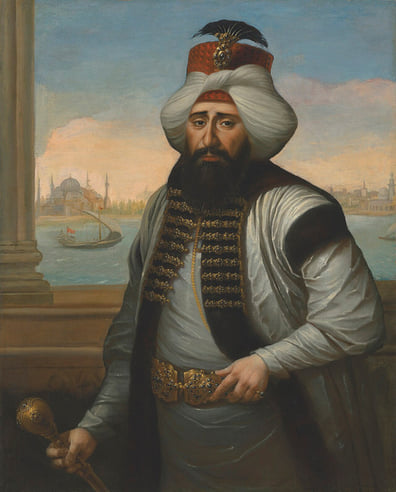
Portrait made in his lifetime — Jean-Baptiste Vanmour
Ahmed III
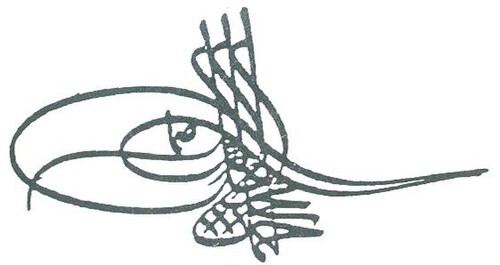
The sultan of the Tulip Period: the printing press, the fire brigade, ambassadors' reports and the effort to understand the West all belong to his reign. The Morea and Azov were retaken, but the Banat and Belgrade were ceded at Passarowitz; his reign ended in a revolt.
Open the reign of Ahmed III on the map▶ Watch the 1-minute video: YouTube · Instagram · TikTok
Interesting fact
By his decree Ibrahim Müteferrika’s press, the first to print books in Turkish, was set up in 1727. He was a master calligrapher: the inscription of the famous fountain in front of the Imperial Gate of Topkapı Palace is in his own hand.
Source: TDV İslâm Ansiklopedisi (Turkish), article “AHMED III”
Life
Youth
Ahmed was born on 31 December 1673. His father was Mehmed IV and his mother Rabia Emetullah Gülnuş Sultan; he was the younger brother of Mustafa II. His first tutor was Imam-ı Sultani Mehmed Efendi; later he became a pupil of Seyyid Feyzullah Efendi. When his father was deposed, the fourteen-year-old Ahmed was shut away together with his father and elder brother in the Şimşirlik quarters of Topkapı Palace; he was then moved to Edirne and remained there throughout the reigns of his uncles and his elder brother.
To the throne through the Edirne Incident
During the Edirne Incident of 1703, the rebels who marched on Edirne to depose Mustafa II proclaimed him sultan; his elder brother handed the throne over to him. Ahmed came to Istanbul and was girded with the sword at Eyüp Sultan. His first act was to order that the former sultan and his children be confined in the Edirne Palace; in time he neutralized the rebel ringleaders and gave new posts to scholars who had been in exile or in hiding and to former viziers. In the early years of his reign he was occupied mainly with internal affairs.
The Pruth, the Morea and Passarowitz
The refuge taken in Ottoman territory by King Charles XII of Sweden, defeated by Tsar Peter the Great of Russia, and Russia's failure to abide by the terms of the treaty led to war, with the Crimean khan also pressing for it. The army under the command of Baltacı Mehmed Pasha, which left Istanbul on 9 April 1711, surrounded Tsar Peter's army on the banks of the Pruth; under the treaty that followed, Azov was recovered.
In the campaign launched against Venice in 1715 the Morea was recovered, and the fortresses on Crete still in Venetian hands were also taken. But in 1716 Austria entered the war; the death in battle of Grand Vizier Damad Ali Pasha at Petrovaradin (Petervaradin) led to the collapse of the army and the lifting of the siege of Corfu. Belgrade fell to the Austrians. With the Treaty of Passarowitz (Pasarofça), signed on 21 July 1718 during the grand vizierate of Nevşehirli Damad Ibrahim Pasha, the Morea remained Ottoman, but Belgrade and part of Serbia were ceded to Austria.
The Tulip Period
After Passarowitz, under the rule of Ahmed and his son-in-law Nevşehirli Ibrahim Pasha, there began a twelve-year period of peace and innovation that would later be called the “Tulip Period”. With the report that Yirmisekiz Çelebi Mehmed Efendi presented on his return from his embassy in Paris, the opening to the West effectively began. Pavilions and gardens were built at Kâğıthane and along the shores of the Golden Horn and the Bosphorus according to plans brought from Paris; the Kâğıthane grounds, known as Sadabad, were divided among the viziers, and here alone the number of pavilions and summer palaces exceeded 120. After Yirmisekiz Çelebi's embassy report (sefaretname), the quarantine system for medically inspecting travelers arriving by sea also gained importance; flower growing became a profession, and the tulip became a highly prized flower.
The most important innovation of this period was the printing press founded by Ibrahim Müteferrika together with Said Efendi, the son of Yirmisekiz Çelebi, which printed books in Turkish for the first time. In 1722 Gerçek Davud Ağa, a man of French origin, founded Istanbul's first fire brigade, the Tulumbacı Ocağı. Ahmed built a freestanding library in Topkapı Palace and, for his mother, the Yeni Valide Mosque in Üsküdar; he also built a second library at Bahçekapı beside the Tomb of Turhan Sultan, and a large fountain each in the Iskele Square of Üsküdar and at Kâğıthane; the famous four-sided Fountain of Ahmed III in front of the Bab-ı Hümayun gate of Topkapı Palace is also his work.
In the east, the collapse of the Safavid state was exploited to take lands reaching as far as Ganja, Yerevan, Khoy, Kermanshah and Hamadan, and through the mediation of the French ambassador a treaty dividing Iranian territory with Russia (the Iran Mukasemenamesi) was signed in Istanbul on 24 June 1724. But with the rise of Nadir in Iran these gains came under threat.
The Patrona revolt and last years
As losses began in Iran, the apparent reluctance of the sultan and the grand vizier to undertake a new campaign combined with discontent in Istanbul, and on 28 September 1730 the Patrona Halil revolt broke out. Unable to deal with the rebels, Ahmed was forced to have his son-in-law, Grand Vizier Ibrahim Pasha, and Ibrahim Pasha's own sons-in-law strangled and handed over to the rebels. A day later he was compelled to abdicate, and he was succeeded by his nephew Mahmud I.
Ahmed was sent, together with his sons Mustafa and Abdulhamid, to the palace quarters reserved for deposed sultans, and he spent the last six years of his life there. He died on 24 June 1736 at the age of sixty-three and was buried in the tomb of his grandmother Turhan Sultan beside the Yeni Cami. Of his sons, Mustafa III and Abdulhamid I later became sultans.
Ahmed was a sultan who loved the arts and protected artists. He learned the thuluth (sülüs) and naskh (nesih) scripts from the famous calligrapher Hafız Osman and became an accomplished calligrapher; he wrote poems under the pen name “Necib” and was the patron of many poets of the period, such as Nedim.
Source: TDV Encyclopedia of Islam (TDV İslâm Ansiklopedisi), “Ahmed III” (M. Münir Aktepe); the main sources of this article are Raşid, Çelebizade Asım, Silahdar Fındıklılı Mehmed Ağa and Abdi Efendi's account of the Patrona revolt.
Meanwhile in the world
Contemporary rulers
- Louis XIVKing of France · 1643–1715The 'Sun King', emblem of absolute monarchy and builder of Versailles
- Peter I (the Great)Tsar, from 1721 Emperor of Russia · 1682–1725Reformer who reshaped Russia along Western European lines
- Charles VIHoly Roman Emperor · 1711–1740Issued the Pragmatic Sanction to secure his daughter Maria Theresa's succession
- George IKing of Great Britain · 1714–1727First Hanoverian king of Great Britain, also elector of Hanover
- Sultan HusaynSafavid Shah of Iran · 1694–1722Last independent Safavid ruler; Isfahan fell to the Afghans in 1722
- KangxiEmperor of China (Qing dynasty) · 1661–1722His 61-year rule is the longest official reign in Chinese history
- Tokugawa YoshimuneShogun of Japan · 1716–1745Eighth Tokugawa shogun, initiator of the Kyōhō Reforms
What was happening in the world?
- 1707The Act of Union merged the English and Scottish parliaments, creating the Kingdom of Great Britain.
- 1709At Poltava, Peter the Great destroyed Charles XII's Swedish army, ending Sweden's status as a great power.
- 1712Thomas Newcomen erected the first commercially successful steam engine, used to pump water from mines.
- 1713The Treaties of Utrecht ended the War of the Spanish Succession; Britain gained Gibraltar and Minorca.
- 1721The Peace of Nystad ended the Great Northern War; Sweden ceded its Baltic territories to Russia.
- 1726Jonathan Swift's satire Gulliver's Travels was published anonymously.
Sources: britannica.com [1] [2] [3] [4] [5] [6] [7] [8] [9] [10] [11] [12] [13]
Family
| Father | Mehmed IV |
|---|---|
| Mother | Emetullah Rabia Gülnuş Sultan |
| Consorts | Emetullah Kadın, Rukiye Kadın, Mihrişah Kadın, Şermi Kadın, Musli Kadın (and many others) |
| Children | Mustafa III, Abdulhamid I, Şehzade Süleyman, Şehzade Mehmed, Fatma Sultan, Atike Sultan |
Major achievements
- The Tulip Period: a flowering of building, gardens, fountains and book culture
- Founding of Ibrahim Müteferrika's press (1727) — the first printed books in Turkish
- The Yalova paper mill and the Tulumbacı corps (fire brigade)
- Yirmisekiz Çelebi Mehmed's embassy to Paris and his reports on Europe
- Azov retaken after the Pruth campaign (1711) and the Morea in the 1715 campaign
- Capture of Tabriz and Yerevan in Persia
- Sadabad and the fountains of Istanbul
Treaties
- Treaty of Adrianople (1713, Russia)
- Treaty of Passarowitz (1718, Austria and Venice)
- Treaty of Hamadan (1727, Persia)
Grand viziers
| Name | From | To | Length |
|---|---|---|---|
| Kavanoz Ahmed Pasha | August 22, 1703 | November 17, 1703 | 87 days |
| Damad Hasan Pasha | November 17, 1703 | September 28, 1704 | 316 days |
| Kalaylıkoz Ahmed Pasha | September 28, 1704 | December 25, 1704 | 88 days |
| Baltacı Mehmed Pasha | December 25, 1704 | May 3, 1706 | 1 year, 129 days |
| Çorlulu Ali Pasha | May 3, 1706 | June 15, 1710 | 4 years, 43 days |
| Köprülüzade Numan Pasha | June 16, 1710 | August 16, 1710 | 61 days |
| Baltacı Mehmed Pasha (term 2) | August 18, 1710 | November 20, 1711 | 1 year, 94 days |
| Ağa Yusuf Pasha | November 20, 1711 | November 1712 | 1-2 years |
| Silahdar Süleyman Pasha | November 1712 | April 1713 | |
| Hoca Ibrahim Pasha | April 1713 | April 1713 | |
| Şehid Ali Pasha | April 27, 1713 | August 5, 1716 | 3 years, 100 days |
| Arnavut Halil Pasha | August 22, 1716 | August 26, 1717 | 1 year, 4 days |
| Nişancı Mehmed Pasha | August 26, 1717 | May 9, 1718 | 256 days |
| Nevşehirli Damad Ibrahim Pasha | May 9, 1718 | October 1, 1730? | 12-13 years |
| Silahdar Damad Mehmed Pasha | October 1, 1730? | January 22, 1731 |
Battles and treaties
| Year | Event | Result / parties |
|---|---|---|
| 1711 | Battle: Pruth campaign | The Russian army was surrounded; Tsar Peter I sued for peace and the Treaty of the Pruth was made |
| 1713 | Treaty: Treaty of Adrianople | |
| 1715 | Campaign: Ottoman reconquest of the Morea (1715) | The Morea and nearby islands were recovered from Venice; the province of the Morea was restored |
| 1716 | Battle: Battle of Petrovaradin (1716) | The Ottoman army was heavily defeated; Grand Vizier Ali Pasha was killed |
| 1716 | Siege: Siege of Corfu (1716) | The fortress held; the siege was raised after the defeat at Petrovaradin |
| 1717 | Naval battle: Matapan | Indecisive; neither side lost a ship |
| 1717 | Siege: Siege of Belgrade (1717) | The relief army was defeated; Belgrade surrendered to the Austrians |
| 1718 | Treaty: Treaty of Passarowitz | Ottoman Empire, Holy Roman Empire, Republic of Venice |
| 1723 | Campaign: Ottoman campaigns in Iran (1723–1726) | Western Iranian cities including Erivan, Ganja, Hamadan and Kermanshah were taken; defeat by the Afghans in 1726 |
| 1727 | Treaty: Treaty of Hamadan | |
| 1730 | Revolt: Patrona Halil Revolt | Grand Vizier Nevşehirli Ibrahim Pasha and his sons-in-law were strangled and handed to the rebels; Ahmed III gave up the throne to his nephew Mahmud I and the … |
Full infoboxes are in the site’s “Battles and Treaties” tab; source: TDV Encyclopedia of Islam.
Death
Deposed in the Patrona Halil revolt of 1730, he died in Topkapı Palace in 1736.
Territorial change
| Year | Region | Event | Source |
|---|---|---|---|
| 1711 | + Azov (Don mouth) | Pruth campaign (1711) and the Treaty of Adrianople (1713) — Azov recovered | TDV İA, “AHMED III” |
| 1715 | + Morea (Peloponnese) | Venetian campaign (1715) — the Morea recovered after sixteen years | TDV İA, “AHMED III” |
| 1716 | − Banat (Temesvár) | Defeat at Petrovaradin and the fall of Timișoara (October 1716) — the Banat to Austria; Treaty of Passarowitz (1718) | TDV İA, “AHMED III” |
| 1717 | − Belgrade–Šabac | Fall of Belgrade (August 1717) — northern Serbia to Austria; Treaty of Passarowitz (1718) | TDV İA, “BELGRAD” |
| 1717 | − Smederevo–Šumadija | Fall of Belgrade (August 1717) — northern Serbia to Austria; Treaty of Passarowitz (1718) | TDV İA, “AHMED III” |
| 1724 | + Azerbaijan–Shirvan–Yerevan | Persian campaign (1723–1727), Treaty of Hamadan — Tabriz and Yerevan | TDV İA, “AHMED III” |
The lands that changed hands in this period, and the battles or treaties that brought the changes, can be seen on the map: map of the reign of Ahmed III.
Cite as: Atlas of the Sultans, “Ahmed III: Reign Map, Wars and Conquests (1703–1730)”, https://padisahlaratlasi.com/en/sultans/iii-ahmed/ (last updated 21 November 2026). Corrections · Image credits
Terms on this page: Şehzade · Tulip Era
Grand viziers of this reign: Baltacı Mehmed Pasha · Şehid Ali Pasha · Nevşehirli Damad Ibrahim Pasha
Monuments of this reign: Yeni Valide Mosque · Library of Ahmed III · Fountain of Ahmed III (Istanbul) · Fountain of Ahmed III (Üsküdar)
Women of the dynasty in this reign: Gülnuş Emetullah Sultan
Myths and misconceptions: Was the Tulip Era called by that name in its own time? · Was the tughra the sultan's own handwritten signature? · Did the Ottoman state collapse right after the 1683 defeat at Vienna?