The Ottoman Army
Six centuries of military order

The Ottoman Army

From a handful of frontier warriors at Söğüt to an imperial army spread over three continents, Ottoman military organisation never stopped changing. On this page you will meet, one by one, the salaried household troops of the sultan, the provincial soldiers who fought in return for land revenues, the vanguard and frontier units, the mehter band, the navy and the new armies of the nineteenth century.

The images are AI-generated reconstructions; details of dress and weapons are approximate. The facts in the text are based on the TDV Encyclopedia of Islam.

Scroll down
01

From frontier principality to a standing army

The first warriors of the Ottoman principality were frontier fighters, most of them horsemen, gathered around Osman Gazi. Against the walled cities of Byzantium and its regular Roman-style troops, however, cavalry alone achieved little. Under Orhan the first regular units were therefore created; until the Janissary corps was founded, volunteers also fought alongside them.

Yaya and müsellem

Orhan – 16th century

The first paid units of the Ottoman army. On the proposal of Çandarlı Kara Halil, the judge of Bursa, they were organised in groups of a thousand and recruited from young Turks; their officers held the ranks of commander of ten, of a hundred and of a thousand. They were paid only while on campaign, went home when it ended and were exempted from taxes in return. They took part in battle until the mid-15th century; afterwards they marched ahead of the army repairing roads and bridges, hauling guns and carrying supplies. A decision of 1582 abolished the organisation in many districts of Anatolia.
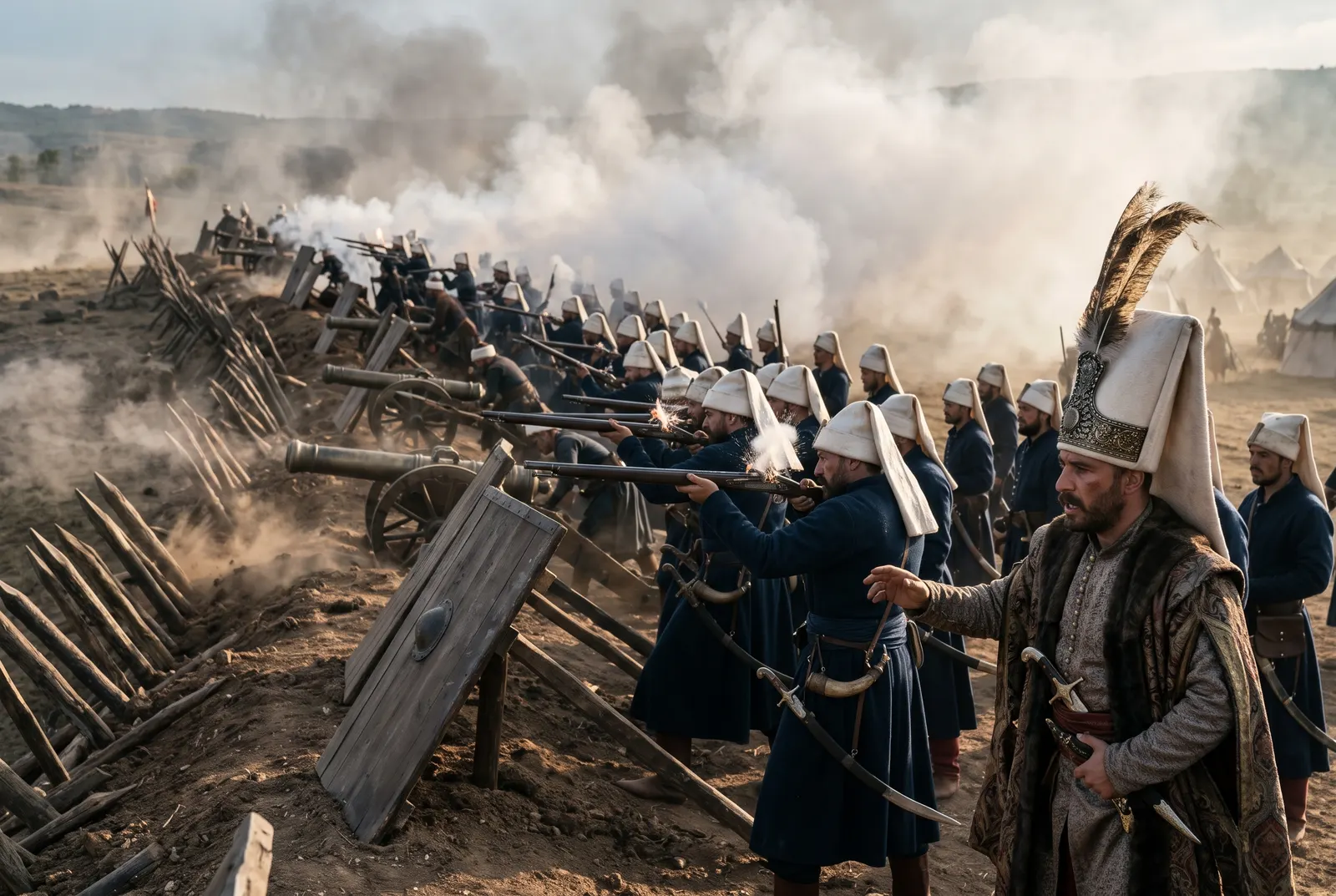
Janissaries firing a musket volley from a position protected by a trench and stakes
Janissaries firing a musket volley from a position protected by a trench and stakesAI reconstruction
02

The household corps (kapıkulu)

Kapıkulu ("slaves of the Porte") was the name of the salaried standing troops who answered directly to the sultan. According to the TDV Encyclopedia of Islam, this regular army was the first permanent military force raised in Europe since the Romans. Its men came first from a one-fifth share of prisoners of war (pençik) and later from the sons of Christian subjects through the devşirme levy. In peacetime they stayed at the centre; on campaign they guarded the sultan and his tent. In the 15th and 16th centuries they numbered some 10,000–15,000 and decided many pitched battles and sieges.

Acemi oğlanları (cadets)

14th–18th century

Levied youths were first placed with Turkish farming families in Anatolia, where they learned Turkish, Islam and local customs ("giving to the Turk"). They were then taken into the Cadet Corps wearing a white felt cap; the first corps was opened at Gallipoli, a second in Istanbul after the conquest. The brightest were chosen for the palace schools and the sturdiest for the Bostancı corps. Passing from cadet to Janissary was called "going out to the Gate" (bedergâh).

Janissaries

14th century – 1826

The first and largest of the household corps. Born under Orhan as a unit of about a thousand prisoners of war, it became a regular corps with the founding of the Cadet Corps under Murad I. Its men were divided into ortas (companies); their number rose to 165 under Suleiman the Magnificent and finally settled at 196, and a company commander was called çorbacı. Pay (ulûfe) was issued every three months. In battle they took position behind trenches fenced with shields and stakes and fired their muskets from just behind the guns; at Otlukbeli, Marj Dabiq, Ridaniya and Mohács musket-armed Janissaries decided the outcome. In peacetime they kept order where they were stationed and fought fires. Their discipline decayed over time, and Mahmud II abolished the corps in 1826.

Cebeci (armourers)

15th century – 1826

The name comes from the Mongolian cebe, "weapon, armour". The armourers supplied, made, repaired and kept the Janissaries' bows, arrows, swords, armour, muskets, powder, shot, picks and shovels. On campaign they loaded these on camels, carried them to the front and handed them out during battle. They are attested from the mid-15th century and were led by the cebecibaşı.

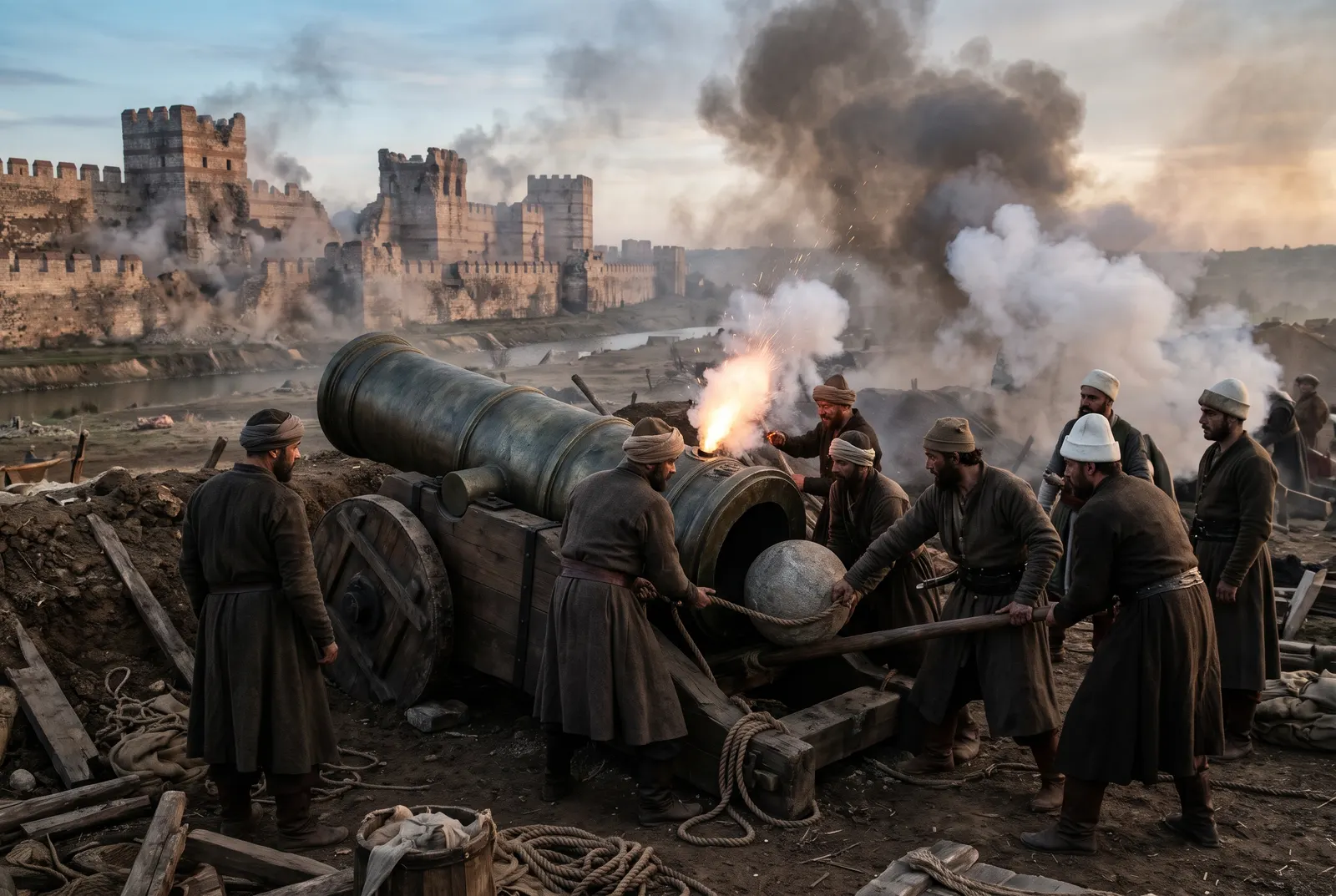
Gunners heaving a giant stone ball into a bombard before the walls of Constantinople in 1453
Gunners heaving a giant stone ball into a bombard before the walls of Constantinople in 1453AI reconstruction

Gunners (topçu)

14th century – after 1826

They cast and served the cannon. The Ottomans had used guns at the siege of Constantinople in 1394 and at Nicopolis in 1396; a permanent foundry was set up at Edirne under Murad II and Mehmed II, and the corps grew in importance from Mehmed II's reign onwards. The Tophane in Istanbul became the centre of gun-casting and of arms and munitions. In the 18th century, under Mustafa III, the fast-moving Rapid-Fire Artillery (Sürat Topçuları) was formed with the help of the French officer Baron de Tott.

Gun-carriage corps (top arabacıları)

15th century – after 1826

One of the infantry household corps, founded to transport the great guns; bringing the artillery to the front on campaign was their task.

Bombardiers (humbaracı)

15th–19th century

The humbara was a round iron shell filled with explosive: thrown by hand it was a "humbara-i dest", fired from a mortar a "humbara-i kebîr". The men who made and threw them first served under the gunners and armourers. In the 18th century, under Mahmud I, the French-born Humbaracı Ahmed Pasha (Comte de Bonneval) reorganised the corps, and the Humbarahâne opened at Üsküdar in 1734 became the first Ottoman military school in the modern sense.

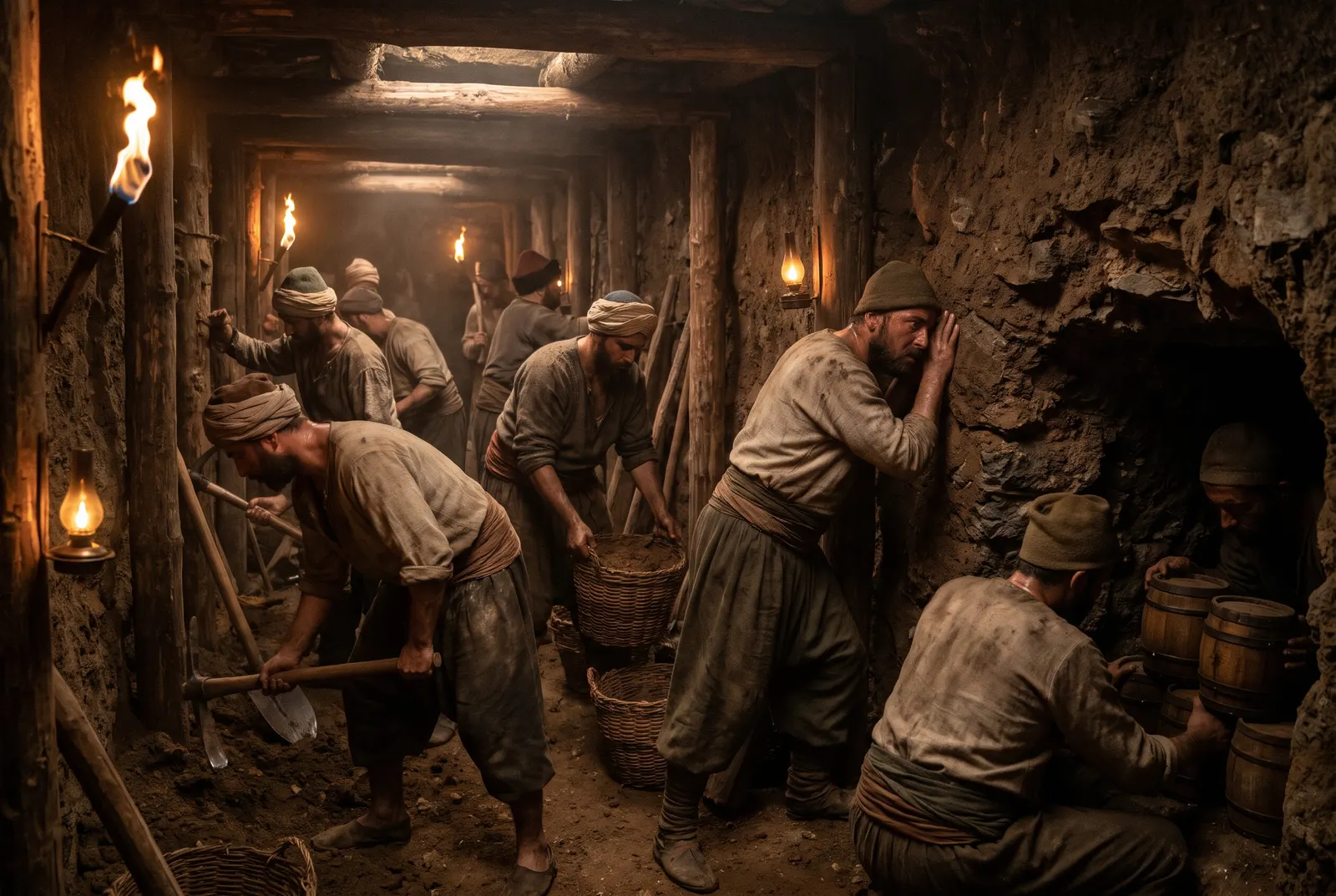
Sappers digging a tunnel under a wall by lamplight and stacking barrels of gunpowder
Sappers digging a tunnel under a wall by lamplight and stacking barrels of gunpowderAI reconstruction

Sappers (lağımcı)

15th–19th century

During sieges they dug tunnels under fortress walls ("tying a mine"), packed them with gunpowder and blew them up ("throwing a mine") to open a breach. They are attested under Mehmed I and Murad II, played an important part in the conquest of Constantinople and were partly brought from the mines of the Balkans. They were probably organised as a corps after the conquest.

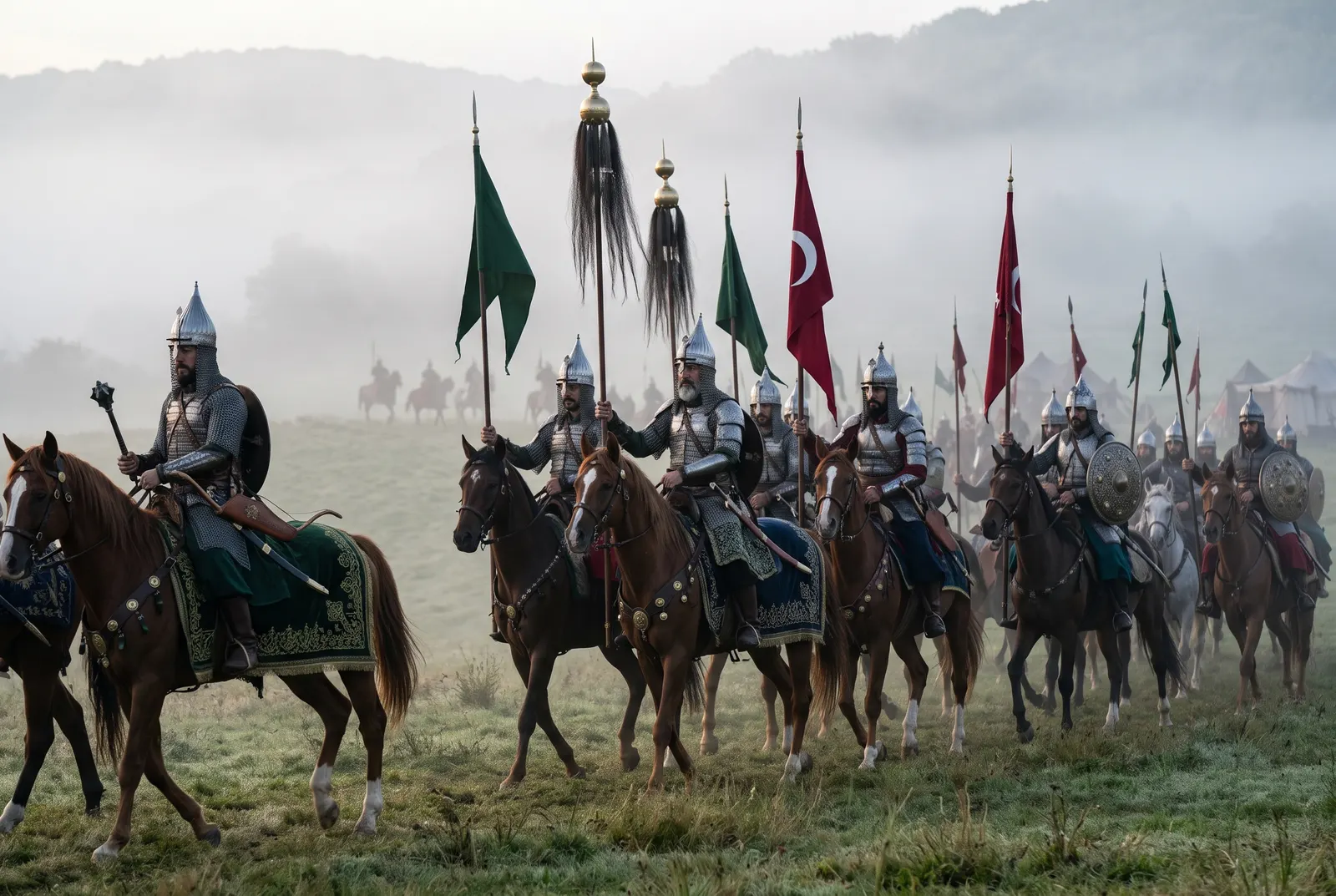
Armoured household cavalry carrying horse-tail standards and banners on a misty morning
Armoured household cavalry carrying horse-tail standards and banners on a misty morningAI reconstruction
03

Household cavalry: the Six Divisions

This was the mounted part of the central army, riding close to the sultan on campaign; together they were called "the men of the Six Divisions". Their ranks were filled from Janissaries who had earned a reward and from pages trained in the palaces of Edirne, Galata and İbrahim Pasha, a promotion known as "going out to the division". In the attack they charged from the flanks of the Janissaries with sword, mace and lance.

Sipahis and silahdars

14th–19th century

The two most prestigious of the six divisions, called the "upper divisions". According to the TDV Encyclopedia of Islam, the silahdar division was founded under Murad I on the advice of Kara Timurtaş Pasha and the sipahi division under Mehmed the Conqueror. The sipahis also appear in the sources as "ebnâ-i sipâhiyân", a name sometimes used for the whole household cavalry.

Ulûfeci

15th–19th century

Their name comes from ulûfe, "pay", and they formed the "middle divisions". According to where they camped they were divided into the right and left ulûfeci, and they were also known by their green or two-coloured banners.

Garip

15th–19th century

The right and left garip were the last two of the six, the "lower divisions". Together with the ulûfeci these four divisions were known as the bölükât-ı erbaa, "the four divisions".

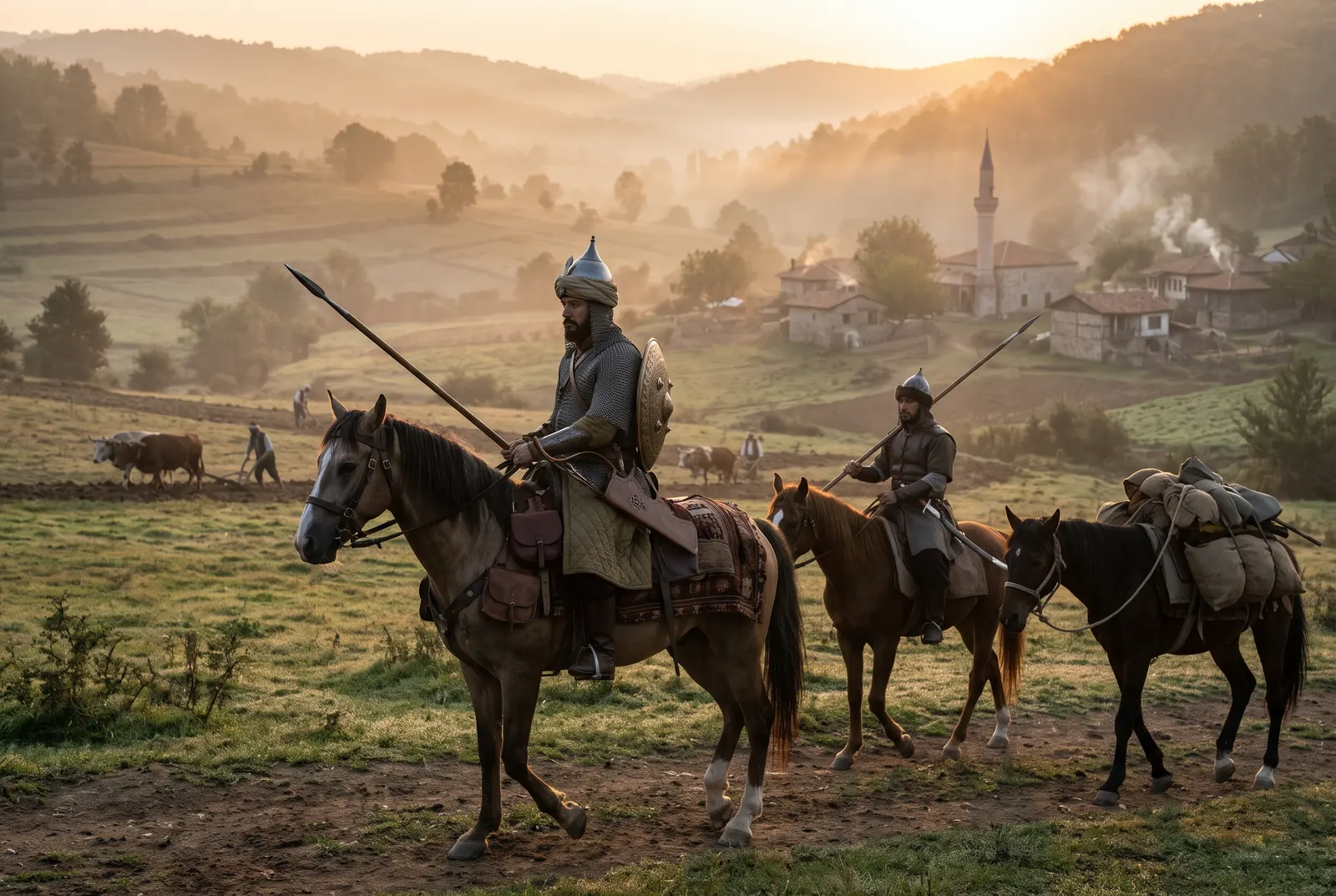
A timariot sipahi riding out from his village at dawn with his armed retainer
A timariot sipahi riding out from his village at dawn with his armed retainerAI reconstruction
04

Provincial troops: the timariot sipahis

In the classical period the real strength of the Ottoman army, in numbers and in quality, lay in the troops of the provinces. The most important of them were the timariot sipahis, the military face of the Ottoman land system. Its essence was that the tax revenue of a piece of state land was assigned to a soldier as his living (dirlik).

Timariot sipahi

14th century – 1847

Also called "sâhib-i arz" (lord of the land), the timariot first saw that his land was ploughed and harvested and collected its taxes, then joined the army with his horse and arms when a campaign was declared. In peacetime he kept order in his district; regular musters were held and a man who did not work his land lost his grant. In the 15th–16th centuries the timariots of the beylerbeyiliks of Anatolia and Rumelia, together with their retainers, could reach 80,000–100,000 men. In battle they fought in armour on the right and left wings, advanced in a crescent, broke the enemy's order with feigned retreats and then rallied to envelop him. Their importance declined in the 17th century; the timar system was formally abolished in 1847.

Cebelü (armed retainer)

15th–17th century

The name, from the Mongolian cebe, means "armoured, equipped soldier". A timar holder had to bring, at his own expense, one mounted retainer for every 3,000 akçe of his income; holders of the larger zeamet and has grants supported one for every 5,000 akçe. The earliest examples appear in the 1431 register of the sancak of Arvanid from the reign of Murad II.

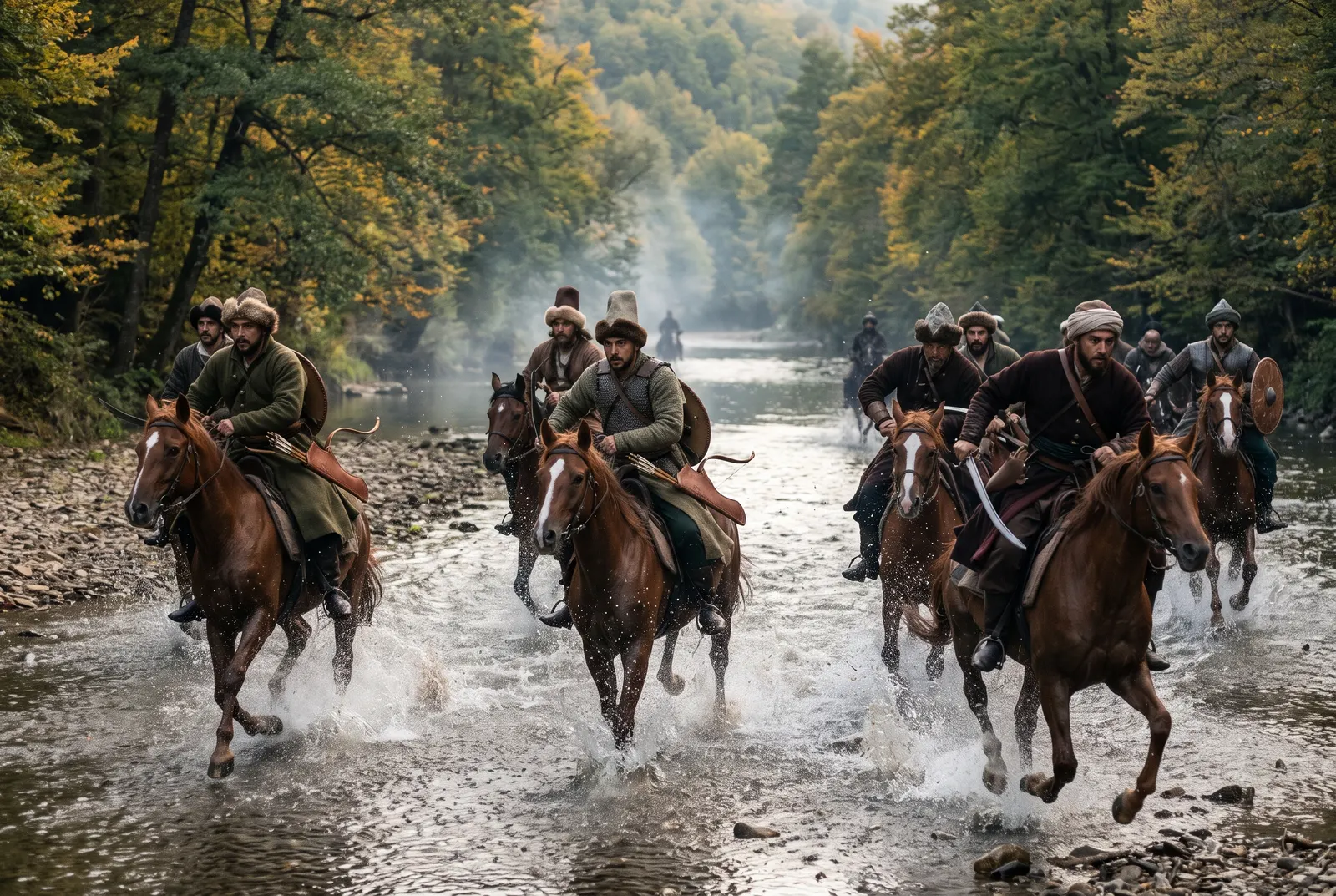
Akıncı raiders galloping across a river in a Balkan forest
Akıncı raiders galloping across a river in a Balkan forestAI reconstruction
05

The vanguard: akıncı, deli and azab

These light units went ahead of the main army: the horsemen were called akıncı and deli, the foot soldiers azab. Their work was to wear the enemy down, guide the army and gather intelligence.

Akıncı (raiders)

14th century – 1826

Tradition says their foundations were laid by Köse Mihal under Osman Gazi; Evrenos Bey did much to turn them into an organised corps. They lived along the Rumelian frontier and raided enemy territory, usually in summer. The state gave them no pay, barracks or weapons: they armed themselves, lived on booty and were exempted from taxes in return. They were named after the families that led them, such as the Mihaloğulları, Evrenosoğulları, Turhanoğulları and Malkoçoğulları, and served the main army as guides and scouts. From the late 16th century they lost their importance and were replaced by the Crimean Tatars; they were formally abolished in 1826.

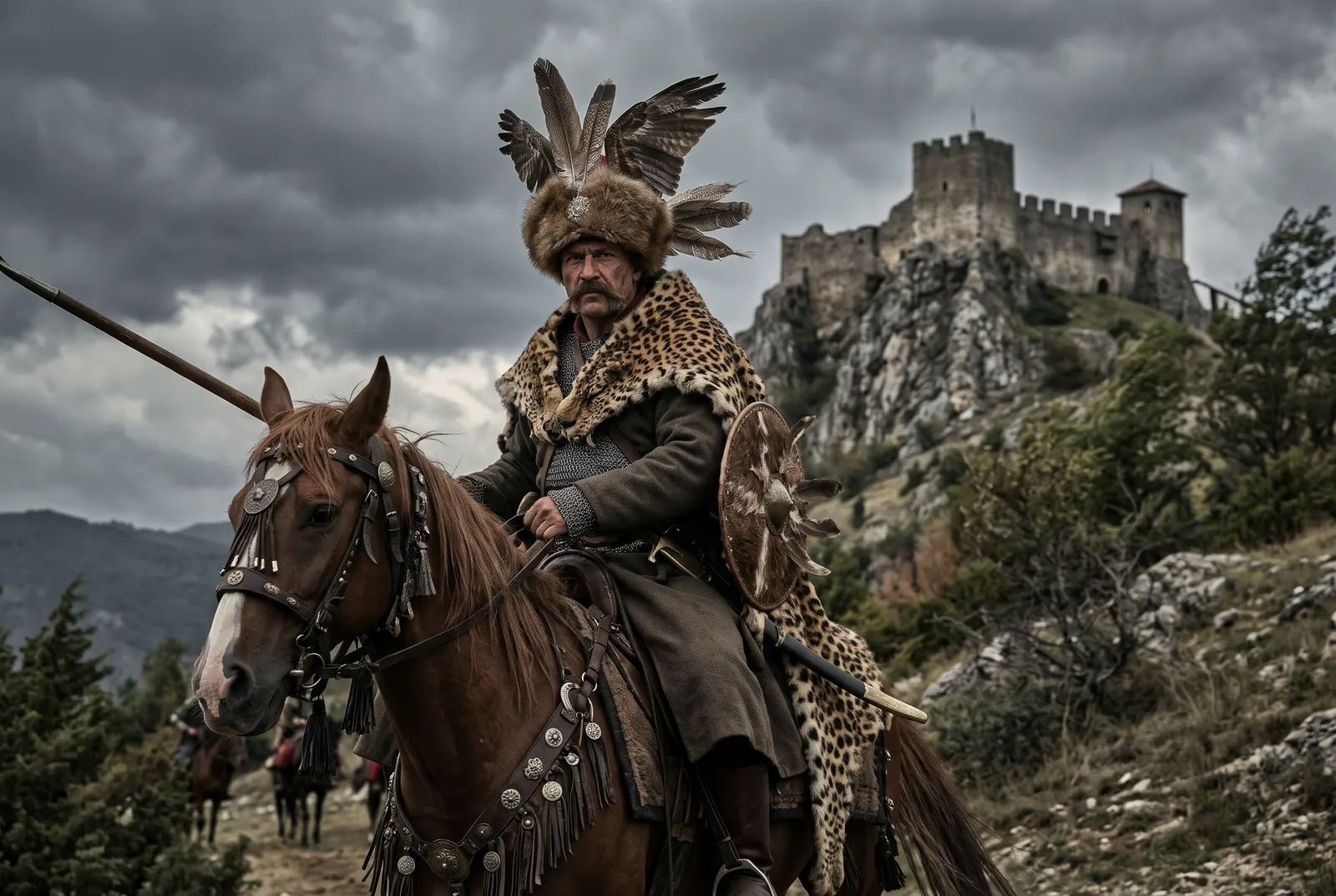
A deli horseman with a leopard-skin cloak and feathered cap before a frontier fortress (inspired by European travellers' descriptions)
A deli horseman with a leopard-skin cloak and feathered cap before a frontier fortress (inspired by European travellers' descriptions)AI reconstruction

Deli

late 15th century – 1829

Light cavalry seen from the late 15th century onwards. Their duties resembled those of the akıncı; what set them apart was that they served in the retinues of grand viziers, viziers and beylerbeyis. European travellers describe them in flamboyant dress decorated with animal skins and feathers. Selim III tried to reform them; Mahmud II abolished them in 1829.

Azab

14th century – Mahmud II

Light infantry used before the Janissary corps existed and counted among the army's vanguard. From the 16th century they served as fortress garrisons and were put on regular pay. The navy also had a class of marine azabs drawn from young bachelors. The azabs had effectively disappeared by the 17th century and were formally abolished under Mahmud II.

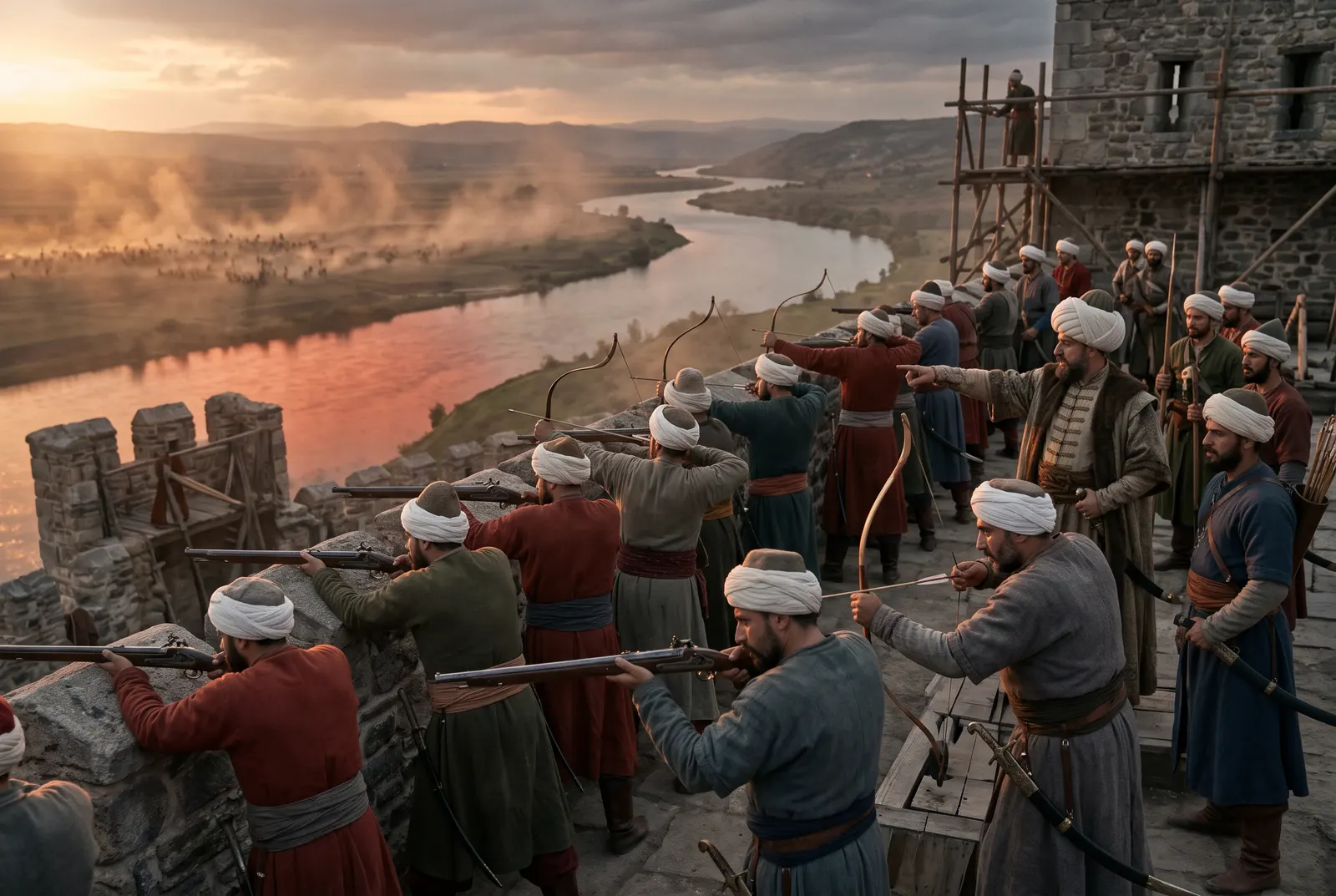
Archers and musketeers on the battlements of a frontier fortress above a river at sunset
Archers and musketeers on the battlements of a frontier fortress above a river at sunsetAI reconstruction
06

Fortresses, frontiers and auxiliary forces

Long borders and hundreds of fortresses needed soldiers in peace as much as in war. Under the dizdar, the fortress commander, garrisons of hisar eri, mounted guards called fârisân, azabs, gönüllü and beşli served in rotation. In Rumelia, Christian military groups such as the martolos and voynuk were also part of this system.

Frontier troops: gönüllü and beşli

late 15th – 18th century

Guards raised from the local population, distinct from the household troops posted in fortresses; to avoid confusion with them they were also called "yerli kulu" (local servants). Known by names such as gönüllü, beşli, azab and fârisân, they served in rotation according to the importance and size of the fortress.

Martolos

15th–18th century

The name is traced to the Byzantine armatolos militia. They are generally held to have taken definite shape under Murad II (1421–1438), and most were Christians. At first they were used as messengers and spies during raids; in the 15th century they served only on the frontier, but from Suleiman's reign onwards they also guarded the interior and its passes. They were salaried soldiers.

Voynuk

15th century – 1878

Their name comes from the Slavic voynik, "soldier"; they were one of the Christian military groups of Rumelia. They joined campaigns and raids and gathered intelligence on the frontier. In peacetime they guarded important passes and fortresses, worked in the imperial stables looking after the sultan's horses and mowed the meadows. The organisation was abolished in 1691 and restored in 1693 when the need was felt again.

Auxiliary units

14th–17th century

The army's support forces: the labour units called cerehor and canbâzân, the nomadic yörüks, and the yaya and müsellem who were later assigned to support duties. Repairing roads and bridges, hauling guns and carrying supplies were done by these units.

Sekban and levend

16th–18th century

During the long Ottoman–Safavid and Ottoman–Habsburg wars of the late 16th century, mercenary units able to use firearms, such as the sekban, sarıca and levend, were taken into the army and into the households of pashas; they were paid only while employed. When the wars ended, those left without a master ("kapısız levend") turned to banditry and supplied the manpower of the Celâlî revolts.

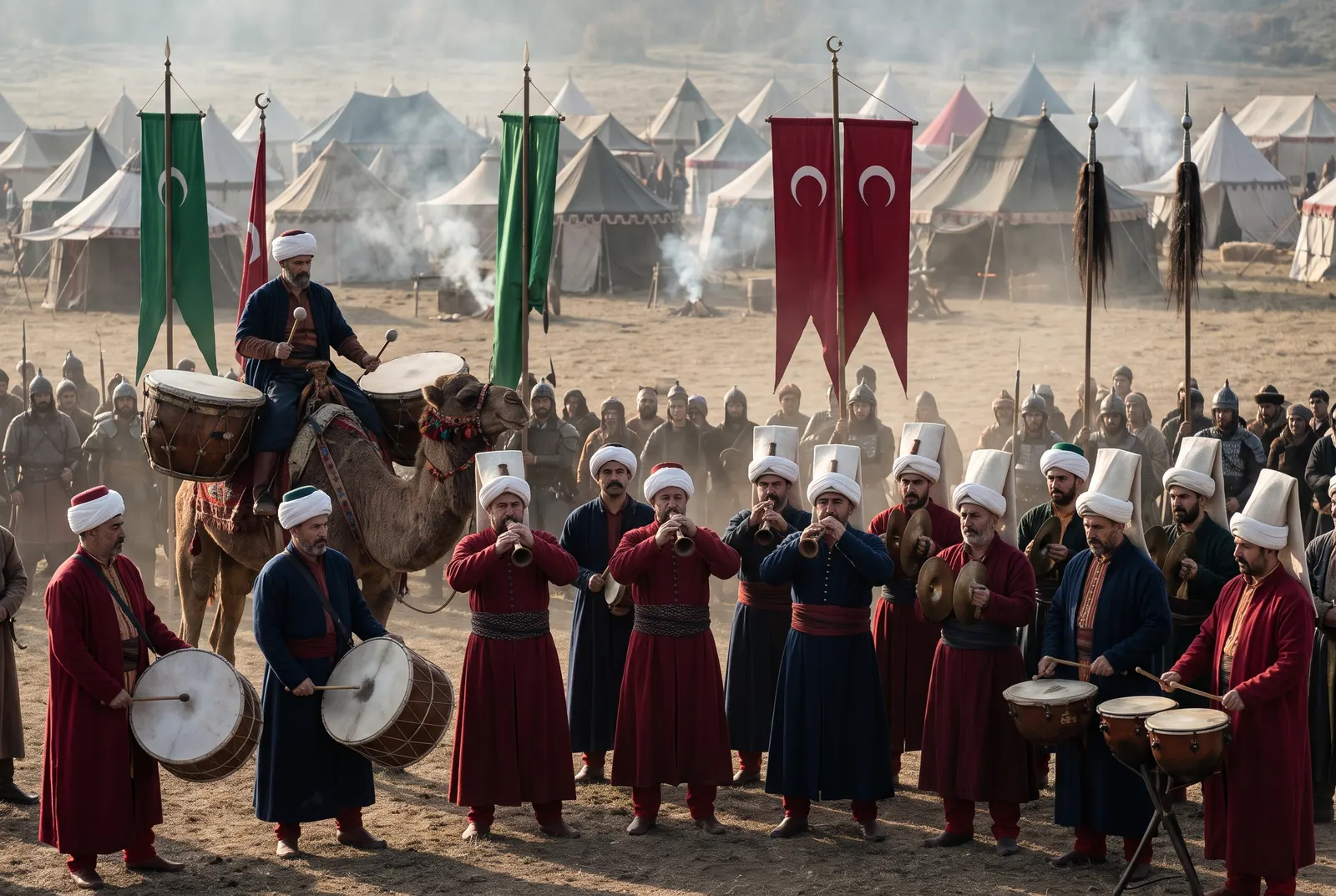
A mehter band playing kettledrums, drums, zurnas and cymbals in front of the army camp
A mehter band playing kettledrums, drums, zurnas and cymbals in front of the army campAI reconstruction
07

The mehter

The mehter (mehterhâne) was the Ottoman military band. Its roots go back to the tradition of the horse-tail standard and the drum, symbols of sovereignty since the Göktürks. A widespread tradition holds that the Seljuk sultan sent Osman Gazi a drum and banner as emblems of rule, but no document confirms it.

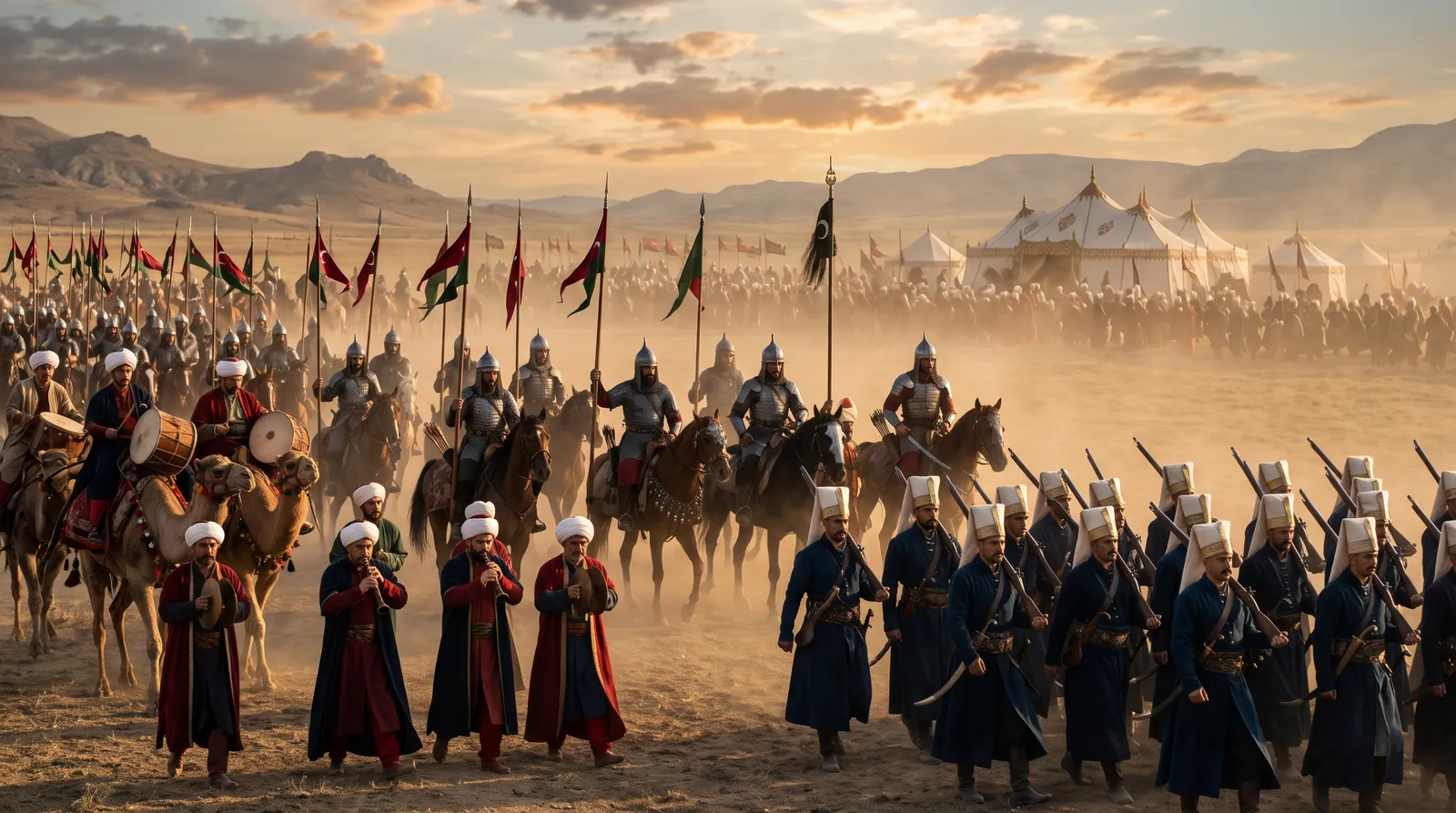
The band had great kettledrums (kös), drums, small kettledrums (nakkare), zurnas, trumpets and cymbals. Only the bands of the sultan and of the commander-in-chief took the great kettledrums to war, carried in pairs on camels or elephants. When fighting began the mehter played with even greater fervour to inspire the troops and frighten the enemy; during sieges it kept playing so that the enemy could not sleep. European composers such as Mozart and Beethoven echoed its rhythms in their "alla turca" works. It was abolished together with the Janissaries in 1826 and replaced by the Muzıka-yı Hümâyun, modelled on European bands; the mehterhâne was revived in 1914 under the Military Museum.

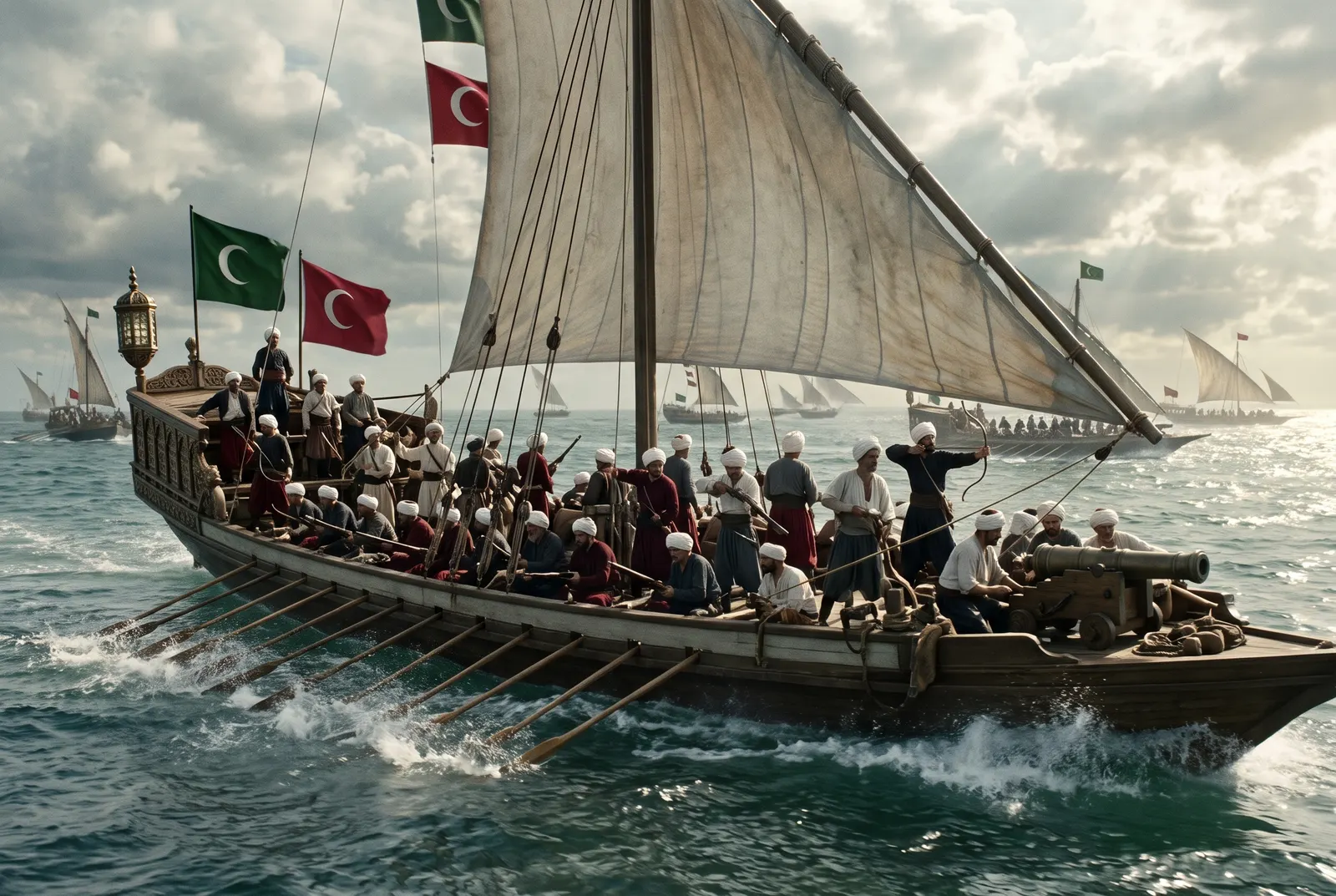
An Ottoman war galley speeding under oars and lateen sail, with levend marines on deck
An Ottoman war galley speeding under oars and lateen sail, with levend marines on deckAI reconstruction
08

The navy

The Ottomans' first contact with the sea came after the principalities on the Marmara and Aegean coasts were absorbed. The first shipbuilding yard was set up at Karamürsel; under Bayezid I a dockyard and naval base were established at Gallipoli (1390). The first Ottoman–Venetian clash, in 1416, ended in defeat, and the fleet commander Çalı Bey fell in battle.

After the conquest of Constantinople the Golden Horn arsenal was founded. The real growth came under Bayezid II, with the building of large warships and the recruitment of seamen such as Kemal Reis and Burak Reis. Under Suleiman, Hayreddin Barbarossa was made grand admiral and Ottoman sea power reached its peak in the Mediterranean. After the fleet was burned at Lepanto in 1571, a new one was built in a very short time.

Kapudan pasha (grand admiral)

14th–19th century

The commander responsible for everything concerning the navy. At first he held the rank of a sancakbeyi and lived at Gallipoli until the mid-16th century. From Barbarossa onwards he rose to the rank of beylerbeyi and vizier and also governed the province of the Islands of the Mediterranean (Cezâyir-i Bahr-i Sefîd), which included the Aegean and Mediterranean islands.

Marine azabs and levends

14th–17th century

The fighting men of the oared galleys. In the 15th and 16th centuries galley fighters were called levend; because they served as free or semi-free men they were also associated with corsairing.

Kalyoncu (galleon crews)

1682 – 19th century

When high-sided sailing galleons replaced the oared galleys after 1682, the sailors known as kalyoncu came to the fore. They were not permanent: each year they were enlisted for pay according to need, as far as possible from coastal regions, and gathered in Istanbul for the fleet's cruises between May and November. Their first major success was the recapture of Chios from Venice in 1695.

River and ocean fleets

16th–19th century

After the conquest of Hungary a river flotilla, the "slender fleet", was created on the Danube; its ships wintered in the dockyard of Rusçuk. There was also a flotilla on the Euphrates built at the Birecik dockyard. At Suez a powerful fleet under its own command was formed against the Portuguese in the Indian Ocean and the Sea of Oman.

Nizâm-ı Cedîd soldiers drilling in the European manner in front of the barracks at Üsküdar
Nizâm-ı Cedîd soldiers drilling in the European manner in front of the barracks at ÜsküdarAI reconstruction
09

Reform: from the Nizâm-ı Cedîd to a modern army

From the 17th century the reform of the army was a constant concern; Osman II lost his life over it, and partial improvements were made under Murad IV and the Köprülü viziers. In the 18th century the superiority of European armies was accepted and more serious steps followed: Humbaracı Ahmed Pasha opened the Humbarahâne at Üsküdar and Baron de Tott founded the Rapid-Fire Artillery. The first fundamental reform, however, was the work of Selim III.

Nizâm-ı Cedîd ("New Order")

1792 – 1807

The new army that Selim III trained in the European manner. New barracks were built and a separate treasury, the İrâd-ı Cedîd, was created to pay for it; it soon reached 12,000 men and began to be raised in the provinces too. In 1795 the Imperial School of Military Engineering (Mühendishâne-i Berrî-i Hümâyun) was opened. All this ended with the revolt of 1807.

Sekbân-ı Cedîd

1808

The army formed by Grand Vizier Alemdar Mustafa Pasha after Mahmud II's accession, resembling the Nizâm-ı Cedîd in organisation and dress. Its training began in the Levent and Selimiye barracks, but a Janissary revolt cut its life short.

Eşkinci corps

1826

Mahmud II attempted a new reform by founding the Eşkinci corps, whose men he chose from among the Janissaries. When the Janissaries rose about a month later, the corps was abolished (the "Auspicious Event", Vak'a-i Hayriye).

Asâkir-i Mansûre soldiers in fezzes and dark-blue uniforms parading in Istanbul in the 1830s
Asâkir-i Mansûre soldiers in fezzes and dark-blue uniforms parading in Istanbul in the 1830sAI reconstruction

Asâkir-i Mansûre-i Muhammediyye

1826 – 1834

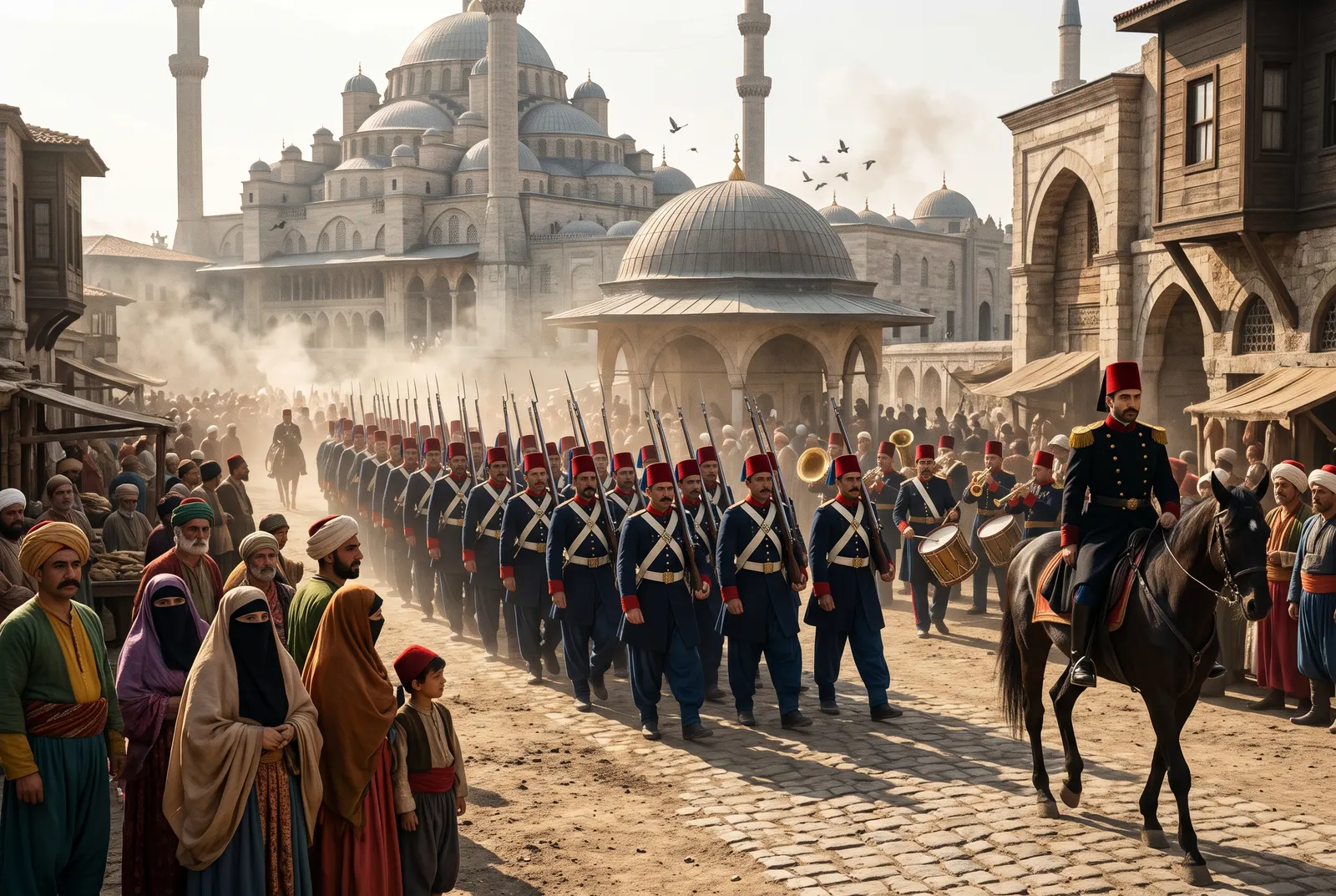
The new army created to replace the Janissaries. Its commander held the title of serasker, and the old Ağakapısı was renamed Bâb-ı Seraskerî. With an initial strength of 12,000, it was divided into battalions and companies in the modern sense, and pay became monthly. The soldiers first wore a segmented cap called the şubara and from 1828 the fez. In 1834 the War College (Harbiye) opened to train officers; according to the TDV Encyclopedia of Islam, reserve units called redif were formed the same year and the army was renamed Asâkir-i Nizâmiyye.

The Tanzimat and the last Ottoman army

1839 – 1918

In 1843 active service was fixed at five years and reserve service at seven; four years later conscription by lot was introduced. In 1869, on the initiative of Serasker Hüseyin Avni Pasha, the army was divided into three components — nizamiye (active), redif and müstahfız — and the land forces into seven armies: the Guard in Istanbul, the Danube at Shumen, Rumelia at Monastir, Anatolia at Erzurum, Syria at Damascus, Arabia at Baghdad and Yemen. Under Abdulhamid II the Hamidiye Light Cavalry Regiments were raised from the tribes of eastern Anatolia and a German military mission was invited to reform the army. The Ottoman army passed into history with the First World War; the founders of the new Turkish army were officers trained in Ottoman military schools.

Timeline

  1. Under Orhan the first regular units, the yaya and müsellem, were created.

  2. Under Murad I the Cadet Corps opened at Gallipoli and the Janissaries became a regular corps.

  3. A dockyard and naval base were established at Gallipoli.

  4. The Ottoman army used cannon at the siege of Constantinople and at Nicopolis.

  5. Great guns and sappers played a decisive part in the conquest of Constantinople.

  6. The fleet burned at Lepanto was replaced in a very short time.

  7. The first galleons, ordered in 1682, were launched.

  8. The Humbarahâne opened at Üsküdar, the first military school in the modern sense.

  9. Selim III's Nizâm-ı Cedîd army was created and then disbanded.

  10. The Janissary corps and the mehterhâne were abolished; the Asâkir-i Mansûre-i Muhammediyye was founded.

  11. The War College opened; reserve units called redif were formed.

  12. The timar system was formally abolished; conscription by lot was introduced.

  13. The army was divided into nizamiye, redif and müstahfız; seven armies were formed.

  14. The mehterhâne was re-established under the Military Museum.

Sources

TDV Encyclopedia of Islam (TDV İslâm Ansiklopedisi), articles: "Ordu" (Ottoman section), "Yeniçeri", "Kapıkulu", "Acemi Oğlanı", "Cebeci", "Tophâne", "Humbaracı", "Lağımcı Ocağı", "Altı Bölük", "Ulûfeciyan", "Sipahi", "Timar", "Cebelü", "Akıncı", "Yaya ve Müsellem", "Serhad Kulu", "Martolos", "Voynuk", "Sekban", "Levent", "Mehter", "Kalyoncu", "Nizâm-ı Cedîd", "Asâkir-i Mansûre-i Muhammediyye".

The images are AI-generated reconstructions made for the Atlas of the Sultans; they are not historical documents.