TRENDEFRARAtlas of the Sultans · Ottoman monuments
Yıldız Palace
Monument · Palace complex, 19th century
- Type
- Palace and pavilion
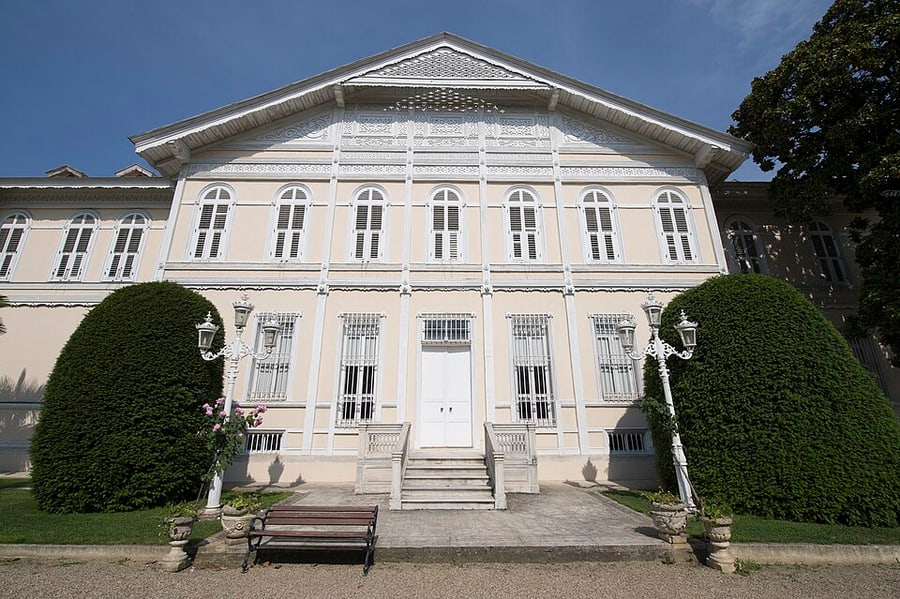

From a pavilion to a palace complex
The first building of the palace, which spreads over the sloping ground of the Yıldız hill, was a pavilion that Selim III built for his mother Mihrişah Sultan; a fountain in the rococo style was also built in the name of his father Mustafa III. Mahmud II had a pavilion built here in 1834–1835, but this building has not survived. Abdulmejid demolished the old pavilions and in 1842 built the Kasr-ı Dilküşa for his mother Bezmialem Valide Sultan; the building known today as the Valide Sultan Pavilion is thought to go back to this structure. In the reign of Abdulaziz the Great Mabeyin Pavilion, the Çit Kasrı, and the Malta and Çadır pavilions were added.
It was Abdulhamid II who gave the palace its real form. The sultan, who moved here from Dolmabahçe and lived here throughout his reign, built the Small Mabeyin Pavilion, the harem buildings, the Şale (Chalet) Pavilion, the Yıldız Mosque, a theatre, workshops, a pharmacy, a library and pavilions for the princes.
Courtyards, pavilions and the royal garden
Consisting of pavilions and kiosks scattered over a wooded area enclosed by walls averaging 4 metres in height, the palace is made up of the palace proper and an outer garden called Yıldız Park. The dispersal of the buildings as separate units is, according to the author of the article, an extension of the layout tradition of Topkapı Palace. The Great Mabeyin Pavilion, built by the Balyan family and dated 1866, is the largest building, where the sultan's official meetings and receptions were held. The Ottoman-Russian War of 1877–1878 and the Ottoman-Greek War of 1897 were directed from a headquarters set up in the largest hall of the Çit Kasrı.
The Small Mabeyin Pavilion, built in 1900, was Abdulhamid II's private residence. The theatre, completed in 1889, is the second theatre within the Ottoman palaces; Western drama and opera were staged here, as well as Turkish drama and orta oyunu (traditional improvised theatre). In the royal garden stretches a pool 12 metres wide, fed by artificial cascades and forming an island. The Şale Pavilion, built for the visits of Emperor Wilhelm II in 1889 and 1898, is the most magnificent building added to the palace in its last period.
After Abdulhamid
After the deposition of Abdulhamid II, the centre of government moved back to Dolmabahçe, but later sultans used Yıldız from time to time. Mehmed VI met Mustafa Kemal Pasha in the Small Mabeyin Pavilion on 15 May 1919, before the latter's departure for Samsun.
After the proclamation of the Republic the palace stood empty for a time. The valuable works in its library were transferred to the Istanbul University Library on Atatürk's orders, and other movable objects were distributed to other palaces. Handed over to the armed forces in 1924, the palace was used as the War Academies.
The present state
The palace was transferred to the Ministry of Culture in 1977 and restoration work began; according to the author of the article, this work is still continuing. Although the sections whose repair is finished have been opened to visitors and to use, the palace is used not as a whole but by various institutions and organizations. The City Museum of the Istanbul Metropolitan Municipality operates in the fine arts building and the carpentry workshop. Of the barracks built for the security of the palace, the Ertuğrul Barracks were demolished in 1958; the Orhaniye Barracks, built in 1887 by Abdulhamid II in the name of Orhan Gazi, still stand outside the palace wall.
Source: TDV Encyclopedia of Islam (TDV İslâm Ansiklopedisi), “YILDIZ SARAYI” (Bülent Bilgin)
Related sultans
Cite as: Atlas of the Sultans, “Yıldız Palace · Ottoman monuments”, https://padisahlaratlasi.com/en/monuments/yildiz-palace/ (last updated 21 November 2026). Corrections · Image credits