TRENDEFRARAtlas of the Sultans · State organisation
The Province and Sandjak System
Institution · Ottoman provincial administration · 14th–20th centuries

From sandjak to governorate-general
The word sancak, said to derive from the Turkish verb sançmak (“to plant, to thrust”), was used to mean a banner, the military unit that banner represented, and the administrative district they formed. According to Aşıkpaşazade, after the conquest of Karacahisar the Seljuk sultan sent a banner to Osman Gazi, who thus became a sandjak bey. In the earliest period, however, terms such as subaşılık and vilayet were used for the basic administrative unit rather than sancak; in the 15th century the sandjak acquired the meaning of “administrative district” alongside that of command, and in time came to denote a district within a province, governed by a sandjak bey.
In 1357 Orhan Gazi sent his son Prince Murad to Rumelia with his tutor (lala) Şahin; when responsibility for the conquered lands was given to Lala Şahin, he took the title of beylerbeyi (“bey of beys”, governor-general). As conquests in the Balkans accelerated after 1361, Murad I appointed him commander over the beys of Rumelia; the governorate-general (beylerbeyilik) thus emerged as a mechanism of control over the sandjaks. As areas of responsibility in Anatolia and Rumelia expanded, the state was divided into two great administrative halves along the Straits: in 1393, when Bayezid I crossed into Rumelia, he left Kara Timurtaş Pasha at Ankara as governor-general of Anatolia. The governor-general of Rumelia kept his precedence, attending council meetings and ranking ahead of the others. The governorate-general of Rum, covering the Amasya–Tokat region (1413), and, after the annexation of the Karamanids, that of Karaman followed.
A provincial map expanding with conquest
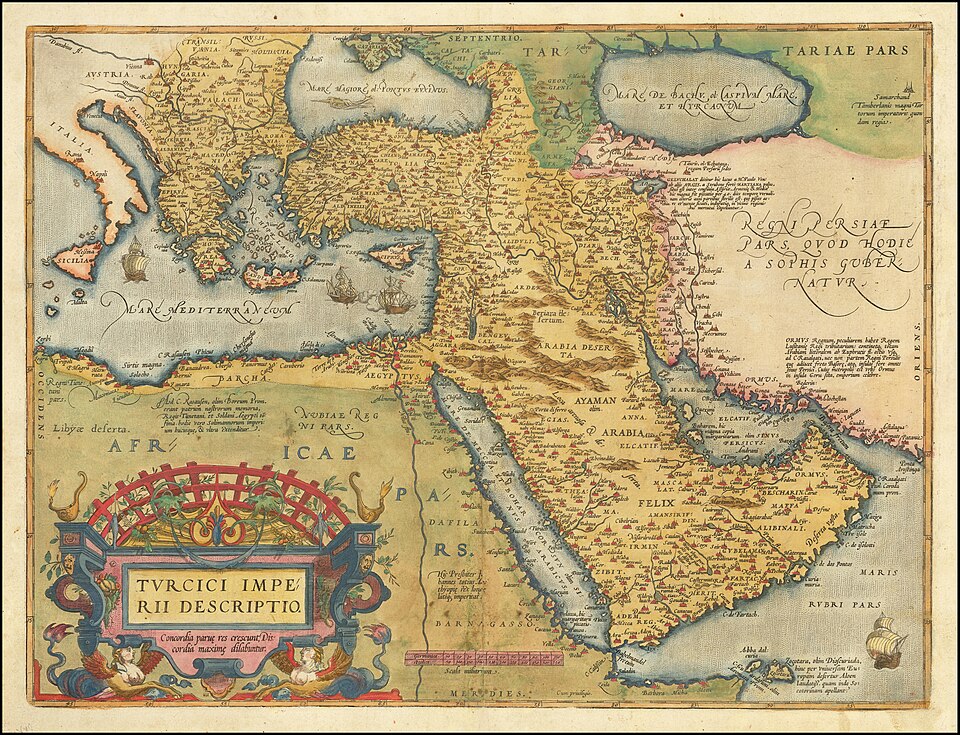
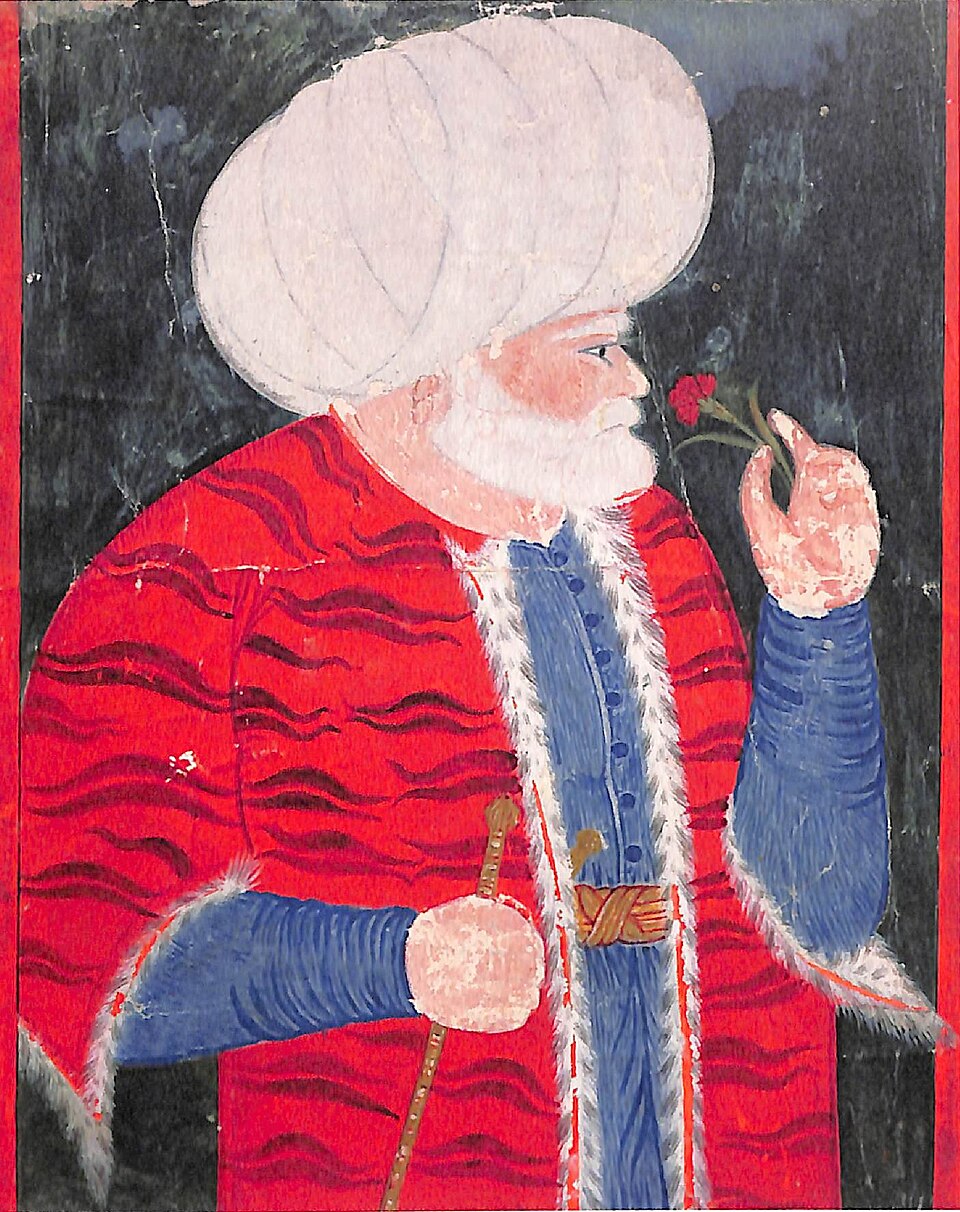
After the conquests of Selim I, an Arab province comprising Syria, Palestine, Egypt and the Hijaz was formed, together with the provinces of Alaüddevle (Dulkadir) and Diyarbekir. According to a document of 1520 there were thirty sandjaks in the province of Rumelia, twenty in Anatolia, eight in Karaman, five in Rum, fifteen in the Arab province and nine in Diyarbekir. Under Suleiman the Magnificent the Arab province was split into the governorates-general of Aleppo, Damascus and Egypt; in 1533 the governorate-general of Algiers was created and given to Barbaros Hayreddin Pasha, who was also made grand admiral (kaptan-ı derya). New conquests led to the governorates-general of Baghdad and Erzurum (1534), Buda (1541), Van (1548) and Temesvár (1552); appointing a governor-general immediately after conquest was a new practice of Süleyman’s reign. In 1568 the sandjak of Kefe (Caffa), and in 1571, after its conquest, Cyprus, were made governorates-general.
For a long time documents used the terms beylerbeyilik and vilayet; the word eyalet was probably adopted for this administrative unit around 1591. The list of Ayn Ali Efendi dated 1609 names thirty-two provinces (eyalet): twenty-three, such as Rumelia, Anatolia, Karaman, Buda, Temesvár, Bosnia, Cyprus, Diyarbekir, Damascus, Aleppo, Erzurum and Van, were timar provinces, while Egypt, Baghdad, Yemen, Habeş, Basra, Lahsa, Algiers, Tripoli in Libya and Tunis were salyane provinces. At the end of the 16th century, more than thirty governorates-general held some 500 sandjaks; in the early 19th century there were about twenty-five governorates-general and roughly 300 sandjaks. An Ottoman province was far larger than a present-day Turkish province (il); with one or two exceptions, a modern il was only about the size of a sandjak.
 AI

Governor-general and sandjak bey
A province consisted of sandjaks governed by sandjak beys; the governor-general resided in the central sandjak known as the paşa sancağı. As representative of the sultan’s executive power he was responsible for all the affairs of the province, carried out judges’ rulings and the sultan’s orders and ensured public security. Since the province was built on the timar system, he was above all responsible for the army of timar-holding cavalrymen (sipahi); their appointments and promotions depended on him, handled by his registrar (defter kethüdası) and timar treasurer (timar defterdarı). Yet the judge (kadı) and the finance treasurer answered directly to the capital, the Janissary commanders of the large cities were not subordinate to him, and he could not enter fortresses held by Janissary garrisons. These checks and balances, together with frequent changes of post, were meant to prevent governors-general from becoming too powerful and independent.
The highest official of a sandjak was the sandjak bey (mir-i liva). He resided in the sandjak’s central district and was represented in the other districts by officials called zaim, subaşı or voyvoda. Belonging to the military-administrative class (seyfiye or ehl-i örf), his main duty was to keep order and to ensure that relations between the sipahis and the taxpaying subjects (reaya) followed the sandjak law codes (kanunname), most of which were recompiled under Süleyman; on campaign he joined the governor-general’s command with the timar-holders of his sandjak. In the 16th century his term ranged from one to three years, and appointments were usually made between neighbouring sandjaks. At the beginning of that century nearly 40 percent of sandjak beys were sons or relatives of commanders; from the second half of the century the share of men coming from the palace grew.
Features of the sandjaks
When the Ottomans annexed the Anatolian principalities (beylik), they did not greatly disturb their old boundaries: the principalities of Saruhan, Karesi, Menteşe and Aydın became sandjaks within the province of Anatolia, keeping their former borders, administrative structures and names. This integrative policy eased the absorption of principalities sharing the same culture into the Ottoman order. In the fifteenth and 16th centuries certain sandjaks, such as Saruhan (Manisa), Menteşe, Germiyan (Kütahya), Konya, Amasya, Kastamonu, Trabzon and Kefe, were princely sandjaks to which the sultan’s sons were sent to gain administrative experience. Some sandjaks were also left to old dynasties, as when beys of the Ramazanoğlu family in Adana and of the Dulkadıroğlu family in Maraş were appointed sandjak beys.
Provinces and their sandjaks were of two kinds: timar (or has) provinces and salyane provinces. In the timar provinces of Anatolia and Rumelia, tax revenues were distributed as has, zeamet and timar grants. In the salyane provinces, mostly on the southern frontiers, revenues were not distributed as timars but collected directly for the treasury; after the annual salaries of soldiers and officials were paid, the remainder was sent to Istanbul, whence the name salyane, meaning “annual.” Sandjaks without a fixed centre were also created to keep nomadic communities under better control and collect their taxes regularly; in the second half of the 16th century the Turkmens of Aleppo and the Bozulus Turkmens were each organized as a sandjak.
Notables, müşirs and vilayets
The decay of the timar system brought fundamental changes to the provinces. A large share of tax revenue was now collected directly for the treasury through tax farming (iltizam); governors were appointed on condition of collecting these taxes and were encouraged to maintain their own retinues (kapı halkı) at their own expense. These developments paved the way in the 18th century for greater provincial autonomy. Local notables called ayan grew stronger; governors who did not cooperate with them had limited influence, and powerful ayan families founded local dynasties not only in distant provinces but also in Anatolia and Rumelia. In Egypt real control passed to the Mamluk beys, in Baghdad and North Africa to local Janissary groups.
In 1812 Mahmud II began a struggle against the ayan and pashas, and after 1826 he reorganized the provinces as müşiriyets entrusted to marshals (müşir) with broad military and financial powers. With the proclamation of the Tanzimat in 1839 tax farming was abolished, tax collection was given to officials sent from the centre (muhassıl), and the müşirs’ powers were confined to public order; but this system failed, and early in 1842 tax farming was restored. In 1864 a Provincial Regulation (Vilayet Nizamnamesi) modelled on the French system was issued: provinces (vilayet) were divided into sandjaks, sandjaks into districts (kaza) and districts into villages, with administrative councils at each level. After the success of the system in the Danube province (Tuna vilayeti) it was extended in 1867 to the whole country except Yemen and Baghdad; the General Provincial Administration Regulation of 1871 clarified the status of the nahiye. The sandjaks were abolished by the Grand National Assembly of Turkey in 1921; in the Republic the vilayets became provinces (il), each headed by a governor (vali).
Related sultans
Cite as: Atlas of the Sultans, “The Province and Sandjak System · State organisation”, https://padisahlaratlasi.com/en/ottoman-state-organisation/the-province-and-sandjak-system/ (last updated 21 November 2026). Corrections · Image credits