TRENDEFRARAtlas of the Sultans · State organisation
The Timar System
Institution · Military and fiscal land regime · 14th–19th centuries
 AI

Definition and origins
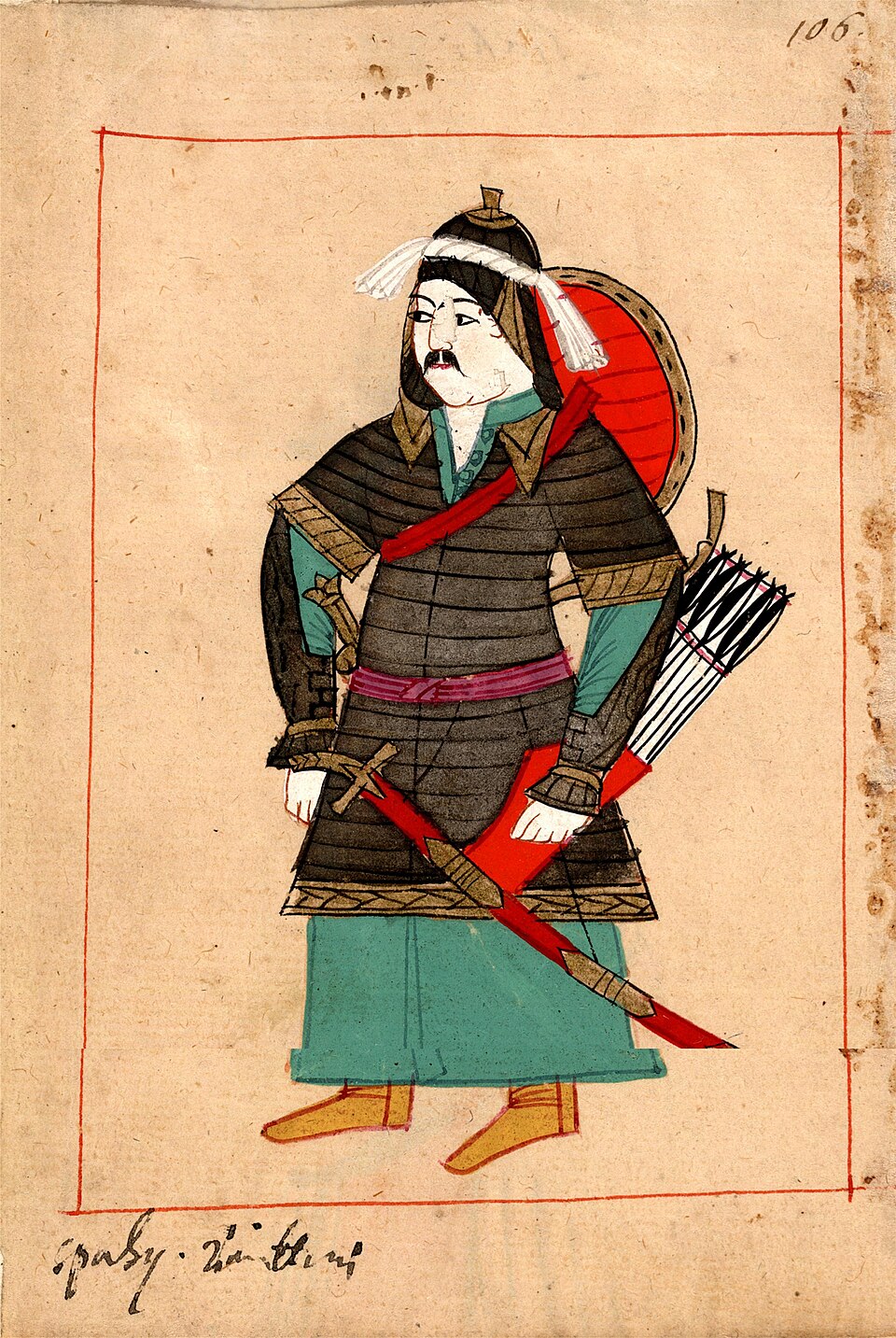
The word timar, used in Turkish as a synonym of dirlik (“livelihood”), literally means “care, attention.” As a term it denotes a non-hereditary assignment of revenue made in the central Ottoman provinces to support a cavalry force and the military-administrative hierarchy. The timar system was not only the backbone of military and administrative organization; it was also the decisive factor in the working of the state-owned land (miri) regime, in fixing the status of the peasants and the taxes they paid, and in managing the agrarian economy during the classical age.
The first documented reference to the system goes back to the time of Orhan Bey; the grants Osman Gazi distributed to his commanders seem to have been rather of the appanage (yurtluk) type. In states where a money economy and a central treasury were insufficiently developed and the army consisted largely of cavalry, such assignment systems arose of necessity. The Ottomans built a structure of their own by borrowing elements from the Seljuk and Mamluk iqta, the Byzantine pronoia and Mongol tradition; the word timar is the exact equivalent of the Greek pronoia, meaning “care,” while terms such as cebe and gecim come from Mongolian. The summary registers (icmal defteri) compiled under Murad II, notably the Arvanid register of 1432 (835 AH), show that all the basic principles of the system had already taken shape by then.
Has, zeamet and timar
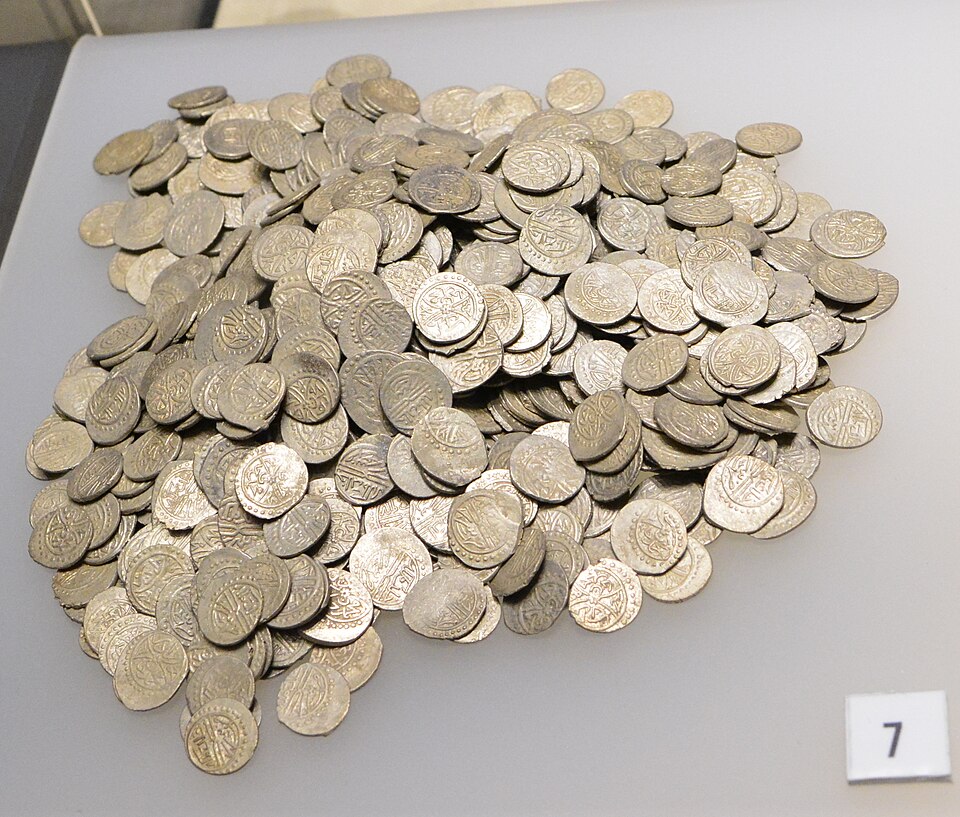
Grants were divided functionally into three classes. The has comprised the sultan’s own domains (havass-ı hümayun) and those assigned to viziers, governors-general and sandjak governors; the has of sandjak and provincial governors was considered to begin at 100,000 akçe. Grants from 20,000 to 100,000 akçe were called zeamet, their holders zaim or subaşı; those below were timars. Around 1609 the lowest has of a sandjak governor was 96,750 akçe and the highest, that of the sandjak of Klis in Bosnia, 652,500 akçe; governors-general’s has ranged from 600,000 akçe for Cyprus to 1,200,660 akçe for Diyarbekir. A governor-general’s province was divided into sandjaks and the sandjaks into subaşılıks or zeamets; one of the zaims was chosen as alay beyi and made responsible for all matters concerning the sipahis of the sandjak.
The villages and shares making up a timar were deliberately scattered; holdings of has, zeamet and timar thus formed a mosaic, preventing the holder from turning a village into private property. A timar unit entered in the summary register was called a kılıç (“sword”). As sahib-i arz (“master of the land”) the holder exercised the powers the law gave him over land and peasants, collecting personal taxes such as the çift resmi and ispence and the tithe (öşür) on produce. He could bring back a peasant who had abandoned his land within ten (later fifteen) years. Yet the Ottoman order opposed the exploitation of peasant labour: the subjects (reaya) paid no more tax than the law stated, and the sipahi could not make them work at will; most of the labour services inherited from pre-Ottoman times had been converted into paid work.

The timar army on campaign
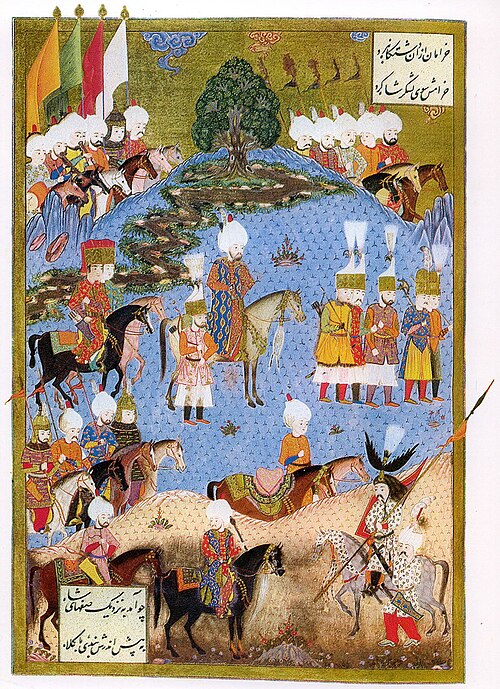
The campaign season usually opened in March or April. Troop leaders (çeribaşı) gathered the sipahis of a zeamet and joined the subaşı, the subaşıs met the sandjak governor, and the governor-general inspected the units collected from the sandjaks before joining the imperial army (Ordu-yı Hümayun). Idris-i Bitlisi estimated the Anatolian timar army in 1473 at about 20,000 and the Rumelian at about 24,000. Official records of 1527–1528 give the timar army as 37,521 men, of whom 9,563 were fortress guards (hisar eri) and the rest cavalrymen who went on campaign. Leaving aside Egypt, where the timar system was not applied, almost half of public revenue was assigned to timars.
Every holder of a timar, zeamet or has had to bring a number of cebelüs, fully equipped mounted soldiers, in proportion to his income. An ordinary sipahi equipped one cebelü for every 3,000 akçe above his base timar, while subaşıs and higher ranks with more than 20,000 akçe did so for every 5,000 akçe. A small timar holder wore a cebe, a simple armour of metal plates; those above 3,000 akçe wore the bürüme, a coat of interlinked steel rings. According to the law code of Ali Çavuş, there were 56,455 timar holders and 117,135 cebelüs in twenty-four governorates-general. A timar did not pass by inheritance, though sipahis’ sons were allowed an entry-level timar. Failure to join a campaign, a serious crime or oppression of the subjects were grounds for losing a timar; a dismissed sipahi who did not rejoin a campaign within seven years lost his status and became a taxpaying subject.
 AI

Adaptation and diversity
In conquered lands the Ottomans adapted the timar system to local conditions in line with their policy of istimalet (winning hearts). In the Balkan conquests many pronoia holders were left in place as Ottoman timar holders; being Muslim was not a precondition for becoming a sipahi, and in some sandjaks Christian timar holders made up as much as 35 percent. Selim I recognized the property rights and internal autonomy of nine Kurdish sandjak governors of the province of Diyarbekir over their hereditary lands; this yurtluk-ocaklık status was also applied in Van, Aleppo, Çıldır and Şehrizor and to some Turkmen tribes.
In Bosnia, faced with the Austrian threat, the state had to accept that sipahis’ timars could pass, in the absence of a son, to other male members of the family; this decision, going back to the reign of Ahmed I, was confirmed by Sultan Ibrahim in 1644. Needing additional troops, Mehmed II the Conqueror required owners of private land to supply auxiliary soldiers called eşkincili; he also abolished many endowment and freehold lands to create new timars for sipahis. Types such as serbest timars, arpalıks and ocaklıks enjoyed a certain autonomy, in that the provincial authorities (ehl-i örf) could not intervene in them to pursue offenders or collect fines.
Decline and liquidation
In the Austrian war of 1593–1606 the need for musket-bearing troops made the employment of salaried soldiers unavoidable; on campaign, sipahis ill-suited to face firearms were increasingly replaced by Janissaries and by sekban and saruca mercenaries. After 1584 timar values stayed fixed while inflation reached 100 percent, and the sipahis grew poor. Dismissed sipahis and sipahis’ sons waiting for timars formed a restless group that joined the uprisings of Sheikh Bedreddin in 1416, Şahkulu in 1511 and the Celali revolts of 1593–1609; the expulsion from the profession of Anatolian sipahis who failed to join the campaign of 1596 caused great turmoil. The government shifted timar revenues to the treasury or to influential men such as çavuşes, müteferrikas and scribes: in the campaign of 1621, 2,882 çavuşes and their sons, 681 müteferrikas and 522 scribes held timars. The number of timar-holding sipahis on campaign fell from 14,867 in 1616 to 6,052 in 1655.
From the late 17th century the system all but lost its military function. In the Erzurum muster of 1715, 2,119 timars were transferred to the treasury because villages lay in ruins or sipahis failed to appear; reform attempts through the regulations of 1777 and 1791 bore no fruit. In 1827 some 5,200 timar-holding sipahis from fifty-three sandjaks in Rumelia and Anatolia were turned, together with their timar revenues, into cavalry of the new Asakir-i Mansure army. The fiscal reforms of the Tanzimat severed the timar holders’ ties with their districts; it was decided that timars would be liquidated on the death of the last sipahi and that sons of suitable age would be trained as officers. Thus the timar regime passed into history, while local problems concerning timar lands were inherited by the Republic. The basic sources for the system, the summary and detailed survey registers and the registers of the Tahvil Office covering 1615–1916, are preserved today in the Ottoman Archives.
Related sultans
Cite as: Atlas of the Sultans, “The Timar System · State organisation”, https://padisahlaratlasi.com/en/ottoman-state-organisation/the-timar-system/ (last updated 21 November 2026). Corrections · Image credits