TRENDEFRARAtlas of the Sultans · State organisation
The Learned Hierarchy and the Judgeship
Institution · Education, justice and legal opinion · 14th–20th centuries
 AI

One of three professions
The ilmiye, or learned hierarchy, was one of the three basic professional groups of the Ottoman state, alongside the seyfiye (the military) and the kalemiye (the bureaucrats). Made up of scholars (ulema) such as the şeyhülislam, the chief of the Prophet’s descendants (nakibüleşraf), the military judges (kazasker), judges (kadı) and professors (müderris), it comprised men who graduated with a licence (icazet) after proper study in a madrasa and who ran education, law, legal opinion (fetva) and the main religious services, also filling certain senior posts of the central bureaucracy related to their field. In the century and a half between the state’s foundation and the conquest of Istanbul its principles were not yet fully fixed; from the conquest to the early 17th century a solid tradition took shape with its own order, ranks and powers. From the 16th century members of the ilmiye held a monopoly over education and justice.
Within the ruling class the members of the ilmiye enjoyed the broadest privileges. Their tax exemptions were wider than those of other military groups; as “people of the sacred law” (ehl-i şer’), the heaviest punishment they faced was dismissal or exile, and executions were very rare. The privilege that Murad II granted to the family of Molla Fenari, allowing his sons and grandsons to begin as professors at 40 akçe a day, was gradually extended to all learned families and to the sons of scholars. This privilege granted merely for being a scholar’s son (the mevalizade law) caused the profession to decline; some twenty families, such as the Fenarizades, Ebussuudzades and Dürrizades, easily secured the leading posts.
Foundation: from the madrasa of Iznik to the military judgeship
Under Orhan Bey judges were appointed to conquered places, with the judge of Bursa as chief judge; the first madrasa opened in Iznik in 1331, with Davud-i Kayseri as its professor. In the Ottoman tradition of conquest, a place passed definitively under Ottoman rule only once a judge representing the law and a subaşı representing the administration had been appointed. The military judgeship (kazaskerlik) was founded early in the reign of Murad I, in 1361 or 1362 according to different sources; its first holder was Çandarlı Kara Halil, who came from the judgeship of Bursa. The chronicles relate that under Bayezid I the hierarchy of judges was regulated through the efforts of Grand Vizier Çandarlı Ali Pasha. During the Interregnum, Musa Çelebi made Sheikh Bedreddin his kazasker and Mehmed Çelebi appointed Çandarlı Ibrahim, showing that the post was regarded as one of the three basic offices of the state.
The law code of Mehmed II the Conqueror gave ample space to the ilmiye; the fees judges could charge, the hierarchy and the equivalence between teaching, judging and issuing legal opinions were fixed in this period. With the founding of the Sahn-ı Seman madrasas (1463–1470), the education required to become a judge was regulated, and senior judges paid 500 akçe a day were ranked equal to the professors of the Sahn. In the last year of Mehmed II’s reign, on the proposal of Karamani Mehmed Pasha, the military judgeship was divided into those of Rumelia and Anatolia; an Arab and Persian military judgeship set up for a time under Selim I was later abolished and attached to that of Anatolia. With Süleyman’s Süleymaniye madrasas (1550–1557) the system reached its peak. As graduates multiplied, in the 1540s Ebussuud Efendi, by Süleyman’s decree, regulated the mülazemet, the period of internship and waiting between graduation and a first post.

The military judges and the career ladder
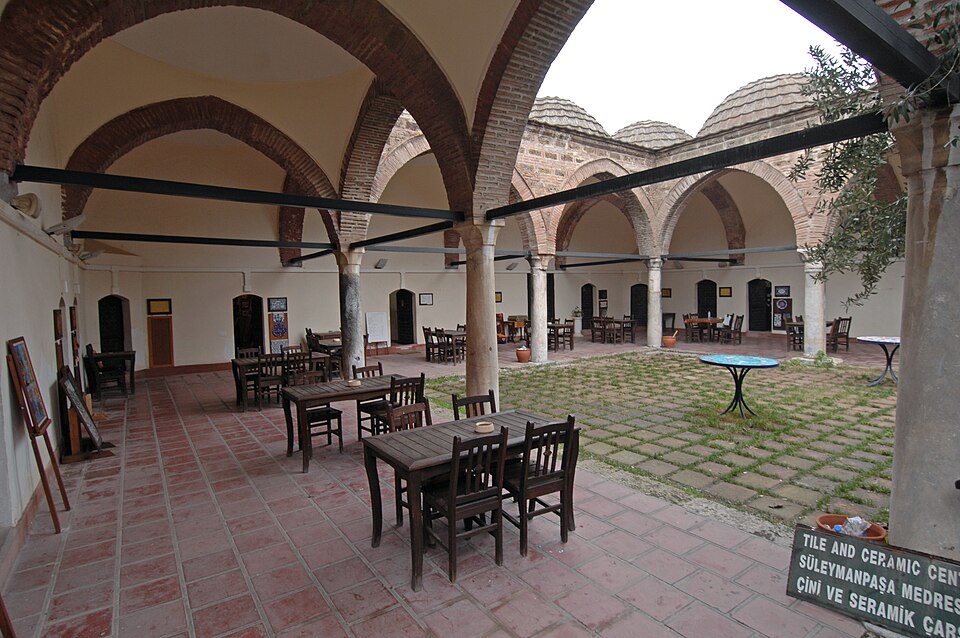
The judicial organization was divided into three regions: Rumelia, Anatolia and Egypt. Judges in Rumelia were under the military judge of Rumelia, those in Anatolia and Egypt under the military judge of Anatolia. The kazaskers were members of the Imperial Council (Divan-ı Hümayun); there the grand vizier handled customary law while the kazaskers dealt with cases under the sacred law, and on certain days of the week they also held court in their own mansions. The privileged groups known as “askeri” could ask for their cases to be heard by the kazasker rather than an ordinary judge. The kazaskers recorded the appointments, dismissals, transfers and promotions of judges and professors in registers called ruznamçe, and accompanied the sultan on campaign.
A candidate who had completed the madrasa (danişmend) applied to a kazasker’s office and entered the mülazemet, after which he was appointed to one of the lowest-ranking districts. Judges were appointed by a sultan’s diploma (berat), as a rule for two years (müddet-i örfiyye), after which they returned to the capital to await a post of higher rank; holding court without a berat was considered unlawful. District judges usually received 300 akçe a day, while sandjak judges of mevleviyet rank earned more. In ascending order the mevleviyet ranks were the devriye (Maraş, Baghdad, Sofia, Belgrade, Antep, Konya), the mahreç (Jerusalem, Aleppo, Izmir, Galata, Thessaloniki, Eyüp), the bilad-ı hamse or “five cities” (Bursa, Damascus, Cairo, Edirne and, added later, Plovdiv) and the Haremeyn (Mecca and Medina), followed by the judgeship of Istanbul and finally the military judgeships. From the 17th century appointments in the ilmiye increasingly passed to the şeyhülislam.

The judge’s duties in the provinces
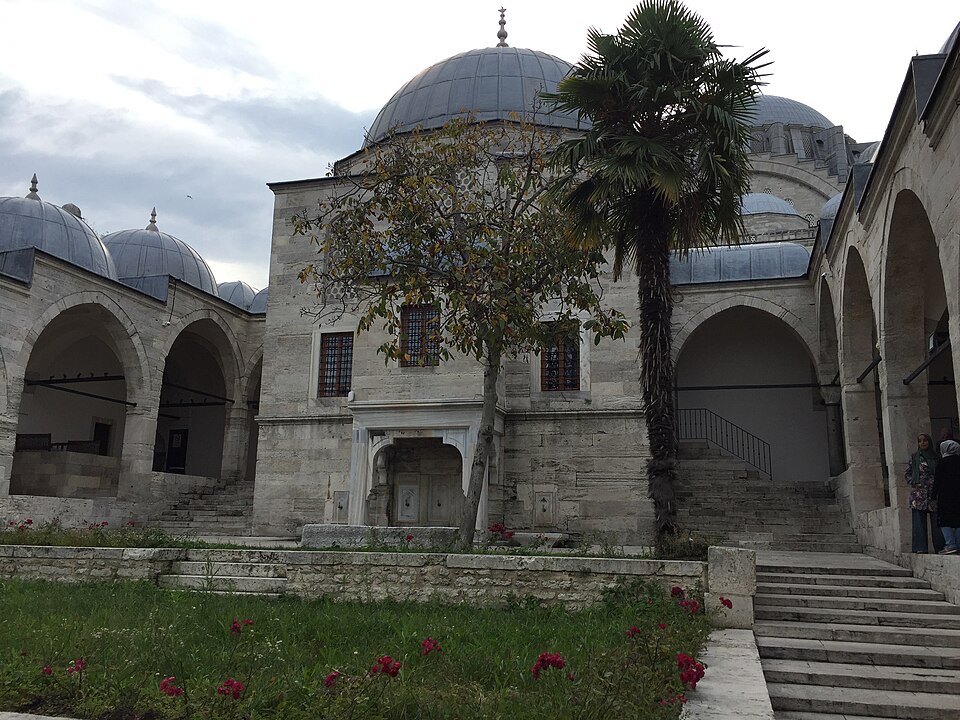
The Ottoman kadı was not merely a magistrate sitting in his court but an administrator with wide duties covering civil, municipal, financial, military and judicial matters. He was responsible for repairing bridges and fountains along campaign routes, provisioning the army, collecting the extraordinary avarız taxes, supplying oarsmen and pack animals, sending provisions to Istanbul, fixing official prices (narh) and supervising markets. He oversaw the administrators of endowments, madrasas and dervish lodges; searches and arrests could only be made on his order, so that he also carried out the work of today’s prosecutor and examining magistrate. Over large areas he worked through deputies (naib); the term nahiye derives from the districts of these deputies’ courts. His main assistants were the estate divider (kassam), the court usher (muhzır), the registry clerks, the market inspector (muhtesip), the subaşı, the night watch chief (asesbaşı) and the fortress wardens (dizdar).
In the provinces the judge, the treasurer (defterdar) and the governor-general or sandjak governor were conceived as three elements balancing one another. The kadı was not only an official of the central government but also the people’s spokesman before the state, forwarding to the capital requests such as moving a market. The court registers (şer’iyye sicilleri) contained case records, endowment deeds, estate divisions, price lists and incoming decrees, serving at the same time as the city’s commercial records and notarial archive; the oldest to survive are those of Bursa from the second half of the 15th century. Even in remote places where Ottoman rule was weak, such as Kuwait, there was always a judge; for centuries the kadı was a symbol of sovereignty.
Decline, reform and end
From the mid-16th century the number of madrasa graduates grew, but the number of posts did not keep pace. The state sought remedies by granting honorary ranks (paye), distributing posts for short terms and creating new positions. In the 1540s Taşköprizade wrote that the level of learning had fallen; Gelibolulu Ali Mustafa Efendi complained of favouritism and bribery, Koçi Bey of frequent dismissals, and Katib Çelebi of the removal of philosophy and the rational sciences from the madrasas. In 1667 the judgeships of Rumelia were reorganized according to revenue; in the 18th century Ahmed III, Mahmud I and Selim III issued reform decrees. In this period of weakening central authority, judges left on their own had to come to terms with the local notables (ayan).
Under Mahmud II, the abolition of the Janissary corps in 1826 and the creation of the Ministry of Market Regulation (Ihtisap Nezareti) and the Ministry of Endowments (Evkaf Nezareti) stripped the judge of his policing, municipal and endowment-supervision duties, while the transfer of endowment revenues to the state budget weakened the madrasas. Laws adapted from French legislation and the new secular (nizamiye) courts confined the religious courts to cases such as marriage, inheritance, divorce and debt. The ilmiye tried to adapt: the Muallimhane-i Nüvvab was opened in 1854, and the Law on Judges of 1914 made graduation from it a requirement; in the same year the courts of the military judges of Rumelia and Anatolia were merged into one. With the abolition of the religious courts on 9 April 1924 and the subsequent Law on the Unification of Education, the judgeship and madrasa education came to an end as institutions.
Related sultans
Cite as: Atlas of the Sultans, “The Learned Hierarchy and the Judgeship · State organisation”, https://padisahlaratlasi.com/en/ottoman-state-organisation/the-learned-hierarchy-and-the-judgeship/ (last updated 21 November 2026). Corrections · Image credits