TRENDEFRARAtlas of the Sultans · State organisation
The Nişancı and the Scribal Service (Kalemiye)
Institution · Ottoman bureaucracy · 14th–19th centuries

The nişancı and his origins
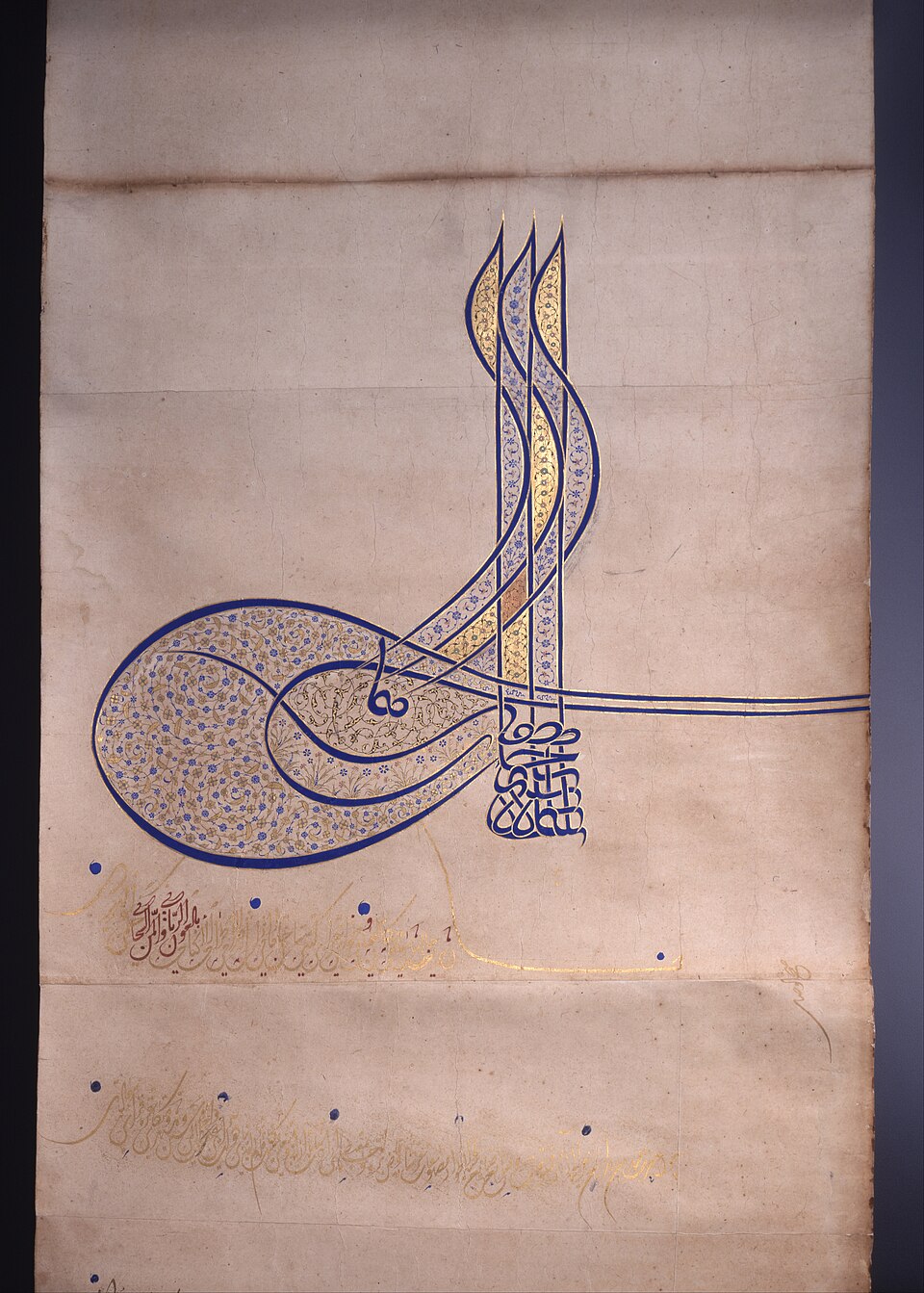
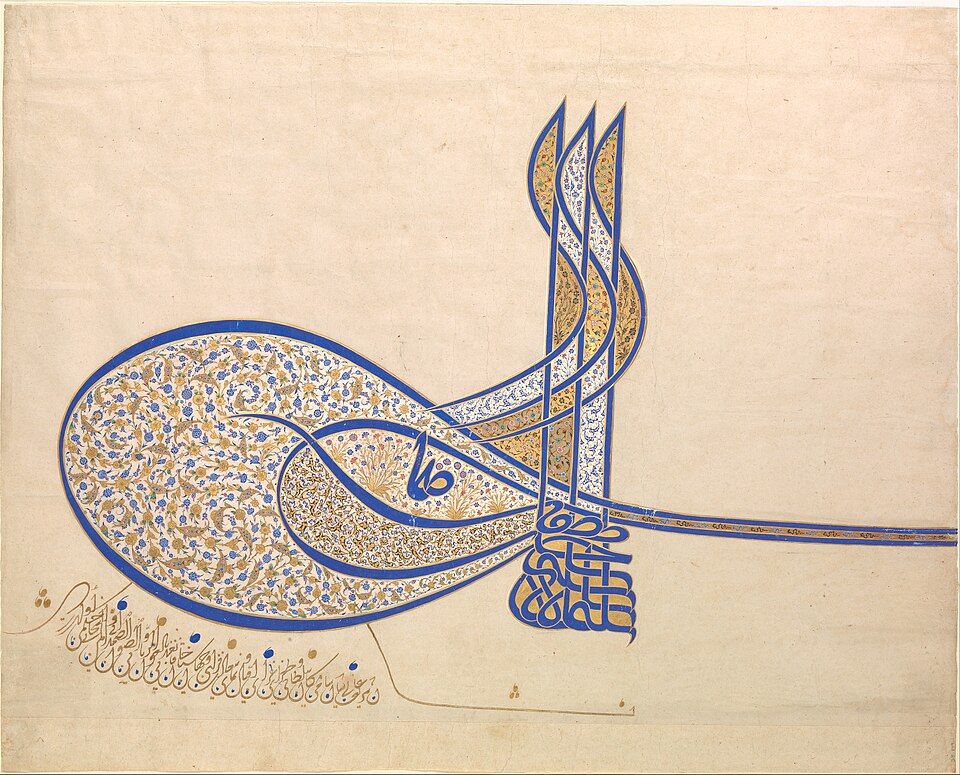
Nişancı is a title derived from the Persian word nişan, “a mark placed to identify something”, and denotes the high-ranking official in the Ottoman central government, a member of the Imperial Council (Divan-ı Hümayun), who drew the sultan's monogram (tuğra) on documents. The sources also call him tuğrai, tuğrakeş-i ahkam, muvakki and tevkii. Similar duties were performed among the Great and Anatolian Seljuks by the tuğrai, among the Mamluks by the katib al-sirr, and among the Ilkhanids by the uluğ bitigçi.
When the office emerged is unknown. Since the timar system goes back to the reign of Orhan Bey, an official handling timar business may well have existed then; documents surviving from Orhan's time point to a body of scribes skilled in chancery practice and to a central office organising them, and they also bear Orhan's tuğra. In a history translated under Murad II by the sultan's order, the Arabic word muvakki was rendered as “nişancı”, showing that the term was in use by the early 15th century.
The three pillars of the bureaucracy
In the early period a small staff of scribes under the nişancı is thought to have handled administrative and financial business as well as timars. Probably from the reign of Bayezid I, the nişancı transferred part of his powers to the council scribes. As the state grew, the treasury (defterdarlık) was established as a separate institution for financial affairs in the early 15th century, and under Mehmed II (1451–1481) the Defterhane-i Amire, which kept the timar records, was founded as the third pillar of the bureaucracy. The fact that Mehmed II's law code regulates the nişancı's duties, appointment and income shows that the office was by then fully organised as a bureau. According to Mehmed II's law code, the post of nişancı was the highest office in the central administration after those of vizier, kazasker and chief treasurer.
Until the early 16th century nişancıs were chosen not from professional bureaucrats but from members of the ulema with a strong command of chancery style (inşa). As specialisation grew within the scribal service, they came increasingly to be appointed from professional bureaucrats. Because nişancıs and treasurers were regarded as trustworthy, unlike other dignitaries they received no patent of office and were appointed solely on the sultan's oral order. Gelibolulu Mustafa Ali writes that a future nişancı had to be learned enough to translate letters arriving from the rulers of Iran and Bukhara.
Monogram, law and registers
The nişancı's chief task was to draw the sultan's tuğra on documents such as decrees (ferman), letters (name), capitulations (ahidname) and patents (berat); when his workload in the council grew, the most junior dome vizier helped him. Until the early 18th century, as officials who knew the state's laws well and could propose new ones, nişancıs were also called “mufti of the kanun”, and questions about the laws of organisation and ceremonial were referred to them. According to Mustafa Ali, just as the şeyhülislam issued fatwas on sharia, the nişancı had the last word on customary (örfi) law.
Nişancıs played a major part in codification: Karamani Mehmed Pasha, who rose from nişancı to grand vizier, in the preparation of Mehmed II's law code; Koca Nişancı Celalzade Mustafa Çelebi under Suleiman the Magnificent; and Tevkii Abdurrahman Pasha in the second half of the 17th century. The nişancı also held the authority to correct the survey registers (tahrir defterleri) on which the tax and military system rested; this was called “correction by the nişancı's pen”, and this control lasted until the empire's final period. Until the late 16th century nişancıs were also required to accompany campaigns in which the sultan took part. The nişancıs' main income came from the revenue grants (has) they held: at the beginning of the 16th century these were worth 180,000 akçes, raised to 300,000 for Celalzade Mustafa on account of his merit; the law code of the second half of the 17th century states that they were to exceed 400,000 akçes.

The scribal service and the reisülküttap
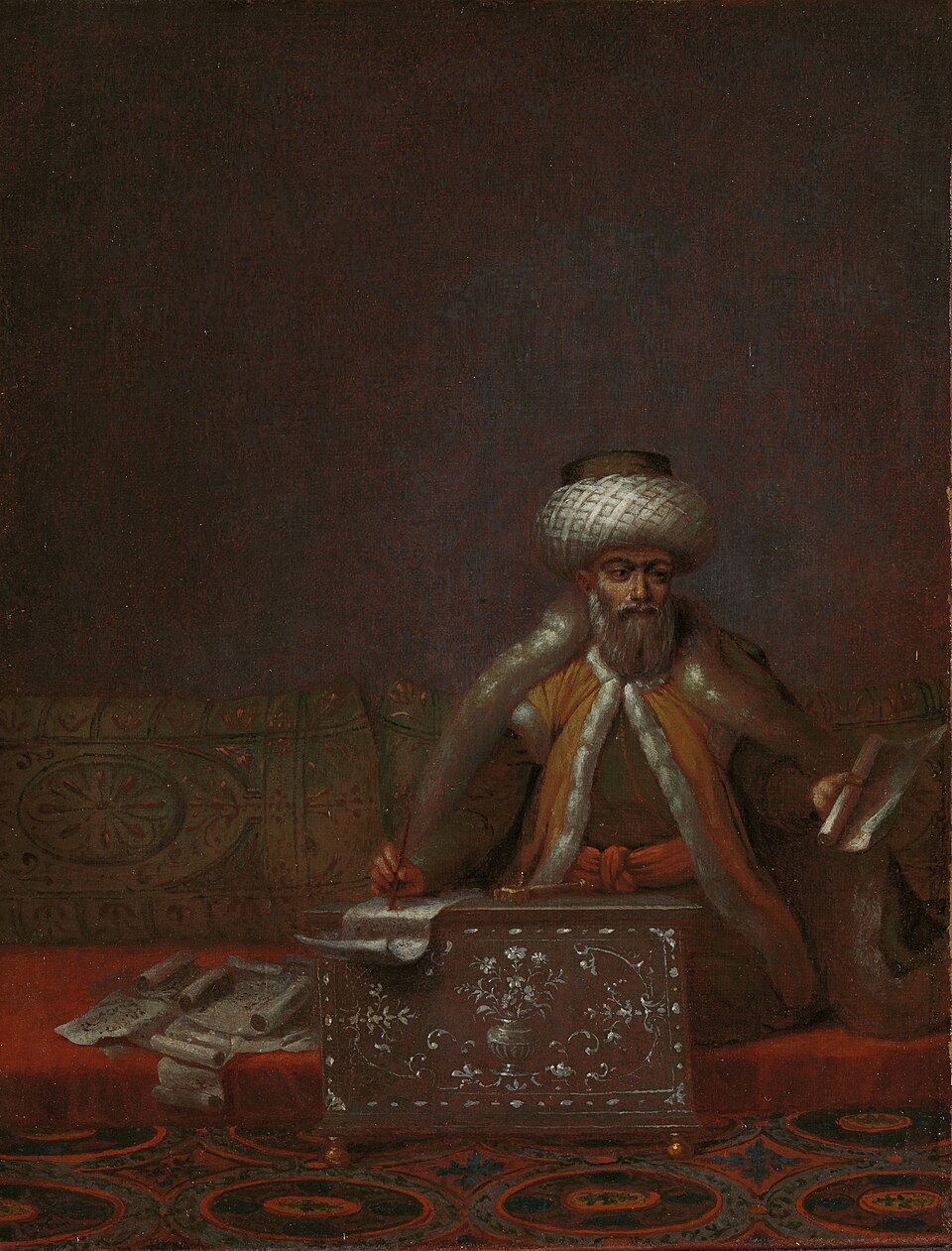
The Ottoman ruling elite was known as the men of the sword (seyfiye), the ulema (ilmiye), the scribal service (kalemiye) and finally the civil administration (mülkiye). While the ulema were trained in the madrasa and the military men in the Acemi Oğlanları and Enderun schools, there was no specific school for the scribes. Scribes were trained through a master-apprentice relationship: boys entering the bureaux as apprentices (şakird) at about twelve to fourteen learned scripts such as divani and rika and the art of stylish composition (inşa) from masters called hace, often also taking Arabic and Persian lessons outside office hours.
The Imperial Council scribes and the reisülküttap worked under the nişancı. The reisülküttap was chief of the council chanceries, made up of the beylik, tahvil and ruus offices; he prepared the council's agenda and had the grand vizier's reports to the sultan drafted. From the mid-17th century, as the centre of government moved to the Paşakapısı, part of this staff was transferred there and the reisülküttap replaced the nişancı as the de facto head of the bureaucracy. After the Treaty of Karlowitz (1699) the number of grand viziers from the scribal service grew; Reisülküttap Rami Mehmed Efendi, architect of the treaty, became grand vizier in 1703.
 AI

Decline and abolition
In the 18th century, with the system of annual appointments (şevval tevcihatı), the post of nişancı joined the offices of hacegan rank; the three treasurerships, the nişancı, the reisülküttap and the defter emini were called the “six offices” (menasıb-ı sitte). Whereas earlier a nişancı could rise to grand vizier, governor-general or district governor, from this century transfers to lower-ranking posts occurred. Nevertheless, as an ancient office it kept its place in protocol, and the reisülküttap, though de facto head of the bureaucracy, ranked below it.
After the office was abolished in 1836, drawing the tuğra was entrusted to the defter emini; tuğra-drawers appointed by the Porte for important decrees, and by the defter emini for others, began doing the work. According to the TDV article, it is unclear whether the office was abolished entirely or merely stripped of its tuğra duties: until 1908 corrections in the survey registers still appear under the nişancı's “tevki” signature. The reisülküttap's office, for its part, became the Ministry of Foreign Affairs (Umur-ı Hariciyye) in 1835. Schools for the scribal service were opened, such as the Mekteb-i Maarif-i Adliyye in 1839 and the Mekteb-i Aklam in 1862.
Source: TDV Encyclopedia of Islam, “NİŞANCI” (Erhan Afyoncu)
Related sultans
Cite as: Atlas of the Sultans, “The Nişancı and the Scribal Service (Kalemiye) · State organisation”, https://padisahlaratlasi.com/en/ottoman-state-organisation/the-nisanci-and-the-scribal-service-kalemiye/ (last updated 21 November 2026). Corrections · Image credits