TRENDEFRARAtlas of the Sultans · State organisation
The Kapıkulu corps
Institution · Organisation of the Ottoman central army · 14th century–1826
 AI

Origins
Kapıkulu (“servants of the Porte”) was the general name for the salaried military groups directly attached to the Ottoman sultan; it corresponds to the household troops of other Islamic states. In states such as the Karakhanids, Ghaznavids, Seljuks and Ayyubids, household troops were usually drawn from prisoners of war or slaves. Among the Ottomans they were first chosen from prisoners taken under the pencik law and later from the children of non-Muslim subjects collected under the devshirme. Also called the “body of servants” (kul taifesi), these units were stationed mainly in the capital and on campaign guarded the sultan and his imperial tent.
The founding date of the Janissary Corps is not known for certain. It is commonly repeated that under Orhan Bey prisoners of war were used because of new conquests, that they numbered about 1,000, and that the Novice Corps (Acemi Ocağı) was founded at Gallipoli under Murad I. The influence of the palace troops grew with the centralising policy of Bayezid I, but the defeat at Ankara in 1402 cut the process short. Mehmed I and Murad II balanced the servants against the timar-holding cavalry; under Mehmed II the servant system took root and the Kapıkulu became the main pillar of central authority.
Infantry and cavalry corps
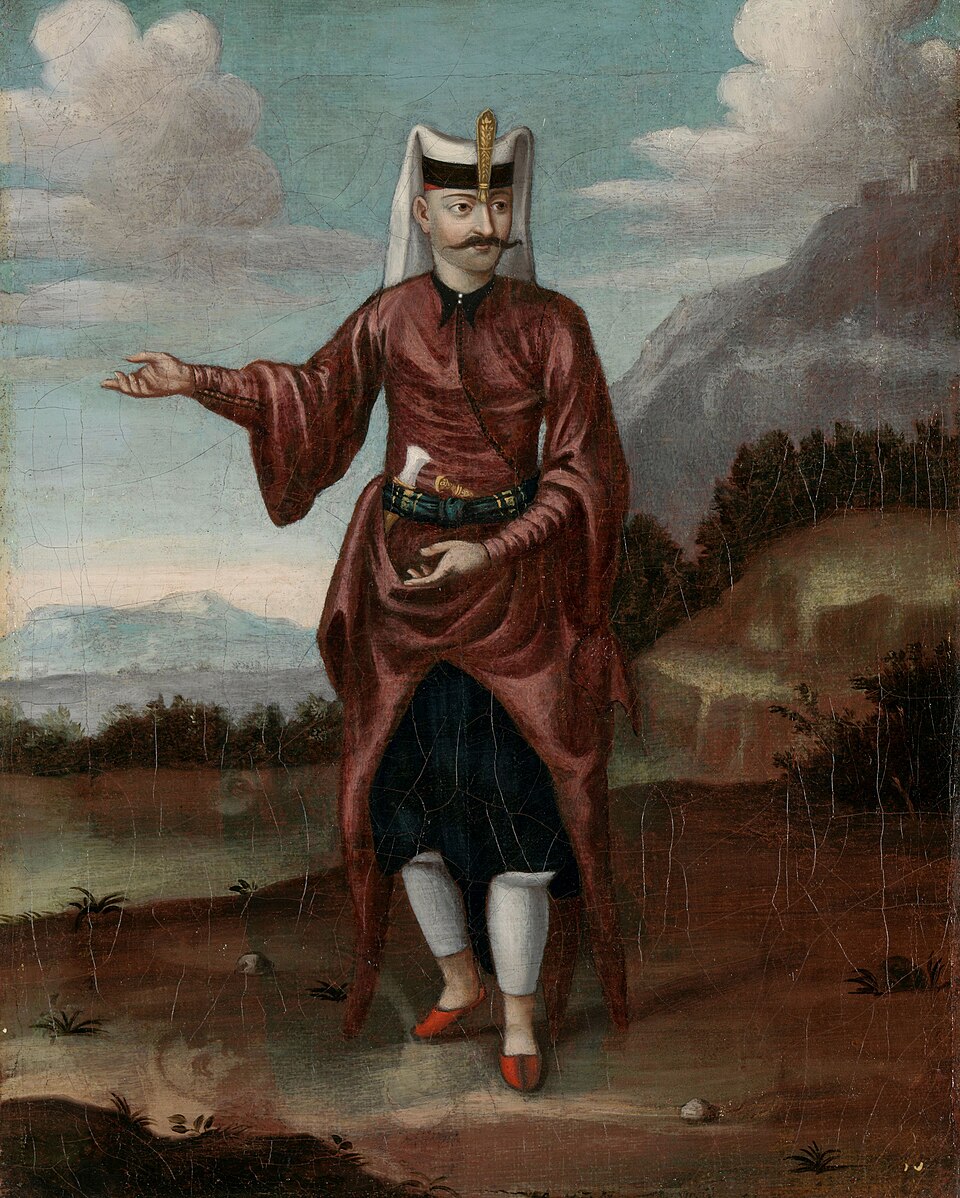
The Kapıkulu troops were divided into infantry and cavalry. The infantry comprised the novice, Janissary, armourer (cebeci), artillery, gun-carriage, bombardier (humbaracı) and sapper (lağımcı) corps, though some sources list them differently. The Novice Corps trained soldiers for the other corps, above all the Janissaries. Armourers supplied and kept the Janissaries' weapons, gunners cast and fired cannon, and the gun-carriage corps built the wagons that moved heavy guns; their workshops were at Tophane and their barracks at Şehremini. The bombardiers, who made and used hand grenades, became a separate corps after the conquest of Istanbul, while sappers dug tunnels under besieged fortresses.
The cavalry corps consisted of the sipahi, silahdar, right and left ulufeci and right and left garib divisions, called the “six divisions” (altı bölük) to distinguish them from the timariot cavalry. The first mounted unit formed was the silahdar division; the sipahi division was founded under Mehmed II. The sipahis and silahdars were the “upper divisions”, the ulufecis the “middle divisions” and the garibs (gureba) the “lower divisions”. Palace guards and gardeners such as the baltacı, bostancı and gatekeepers were also counted as Kapıkulu. A soldier who entered state service as a Kapıkulu could, if able, rise as high as the grand vizierate.
 AI

Internal order of the Janissary Corps
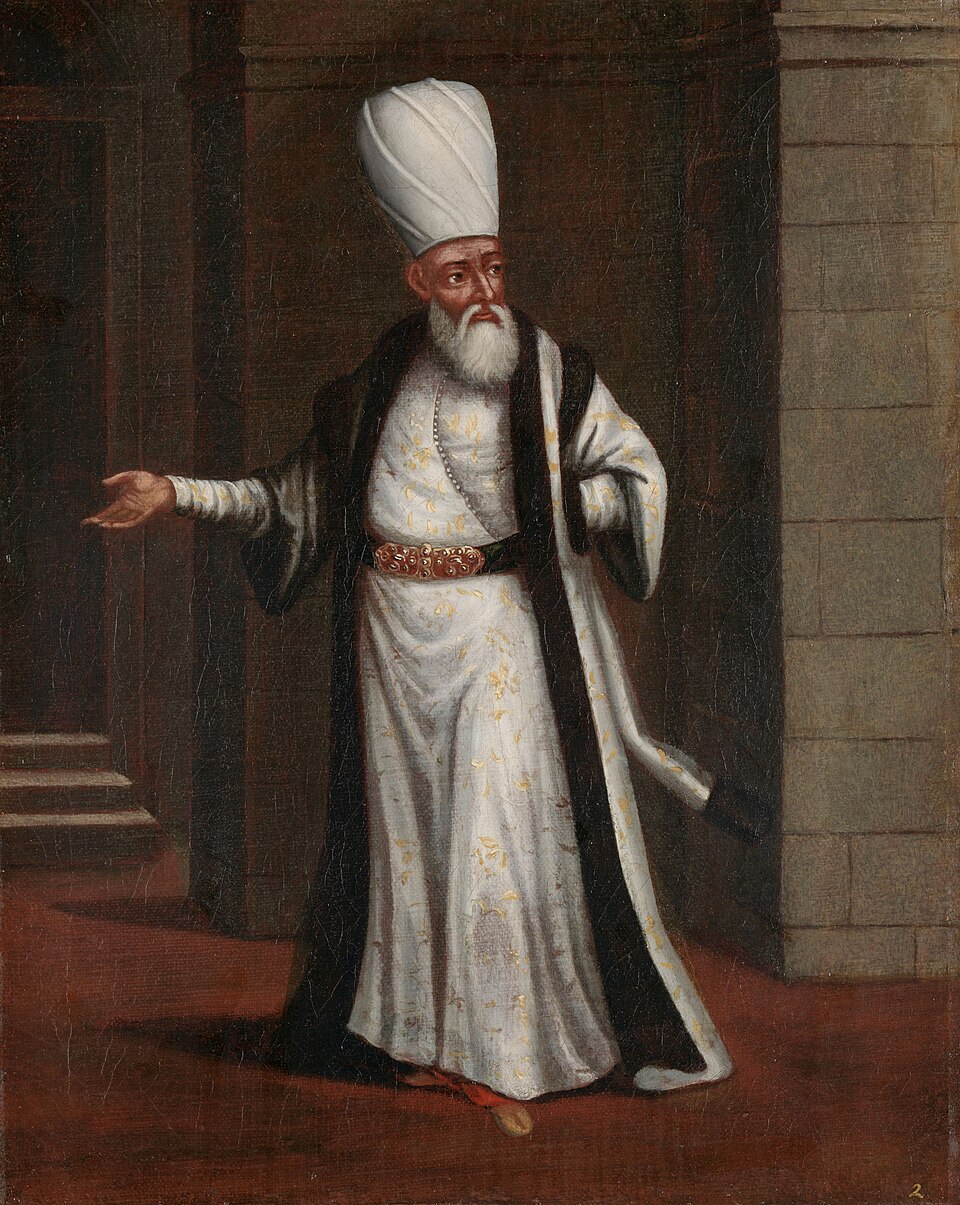
Administratively and judicially autonomous, the Janissary Corps was run by the agha of the Janissaries, and all disciplinary power was concentrated in the agha's council (ağa divanı); civil authority, including the sultan, could act on Janissaries only through the agha. Early aghas were appointed from the sekbanbaşı. In 1515 Selim I executed the agha Balyemez Osman and brought Yakub Agha from the palace; thereafter appointments followed a fixed order among the senior “line aghas” (katar ağaları) such as the kul kethüdası, zağarcıbaşı, saksoncubaşı and turnacıbaşı. According to the law code the agha received 500 akçe a day as well as a fief (zeamet) and other revenues. The Janissary scribe, head of the office keeping the corps' pay and muster rolls, also sat on the agha's council.
Janissary battalions were called orta and their commanders usually çorbacı (“soup-maker”). The number of ortas rose to 165 under Suleiman I and finally settled at 196, grouped in three branches: the cemaat, formed early in Mehmed II's reign and reaching 101 ortas; the sekban, created to keep the palace hunting dogs and joined to the corps by Mehmed II, with 34 ortas; and the agha's divisions (ağa bölükleri), formed from the reign of Bayezid II and reaching 61 ortas. A barrack room first held sixty to seventy men, later 100. In Istanbul there were two barracks, the Old and New Rooms; the Middle Mosque at their centre served for worship and assembly. An orta fund built from deductions on pay lent money to members as a mutual aid fund.
Pay, muster rolls and numbers
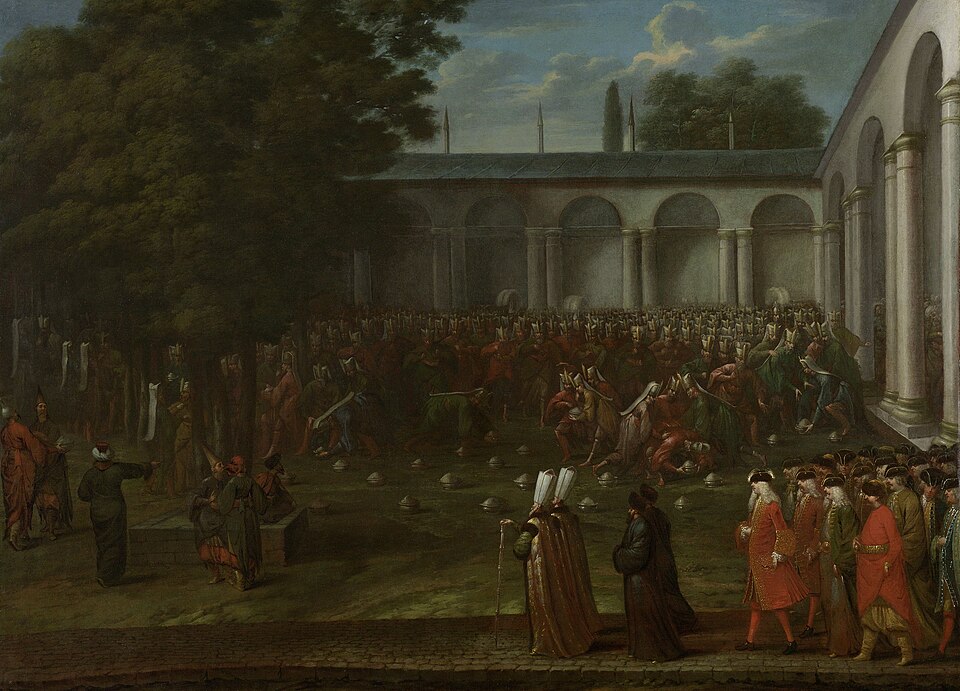
The regular pay of Kapıkulu soldiers was called ulufe and was paid every three months, in four instalments a year. It was distributed with great ceremony in the second court of Topkapı Palace at “victory councils” (galebe divanı), often timed to coincide with the reception of an envoy. A Janissary's daily pay was 2 akçe under Murad II and 7 under Murad III; it has been calculated that price rises would have required at least 20. Janissary numbers doubled from about 5,000 during Mehmed II's reign, reached 12–13,000 under Suleiman I and 25,000 in 1595. Payments made to 7,886 men in 1526 covered 53,849 men in 1660, and spending rose from just over 15 million to just over 133 million akçe.
The registers listing soldiers' names and pay, and the pay certificate each man held, were called esame. In time esames were bought and sold, and many people with no military role tried to enrol in the corps for its tax and legal privileges. The Janissaries' turn to trade began in the late 16th century; according to the surety registers of 1791–1793, about 40 per cent of the shops in Istanbul were connected with Janissaries. In 1826 the British envoy Canning reported that of 70,000 Janissaries in Istanbul, 40,000 merely held esames and 30,000 were real Janissaries.
 AI

Political role and abolition
The Kapıkulu became a decisive force in successions: Bayezid II and Selim I came to the throne with their support. When sultans stopped leading campaigns after Suleiman I, from the reign of Murad III the troops began to march under the command of generals (serdar). Demands for pay rises and accession bonuses turned into revolts from the Buçuktepe incident of 1446; in 1622 Osman II was deposed and killed, and the troops were again prominent in the Edirne Incident of 1703 and the Patrona Halil revolt of 1730. The New Order (Nizam-ı Cedid) army founded by Selim III was dissolved under Janissary threat, and two sultans lost their lives in the revolts of 1807 and 1808.
After long preparation, Mahmud II decided in 1826 to enrol trained eşkinci soldiers. When the Janissaries overturned their cauldrons at Etmeydanı in June 1826, the sultan brought out the Holy Banner; with gunners, bombardiers, sappers, madrasa students and townspeople, the barracks were set ablaze by artillery fire. A decree read on 17 June 1826 abolished the Janissary Corps and created in its place the Victorious Soldiers of Muhammad (Asakir-i Mansure-i Muhammediye); the office of agha was replaced by that of serasker. Casualties in the event, known as the “Auspicious Incident” (Vaka-i Hayriyye), are disputed: official records speak of about 6,000 dead, while Kemal Beydilli considers a total of around 2–3,000 the most realistic estimate. The other Kapıkulu corps were either abolished or reorganised under new laws. The corps' last agha, Mehmed Celaleddin Agha, lived until 1863.
Related sultans
Cite as: Atlas of the Sultans, “The Kapıkulu corps · State organisation”, https://padisahlaratlasi.com/en/ottoman-state-organisation/the-kapikulu-corps/ (last updated 21 November 2026). Corrections · Image credits