TRENDEFRARAtlas of the Sultans · State organisation
The Enderun and the palace organisation
Institution · The palace school and the order of Topkapı · 15th–19th centuries

Foundation and purpose
From the mid-15th century the Enderun (“Inner Palace”) was, after the madrasa, the most important official educational institution of the Ottoman state. This palace school, which trained mainly civil and military administrators, was founded to supply the manpower needed by the central and provincial bureaucracy. There are two views on whether it was opened under Murad II or Mehmed II; according to the TDV article it was formed in the Edirne Palace under Murad II and received its real organisation under Mehmed II.
Its main aim was to train able commanders and solid cadres to govern peoples of different religions, languages and cultures; culture and discipline, not race or blood, were therefore the guiding principles. Candidates were mostly boys collected through the devshirme. They first learned Turkish and Islamic manners with Muslim Turkish families, then trained as “novice boys” (acemi oğlanı) in the Edirne, Galatasaray and Ibrahim Pasha palaces. After this preparation they were assigned to various military units by “graduation” (çıkma), while the most gifted were taken into the Enderun.
The layout of Topkapı Palace
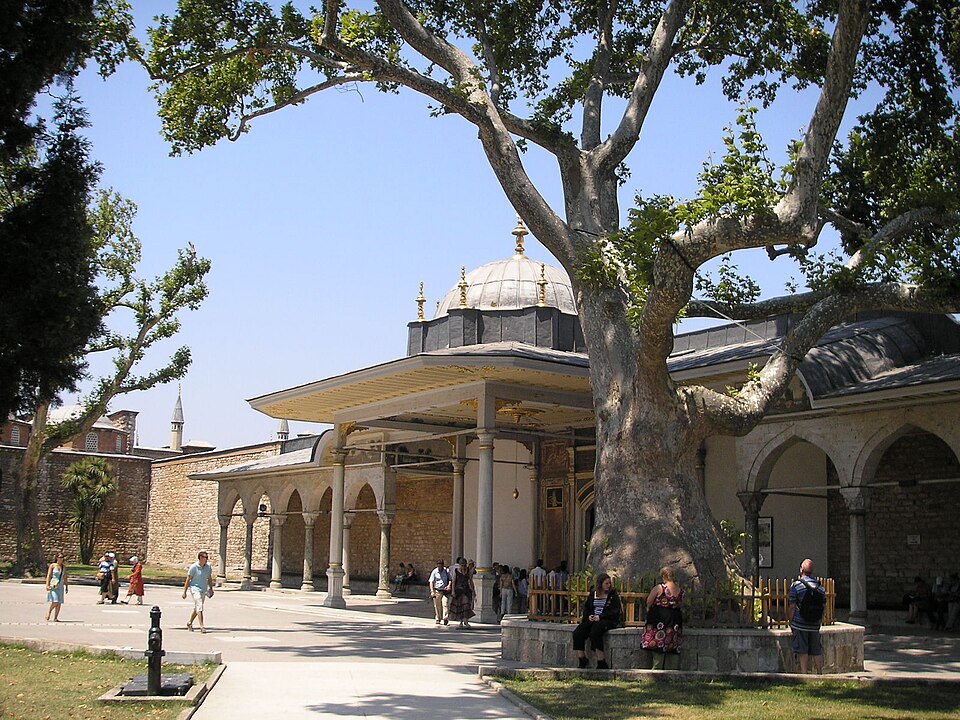
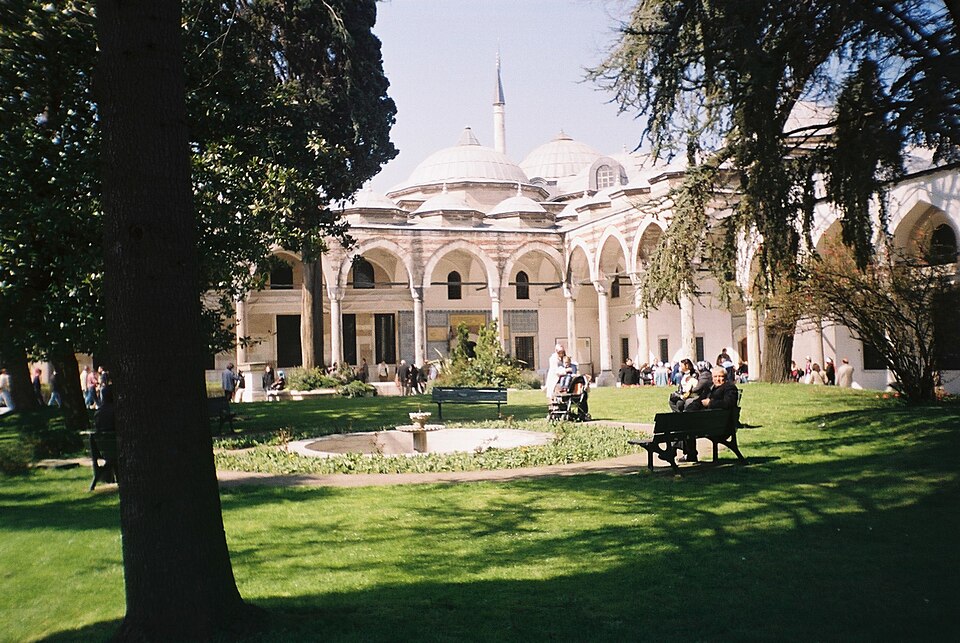
Built on Seraglio Point after the conquest of Istanbul, Topkapı Palace was probably begun in 1465; the inscription on its main gate, the Imperial Gate (Bab-ı Hümayun), bears the date 1478. Long known as the New Palace (Saray-ı Cedid-i Amire), it was organisationally divided into four parts: the service and guard area (Birun), the administrative centre of the Imperial Council (Divan-ı Hümayun), the school (Enderun) and the private quarters (Harem). The palace was arranged around three courtyards and three monumental gates: the Imperial Gate, the Gate of Salutation (Babüsselam) and the Gate of Felicity (Babüssaade). The first court, open to the public and soldiers, held the hospital, the bakeries and Hagia Eirene, used as an arsenal.
The Parade Square between the Gate of Salutation and the Gate of Felicity was the administrative heart of the state. Here stood the Council Hall (Kubbealtı), built under Mehmed II and renovated by Suleiman I's grand vizier Ibrahim Pasha; the council met on average four days a week, and the sultan could follow its sessions, if he wished, from the latticed window of the Tower of Justice. The kitchens, rebuilt by the architect Sinan after the fire of 1574, could prepare meals for 1,500–3,000 people a day. In the Audience Chamber (Arz Odası) just behind the Gate of Felicity, statesmen met the sultan in order of protocol, a practice called “entering the audience”. A register of 1478 lists some 726 staff; with the Harem and the sultan's personal attendants, the palace household probably exceeded 1,500.

The seven chambers
Education in the Enderun was built on seven grades. The first two were the Great and Small Chambers, where youths of about fifteen who had excelled in the novice school studied Islamic religion and culture, Turkish, Arabic and Persian, and practised wrestling, running and archery. The Great Chamber had 100 places and the Small Chamber sixty, reaching 258 in total in the 17th century; these chambers are said to have been abolished in 1675. The Falconers' Ward, where about forty youths trained, was closed under Mehmed IV. The Campaign Ward (Seferli Koğuşu), founded by Murad IV in 1635, trained musicians, singers, wrestlers and barbers; many poets and musicians came from it.
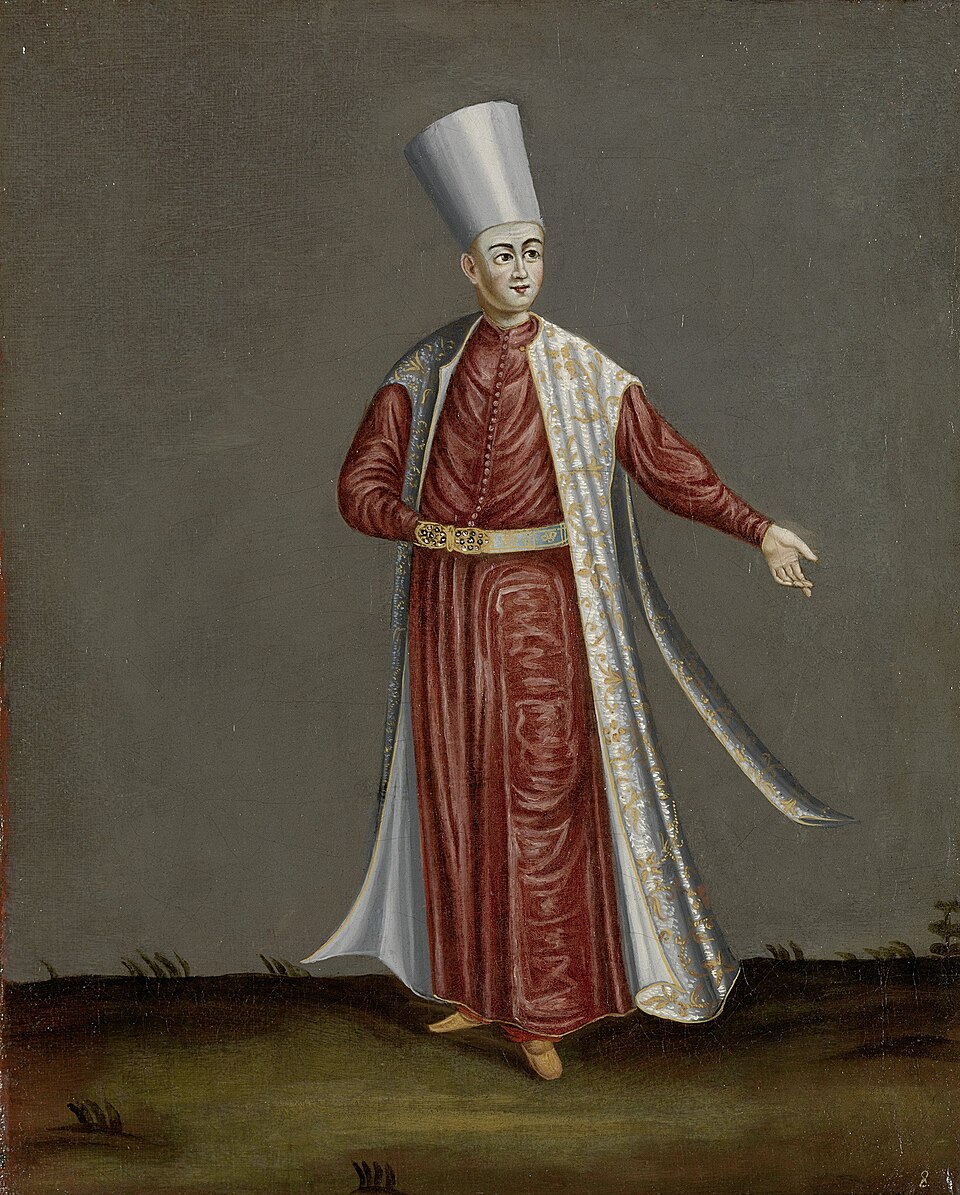
The upper grades were three wards founded by Mehmed II. The Pantry Ward, about thirty strong, prepared food and drink for the sultan and the Harem. The head of the Treasury Ward, the hazinedarbaşı, led some 2,000 palace craftsmen (ehl-i hiref) and was responsible for the palace treasury. The highest grade, the Privy Chamber (Has Oda), had about forty members; its chief officers were the head of the chamber, the sword-bearer (silahdar), the valet (çuhadar) and the stirrup-holder (rikabdar). After the Holy Relics were brought to the palace under Selim I, the Privy Chamber became better known as the Chamber of the Holy Mantle (Hırka-i Saadet Dairesi), and guarding it became its members' chief duty.
 AI

Training and the çıkma system
Judging by its working order, the Enderun was less a school than a course and apprenticeship where skills, arts and administrative knowledge were taught in practice. One of its key principles was “graduation” (çıkma): developed under Suleiman I, it sent those who failed to progress to various ranks of the army, so that only the very successful completed the training. Rules were strictly observed, but irregular promotions also occurred; Süleyman's appointment of Ibrahim, head of his Privy Chamber, as grand vizier is a well-known example. Discipline was harsh; the white eunuchs (akağa) punished the slightest fault with the bastinado, sleep deprivation or withheld meals.
The busy round of governors-general, judges, envoys and council members at Topkapı gave the Enderun youths wide experience. Viziers, governors-general and district governors serving in the capital and the provinces were mostly products of this institution. The Habsburg envoy Busbecq wrote that Westerners took pleasure in well-bred horses and dogs, the Turks in well-trained men. According to Mehmet Ipşirli, in the classical period, when merit and skill were the only way to rise, the Enderun became the state's most successful educational institution. The Harem, for its part, was under the chief black eunuch (Darüssaade ağası); after Mehmed III, when princes were no longer sent to govern provinces, they too lived in the part of the Harem called the Şimşirlik.
Decline and end
In the 17th century the admission of unqualified people through patronage and favouritism, the failure of training to meet new needs and the growing political power of the Kapıkulu troops undermined the institution's discipline and quality. Even so, the Enderun remained influential until the early 19th century; thereafter graduates of Western-style schools gained the upper hand in government.
After abolishing the Janissary Corps, Mahmud II also reshaped the palace: in 1831 he abolished the office of silahdar and turned the private secretariat into the chief secretariat of the Mabeyin, and two years later he created the Marshalate of the Mabeyin and reorganised the Enderun's chambers. The sultan left Topkapı, from which the state had been governed for centuries, and settled in the Beşiktaş waterfront palace; Dolmabahçe Palace, built by his son Abdulmejid, opened on 7 June 1856. Additions to Topkapı continued until the mid-19th century, the last pavilion being Abdulmejid's Mecidiye Kiosk; the Tiled Kiosk, one of the palace's earliest buildings, was turned into a museum around 1875.
Source: TDV Encyclopedia of Islam, “ENDERUN” (Mehmet Ipşirli); “TOPKAPI SARAYI” (Zeynep Tarım Ertuğ)
Related sultans
Cite as: Atlas of the Sultans, “The Enderun and the palace organisation · State organisation”, https://padisahlaratlasi.com/en/ottoman-state-organisation/the-enderun-and-the-palace-organisation/ (last updated 21 November 2026). Corrections · Image credits