TRENDEFRARAtlas of the Sultans · Ottoman capitals
Bursa
Capital · 1326–1402

From Prusa to the Ottoman siege
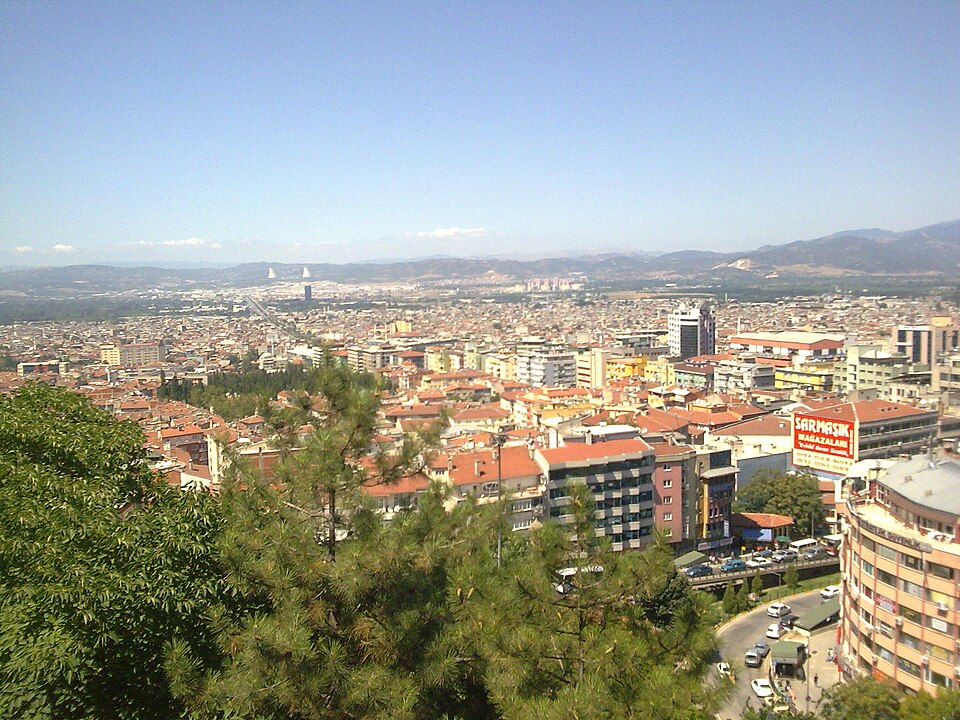
Bursa stands on sloping ground on the north-western foot of Uludağ, at the southern edge of the plain of the same name. Its ancient name was Prusa, from which today's name derives; the city is generally held to have been founded by Prusias, one of the kings of Bithynia, and to distinguish it from other cities called Prusa it was known as “Prusa ad Olympum” (Prusa on Olympus). After the break-up of the Roman Empire it became a city of the Eastern Roman (Byzantine) Empire. Süleyman Şah, son of Kutalmış, took Bursa in 1080, right after making Iznik his seat, but early in the 12th century the city returned to Byzantine hands and remained there until the Ottomans appeared in the region.
According to the Byzantine historian Pachymeres, Bursa was one of the three important fortress-cities still held by Byzantium in western Anatolia around 1300. Halil Inalcık's article on Bursa relates that Osman Bey besieged the city in 1308 after defeating its lord (tekfur), who had allied with other local lords to stop the Ottoman forces at the Dinboz pass. The siege failed, but the city was then squeezed by a policy of blockade. The article on Osman I notes that Bursa would remain under siege for twenty-three years.
Surrender and seat of the principality
After more than ten years without outside help, the starving and destitute inhabitants handed the city over to the Ottomans (6 April 1326). According to the article on Orhan, in the spring of 1326 Orhan came before Bursa with all his forces and called on it to surrender, and terms of capitulation were agreed with its lord. The Byzantine commander was allowed to leave for Constantinople; his chief adviser, who had arranged the surrender, entered Ottoman service, and the Metropolitan of Bursa was permitted to continue his office. The Greek population was moved from the citadel to the lower quarters, and for strategic reasons only Turks were settled in and around the citadel.
In the words of the Bursa article, the city “was made the centre of the Ottoman principality by Orhan Gazi.” Orhan struck his first silver coin (akçe) here in 1327. His contemporary, the Mamluk historian Ibn Fadlallah al-Umari, describes Orhan as a ruler residing in Bursa and possessing fifty towns and more than fifty castles. Orhan died in Bursa in March 1362; his tomb stands beside that of his father, Osman Gazi.
Palace, complexes and new quarters
Transformed by the conquest, the city received settlers from every direction. Orhan turned the monastery in the citadel into a mosque and built the Bey Palace on a spot overlooking the plain, known today as Tophane. In 1339–1340 a complex east of the citadel comprising a mosque, a public kitchen (imaret), a madrasa, a bath and caravanserais (Beyhanı, Emirhanı) became the city's new centre; the area is still a lively commercial district. Quarters such as Alaeddin Bey, Çoban Bey and Hoca Naib were founded at this time, and Ibn Battuta, who visited in 1333, describes a beautiful city with busy markets and wide streets.
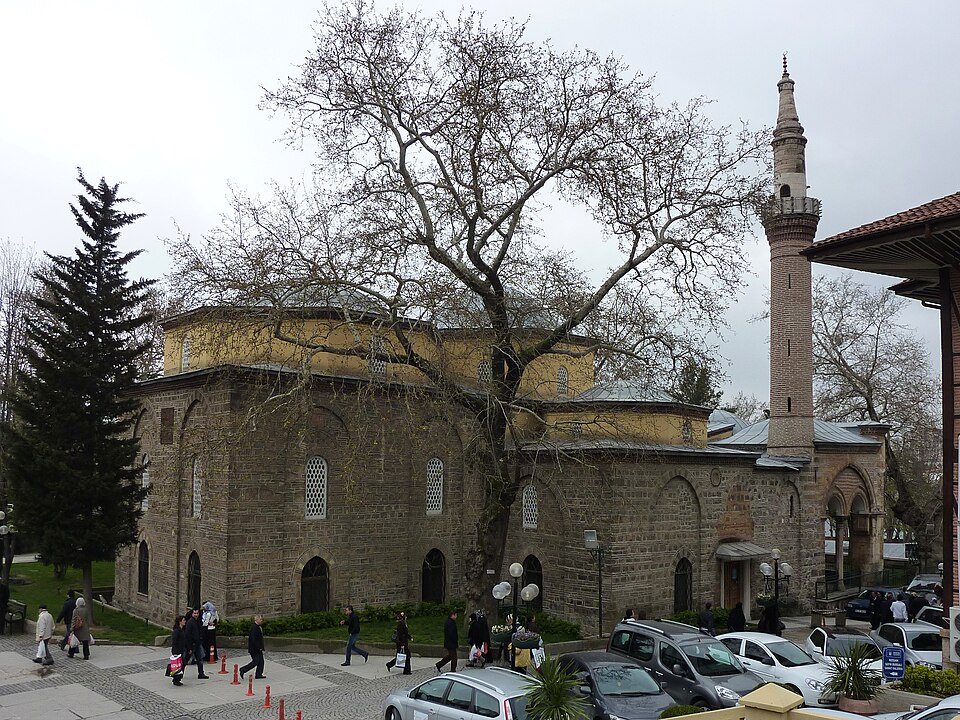
Later, the rich pious foundations (waqfs) of sultans, members of the dynasty and leading statesmen gave rise to new quarters such as Yıldırım, Emir Sultan and Yeşil. Murad I built the Hüdavendigar Mosque and Complex, as well as a mosque beside the palace in the citadel. The city's greatest growth came under Bayezid I, when the Great Mosque (Ulucami) was built in 1399–1400. The traveller Schiltberger reports eight public kitchens open to all the poor; although his figure for the number of houses is exaggerated, it is clear that Bursa was then one of the largest cities of western Anatolia.

At the end of the silk road
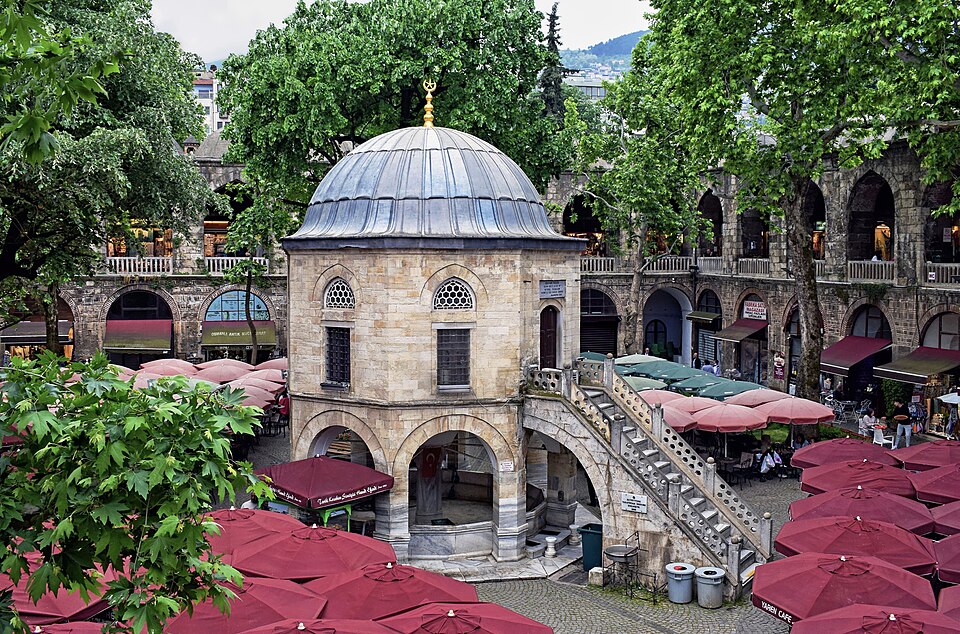
Under Ottoman rule Bursa developed into an international trading centre. According to Schiltberger, around 1400 it was the international centre of the silk trade and industry; the main silk route reached it via Tabriz, Erzurum and Tokat. Genoese, Venetian and Florentine merchants competed to buy silk, and in 1502 the city had more than a thousand looms. Spices, sugar, dyes and soap were also brought to Bursa from Syria and Egypt.
Population records show the city's growth: a court register from the reign of Mehmed II counts some 5,000 households, about 30,000 people; by 1487 there were 6,456 households (about 37,000 people), and according to the 1573 survey the population exceeded 60,000. Large inns were built, such as the Ipek Han under Mehmed I, the Mahmud Pasha Han and Koza Han under Mehmed II, and the Pirinç Han under Bayezid II.

1402 and the shift to Edirne
As Halil Inalcık states in the article on Istanbul, once a palace was built in Edirne in 1365–1368 by order of Murad I, Edirne became the state's centre in Rumelia and its second capital, while Bursa kept its status as the principal capital and seat of the sultanate (darüssaltana) until 1402. Timur's victory over the Ottomans in 1402 dealt a heavy blow to the city: his soldiers plundered and burned Bursa, destroying the official documents of the first Ottoman rulers and many books. According to the Bursa article, during Timur's invasion and the ensuing Interregnum (Fetret) Edirne replaced Bursa as the capital of the state.
Under Murad II, who was enthroned in Bursa, the city recovered quickly, and the endowments of leading statesmen created new quarters. Bertrandon de la Broquière, who saw it in 1432, calls it an important trading centre and “the most magnificent town of the Turks.” Before Mehmed the Conqueror made Istanbul his centre, Bursa had grown as Istanbul's rival, but the transfer of most of its inhabitants to the new capital ended that rivalry.
City of the dynasty's tombs
Bursa did not lose its importance when it ceased to be the capital. According to Inalcık, once Istanbul became the first capital, Edirne in Rumelia and Bursa in Anatolia were regarded as the state's second and third capitals, and sultans on campaign stayed in the palaces maintained there. The Bursa palace was used from time to time by visiting sultans until the 17th century. After the death of Mehmed II, Prince Cem proclaimed himself sultan here, struck coins and reigned for eighteen days.
The tombs of the first Ottoman rulers, from Osman Bey up to the Conqueror, are in Bursa. The Orhan Gazi Mosque and Complex, the Hüdavendigar Complex, the Great Mosque, the Yıldırım Bayezid Complex, the Green Mosque (Yeşilcami) and its complex, and Murad II's Muradiye Complex carry early Ottoman architecture into the present. In the Ottoman period Bursa was the seat of the sanjak of Hüdavendigar and, after 1832, of the province (eyalet) of Hüdavendigar; it was occupied by Greek forces on 8 July 1920 and retaken on 10–11 September 1922.
Related sultans
City: Bursa
Cite as: Atlas of the Sultans, “Bursa · Ottoman capitals”, https://padisahlaratlasi.com/en/ottoman-capitals/bursa/ (last updated 21 November 2026). Corrections · Image credits