TRENDEFRARAtlas of the Sultans · Ottoman capitals
Söğüt
Capital · The first centres · late 13th century–1326
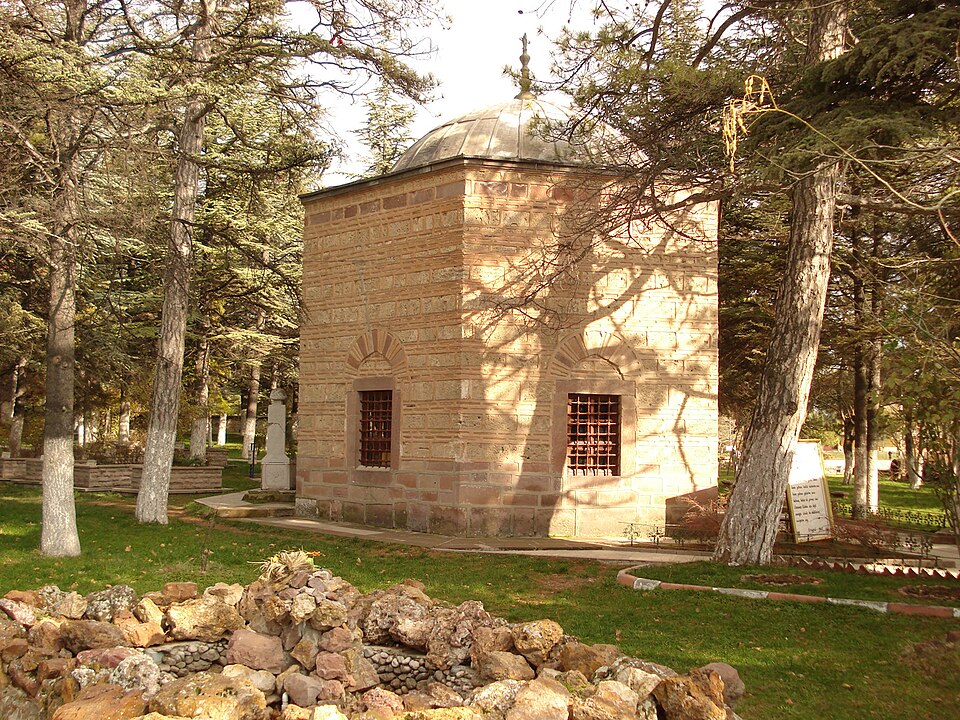

A valley south of the Sakarya
Söğüt lies south of the Sakarya River, at the mouth of a deep, narrow gorge (the Söğüt stream) ringed by hills, about 650 metres above sea level. Today a district centre in Bilecik province, the town stands off the main road between Bilecik and Eskişehir and is linked by secondary roads to Bozüyük in the south and to the settlements of the middle Sakarya valley in the east. The TDV Encyclopedia of Islam describes it as the town “known as the place where the Ottoman state was first founded”.
Its name probably comes from the willow (söğüt), a tree that grows along water; 15th- and 16th-century sources record the forms Bey Söğüdü, Söğüdlü, Söğüdcük and Söğütcük. The claim that it was an ancient settlement called Sagouados has never been proven. The area's history belongs to that of Bithynia, which also included Bilecik, but according to the article Söğüt must have emerged as a settlement in the second half of the 13th century, when the Ottoman principality was taking shape.
The homeland of Ertuğrul Gazi
According to a tradition shared by the early Ottoman chroniclers, Ertuğrul Gazi, chief of the Kayı tribe, impressed the Seljuk Sultan Alaeddin with his success at the siege of Karacahisar, and the sultan granted him the Söğüt valley as winter quarters and the Domaniç mountains as summer pasture. Another tradition says Ertuğrul came here while settling as a march lord (uç beyi) on the Seljuk frontier, fought the local Byzantine forces and took Bilecik.
Halil Inalcık's article on Osman I treats these stories with caution: the tradition about how and when Ertuğrul's tribe reached Söğüt is vague and contains false memories. Nevertheless, it appears that Ertuğrul was given a homeland at Söğüt, on the most advanced line of the frontier, with summer pastures at Domaniç. His people were settled at Söğüt, while the flocks were driven up to the Domaniç pastures in summer. According to the chronicler Neşri, the young Osman lived with his father at Söğüt.
Was Söğüt a capital?
The TDV articles do not present Söğüt as a capital with a palace and council, but as the frontier homeland where the principality was born. Inalcık writes that “Ertuğrul's centre was the town of Söğüt, on the most advanced line of the Sultanöyüğü march.” Ilhan Şahin's article likewise cites Ertuğrul Gazi's tomb, the lands endowed to the pious foundations of Şeyh Edebali and of Osman, Orhan and Murad Hüdavendigar, and the settlement of the Kayı tribe there in the 16th century as evidence of Söğüt's decisive early importance; on that basis it suggests that Söğüt first stood out as a frontier settlement and then as Osman Gazi's first administrative centre.
The same article stresses that the tax registers (tahrir) show the other side of the picture. In 1487 the village of Bey Söğüdü, seat of a sub-district (nahiye), had about fifty-five people in eleven households and was not yet a centre showing signs of urban life. By 1530 the population had risen to about a hundred, and in 1573 Söğüt still had village status. According to the article, these records show that in the early period Söğüt was essentially a village and a temporary winter settlement of nomadic groups. In short, Söğüt is remembered less as a true capital than as the principality's first homeland and first administrative centre.
Karacahisar, Bilecik and Yenişehir
According to Inalcık, two years after the raid on Kulaca, Osman took the fortress of Karacahisar from its lord, the second great Byzantine local ruler (tekfur) of the region, and made it the seat of his principality; by 1288 he had moved from the remote frontier town of Söğüt to a commanding centre near Eskişehir. Between 1288 and 1299 he eliminated the lords of Göynük, Gölpazarı, Bilecik, Yenişehir, Inegöl and Yarhisar and became master of the area stretching from Karacahisar to Bilecik and Yenişehir.
The article on Bilecik states that Yarhisar and Bilecik were taken in a surprise attack in 1299; Bilecik then became an important centre of the principality, Osman built a small mosque there, and Şeyh Edebali and his daughter, Osman's wife, lived there until their deaths. Inalcık writes that in 1299 Osman Gazi moved “his capital from Karacahisar to Bilecik and his frontier base to Yenişehir, near İznik.” Leaving his family at Bilecik, Osman settled at Yenişehir as a base for raids into Byzantine territory and turned all his efforts against Iznik.
The article on Orhan also calls Yenişehir the “capital” (payitaht): the tomb Orhan built there for the dervish Postinpuş Baba was turned into a splendid shrine by Murad I. According to the article on Murad I, the sultan came to the Yenişehir palace in the spring of 1387 and held great wedding festivities there that summer.
Iznik in the early period
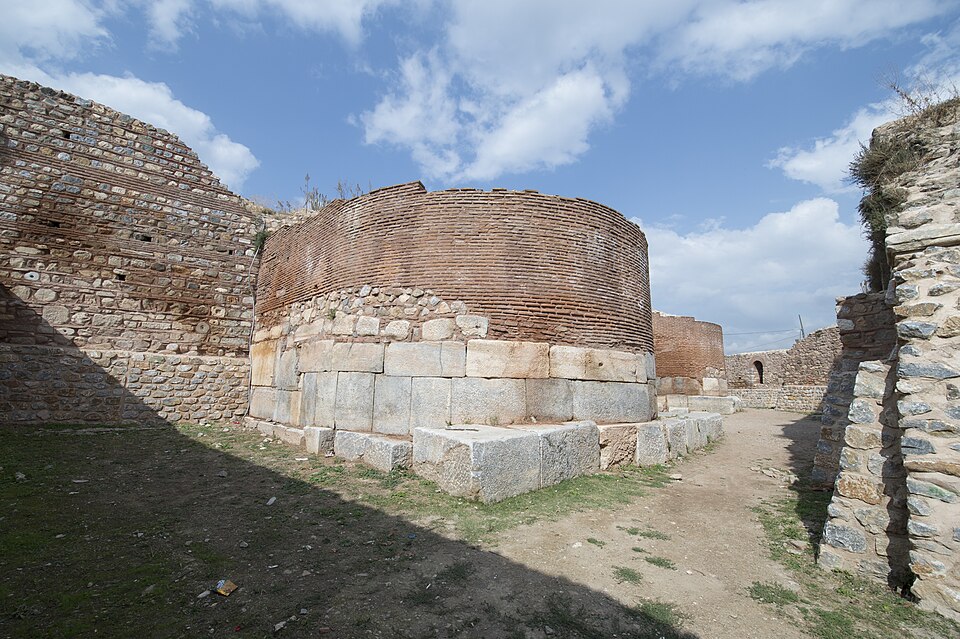
After Bursa surrendered on 6 April 1326, Iznik (Nicaea) also yielded to Orhan Bey after a long blockade, on 2 March 1331 (Ibn Kemal gives 1333). In the Iznik article, Ahmet Güneş notes that some Byzantine and Ottoman sources speak of Iznik becoming the seat of the principality after the conquest, but that accounts differ as to whom its government was entrusted; it is very likely that Orhan's son Süleyman Pasha took on this role.
Ibn Battuta, who saw the city a few years after the conquest, writes that in Iznik, whose walls were in ruins, lived Orhan Bey's wife and a small number of court officials. Orhan appointed Çandarlı Kara Halil as judge (kadı), turned the great church into a mosque and built a soup kitchen and a madrasa. As the seat of the Çandarlı family, Iznik became an important centre of learning and culture from the mid-14th century. Yet the principality's real political centre was Bursa; according to the Söğüt article, Osman's expansion towards the Marmara and the conquest of Bursa must have gradually pushed Söğüt and its surroundings into the administrative and political background.

A town of memory
After the conquest of Istanbul, Söğüt became one of the stops for pilgrims on the “right arm” or “pilgrimage road” into Anatolia, and administratively it remained part of the sanjak of Hüdavendigar (Bursa). The town's chief monument is the Tomb of Ertuğrul Gazi, probably built under Orhan Gazi. According to a widely held view, when Osman Gazi died he was first laid in this tomb and later moved to Bursa.
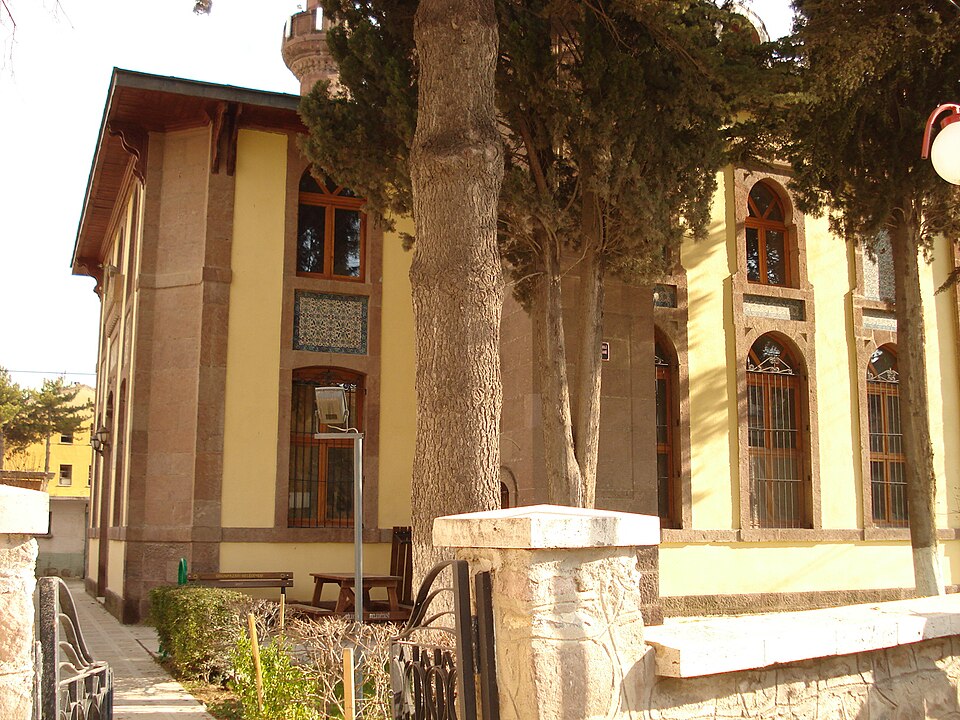
Long out of sight, Söğüt was reinterpreted and brought to the fore in the late 19th century, under Abdulhamid II, as the founding place of the Ottoman state; the Hamidiye Mosque was built in 1889 and a secondary school (idadi) in 1901. The visits and ceremonies held around the tomb by Yörük groups who traced themselves to Ertuğrul Gazi were also revived at that time. Today members of the Karakeçili tribe gather in Söğüt every year on the second weekend of September to keep this tradition alive.

Related sultans
Cite as: Atlas of the Sultans, “Söğüt · Ottoman capitals”, https://padisahlaratlasi.com/en/ottoman-capitals/sogut/ (last updated 21 November 2026). Corrections · Image credits