TRENDEFRARAtlas of the Sultans · State organisation
The Imperial Council (Divan-ı Hümayun)
Institution · Ottoman central government · 15th–19th centuries

Name and origins
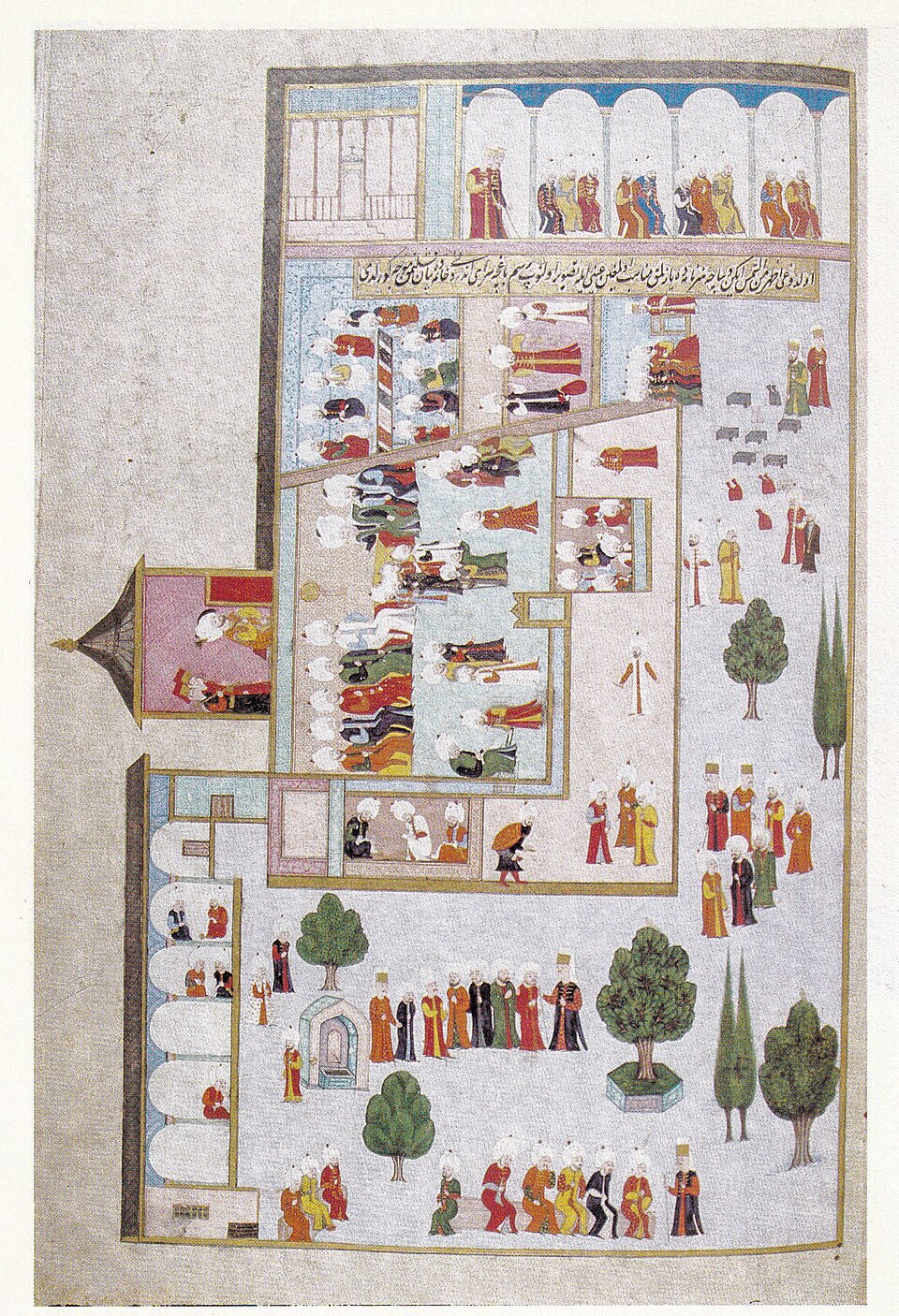
The Imperial Council (Divan-ı Hümayun) means “the sultan's council”; according to the TDV Encyclopedia of Islam it was the most important decision-making body of the Ottoman state from the mid-15th century to the first half of the 17th. The word divan entered Turkish through Persian and Arabic; in ancient Iran it was the name of the registers in which financial records were kept and of the offices that kept them. Among the Ottomans the word was used above all in the sense of “meeting, council”, denoting both the meeting itself and the place where it was held.
The article's author, Ahmet Mumcu, links the institution to the kurultay, the assemblies in which the Turks discussed affairs of state before Islam. Having come to know the palace councils of the Abbasids and the Court of Grievances (Divan-ı Mezalim), open to every complaint, the Turks combined these with their own traditions into a new concept of the council. The first advanced council resembling the Divan-ı Hümayun was founded by the Great Seljuks under the name Divan-ı Ala; the tradition reached the Ottoman principality through the Anatolian Seljuks and the beyliks.
From principality to Mehmed II
The Ottoman principality also had a simple, modest council. As the principality became a regular state the council developed too, but because there are no reliable sources on its institutions before the mid-15th century, this development is hard to trace step by step. What is known is that, especially under Murad II, the council at Edirne began to acquire the character of an Imperial Council; at times the sultan presided over it, and certain organisational rules were applied.
The institution began to take its fully developed form under Sultan Mehmed II the Conqueror. The law code (kanunname) attributed to him regulated the main offices of state, including the Imperial Council. Its greatest innovation was to end definitively the sultan's presidency of the council and to hand this task to the grand vizier (veziriazam, sadrazam). From the early 16th century the Divan-ı Hümayun held the most important place in the state after the sultan, a position it kept until the late 17th century.
Members and chanceries
In the periods when it retained its function, its full members were the grand vizier, the dome viziers (kubbealtı vezirleri), usually between three and seven in number, the chief judges (kazasker) of Rumelia and Anatolia, the nişancı, and the treasurers (defterdar) of Rumelia and Anatolia. When in Istanbul, the governor-general of Rumelia also sat among the members, and the Janissary agha and the grand admiral (kaptan-ı derya) became full members once raised to the rank of vizier. The şeyhülislam, who held no specific administrative or judicial office, was not a member, although the heads of the main central departments were.
Though not a member, the most important assistant steering the meetings was the reisülküttap (chief of the scribes); secretaries (tezkireci), the çavuşbaşı and lower officials also served. A separate bureaucracy wrote, dispatched and preserved the decisions: the “chanceries of the Imperial Council”, made up of the beylik, tahvil and ruus offices, whose chief was the reisülküttap. Copies of the records kept in the council were collected in registers known as mühimme defterleri.

Order of the sessions
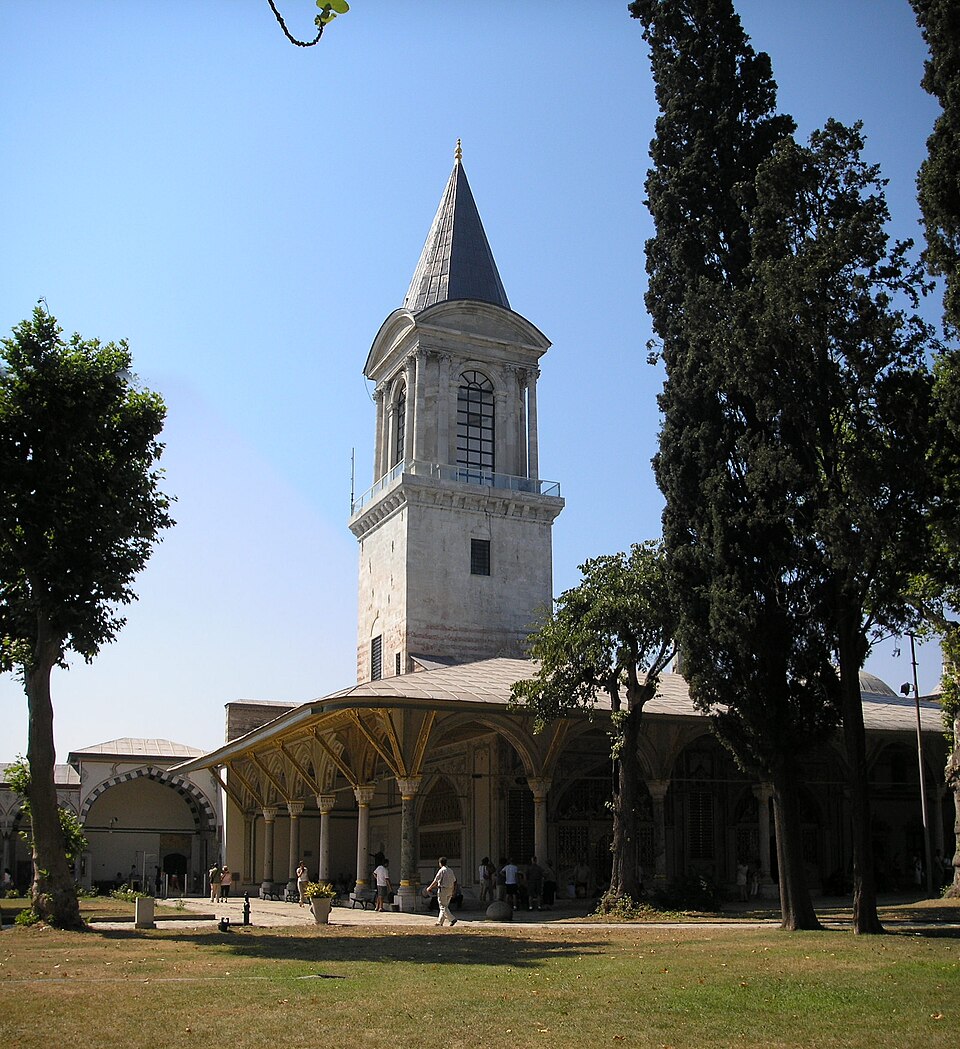
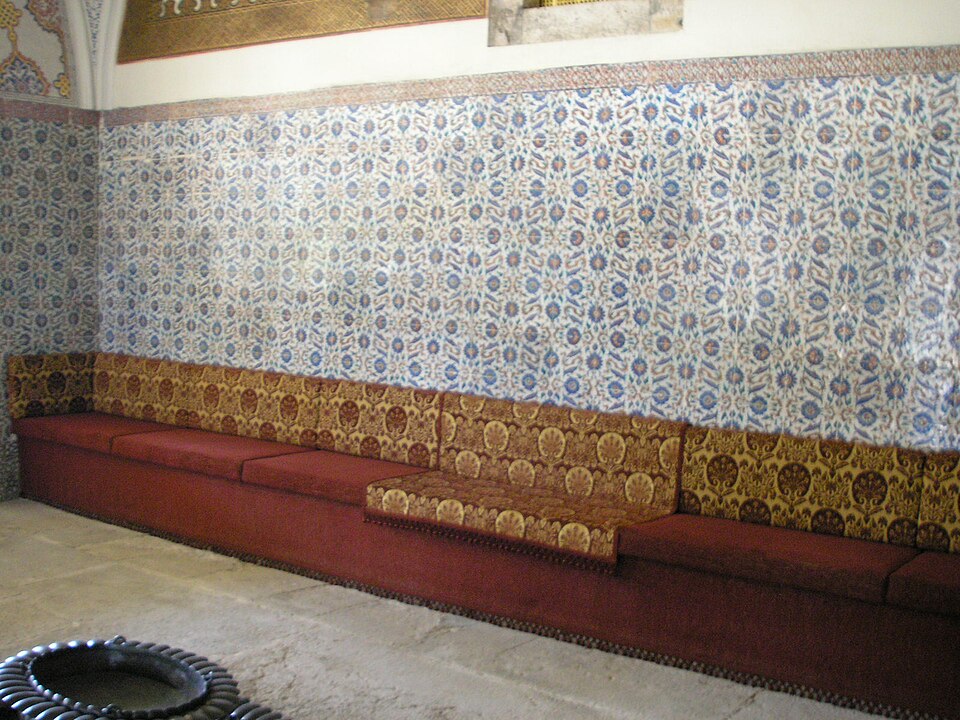
The council met under very strict rules of protocol and wherever the sultan was. In Istanbul its classic meeting place was the Kubbealtı (“under the dome”) in the second court of Topkapı Palace, adjoining the Harem; the Edirne Palace, where some sultans resided for long periods, also had a domed council hall. In the 16th century the council met four or sometimes five days a week; at the beginning of the 17th century this fell to two, and after the early 18th century meetings became rare. Sessions began after the dawn prayer and normally lasted until the noon call to prayer; full members sat in fixed places while assistants served standing.
The reisülküttap prepared the agenda, and political and administrative matters were discussed first. Matters not requiring the sultan's approval were decided at once, and the drafts were handed to the nişancı for fair copying; he prepared, or had prepared, the decree (ferman) bearing the sultan's monogram (tuğra). Some matters, however, were not finalised without being submitted to the sultan, a procedure called “going to the audience” (arza çıkmak). After the session the members appeared before the sultan in turn to report, and once he approved, the decisions became final. The sultan could listen to the debates whenever he wished from behind a latticed window opening onto the hall.

A high court
What most impressed Western observers was the council's judicial role. Anyone, regardless of social rank, age, religion, language or sex, could apply to it in writing or in person, and the members were obliged to hear every complaint. Although Islamic law knew no concept of appeal and a kadı's judgement was considered final, here the rulings of kadıs were also examined; those found unjust were quashed and sent back to the kadı for a new judgement. Cases under sharia were handled by the kazaskers, while in customary (örfi) matters outside sharia the nişancı, the grand vizier and the other viziers decided.
In Mumcu's view, because the council took its decisions collectively with the participation of the officials concerned, in its mature period it should be regarded as standing even above the grand vizier, the highest authority after the sultan; moreover, while the grand vizier could not hear sharia cases alone, the council was competent in them through the kazaskers. For this reason grand viziers, as the sultan's deputies, looked unfavourably on an institution that limited their freedom of action and sought to increase the powers of their own council, the afternoon council (ikindi divanı).
Decline and end
From the late 17th century the powers of the Divan-ı Hümayun passed gradually to the grand vizier's afternoon council. Despite occasional revivals, by the mid-18th century the council had become a place of ceremony and display, as the Bab-ı Asafi, the grand vizier's office, developed in every respect. Mahmud II's great reform of central government ended both this symbolic council and the grand vizier's council, and a cabinet system was introduced. The Divan-ı Hümayun nevertheless survived to the end of the state as an instrument of protocol without any legal or political function.
Mumcu sees the main reason why this council, without equal in East or West in the 16th–17th centuries, failed to develop and declined in its lack of any “representative” character: while far simpler assemblies in the West evolved by admitting representatives from outside the bureaucracy, no representatives of particular social groups were admitted to a council composed of members dependent on the sultan's absolute authority, and the consultative meetings (meşveret) held from time to time did not remedy this. Besides the Imperial Council there were the Friday and Wednesday councils attended by the kazaskers, the councils each office-holder held in his own department, and provincial councils presided over by governors.
Source: TDV Encyclopedia of Islam, “DÎVÂN-ı HÜMÂYUN” (Ahmet Mumcu)
Related sultans
Cite as: Atlas of the Sultans, “The Imperial Council (Divan-ı Hümayun) · State organisation”, https://padisahlaratlasi.com/en/ottoman-state-organisation/the-imperial-council-divan-i-humayun/ (last updated 21 November 2026). Corrections · Image credits