TRENDEFRARAtlas of the Sultans · Ottoman monuments
Bahariye Mevlevi Lodge
Monument · Mevlevi lodge, Istanbul, 1874–1877
- Type
- Dervish lodge
- Built
- 1874–1877
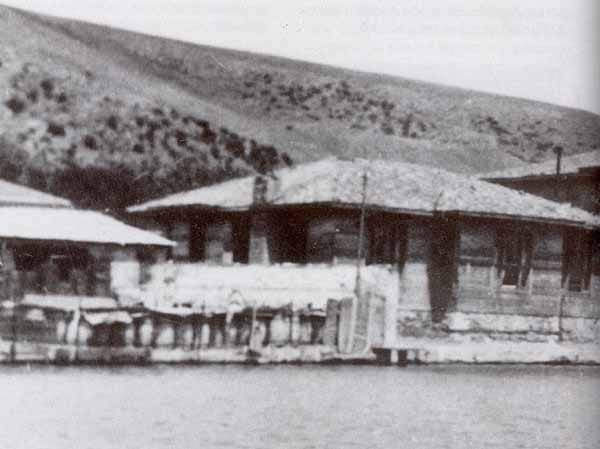

A Mevlevi lodge on the Golden Horn
When the Beşiktaş Mevlevi lodge was demolished in 1867–68 to build Çırağan Palace, and its new building in Maçka was in turn pulled down in 1874 for a barracks, the last sheikh, Hüseyin Fahreddin Dede, founded this lodge on the Bahariye shore at Eyüp between 1874 and 1877. Abdulhamid II, who came to the throne during construction, contributed to it and later added a twenty-eight-room residence. At the centre stood the two-storey, timber-framed semahane and tomb building, which resembled an Istanbul waterside mansion (yalı).
Quickly decayed by the humidity of the Golden Horn, the lodge was thoroughly repaired in 1910 by the Ministry of Pious Foundations through the support of Mehmed V Reşad; the work is thought to have been directed by the architect Kemaleddin Bey. After the lodges were closed in 1925, a long ownership dispute followed: the semahane and tomb building was demolished in 1935, the harem burned in 1938–39, and in 1968 the heirs sold the site, which became a factory zone. Today only a fragment of the gate jamb, some walls of the bath and a few gravestones survive; the masjid was converted into a mosque in a form not faithful to the original.
The Bahariye shore and the founding
The lodge stood between the centre of Eyüp and the head of the Golden Horn, on a shore called Kosmidion in the Byzantine period and Bahariye in Ottoman times because of its rich spring vegetation. Lined with waterfront palaces and mansions, the shore flourished in the Tulip Era, declined when Mahmud II demolished some palaces to build the Iplikhane barracks, and lost its character as a pleasure ground when factories arrived after the First World War. Forced out of Beşiktaş, the Mevlevi community first moved to the Karacehennem Ibrahim Pasha mansion in Fındıklı and in 1870 to Maçka; the building at Bahariye was erected in the garden of the waterfront mansions of Mustafa and Hüseyin Efendi, superintendents of firewood. During Hüseyin Fahreddin Dede's tenure as sheikh (1874–1911), the lodge became a centre where the last great representatives of Mevlevi literature and music gathered.
Layout of the lodge
To the north, vegetable gardens facing the street were separated from the lodge buildings by a wall. Above the neoclassical main gate of cut küfeki stone was a verse inscription of 1910 written by Ahmed Remzi (Akyürek) Dede. The chamfered-cornered brick masjid on the left of the courtyard served as the meydan-ı şerif (assembly room). The cells of the head ney player, the head kudüm player and the head cook, a row of fifteen cells, the refectory and the kitchen were single-storey timber buildings. Behind the quay on the Golden Horn stood the harem, the semahane-tomb and the selamlık (men's quarters); the inner garden between them had a pool with a fountain, an arbour shaded by climbing roses and fruit trees.
The semahane-tomb building
Built on a rubble basement to protect it from damp, the building was crowned by a metal finial in the shape of a Mevlevi headdress. Above the main entrance was an inscription of 1859–60 brought from Beşiktaş, with a text by Musa Kazım Pasha. The square semahane, its corners softened by quarter circles, was surrounded by eighteen wooden columns corresponding to the nezr-i Mevlana (vow to Rumi); the tomb occupied the eastern part of the semahane, its balustrades bearing Baroque ornament topped with wooden Mevlevi headdresses. The frieze of the semahane ceiling combined rumi scrolls and palmettes with leaves recalling the late Andalusian style, and the upper floor carried verses written in gilt.
The remains in the tomb were moved by the heirs to the former site of the martyrs of 16 March on Silahtarağa street, and the selamlık and the main gate were removed in the early 1970s. From 1986 the Istanbul municipality expropriated and demolished the factories on the site as well.
Source: TDV Encyclopedia of Islam (TDV İslâm Ansiklopedisi), “BAHARİYE MEVLEVÎHÂNESİ” (M. Baha Tanman)
Related sultans
Cite as: Atlas of the Sultans, “Bahariye Mevlevi Lodge · Ottoman monuments”, https://padisahlaratlasi.com/en/monuments/bahariye-mevlevi-lodge/ (last updated 21 November 2026). Corrections · Image credits