TRENDEFRARAtlas of the Sultans · Grand viziers
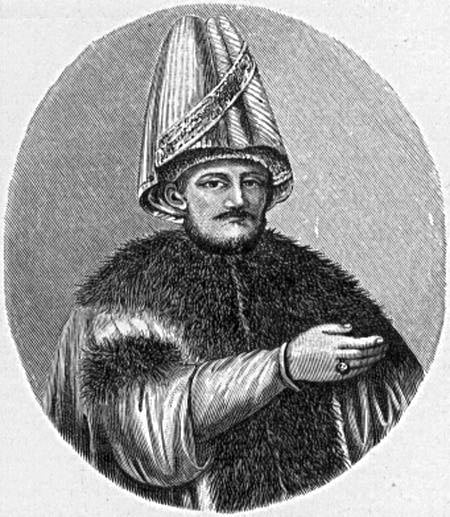
Alemdar Mustafa Pasha
Grand vizier, 1808
 AI

The ayan of Ruse
He was born in Khotyn; he was the son of Hacı Hasan Ağa, one of the Janissaries of Ruse (Rusçuk). He first joined the Janissary corps, then took up stock-breeding and farming in Ruse. He entered the service of Tirsinikli Ismail Ağa, the most powerful ayan (provincial notable) of the region, and became his steward; the nickname “Alemdar” (standard-bearer) comes from his serving as his standard-bearer. For his successes in the struggle against Pazvandoğlu he received ranks and became ayan of Razgrad (Hezargrad). After Tirsinikli's sudden death in 1806 he was elected “ayan of ayans” by the notables of the region. Selim III, who wanted to make use of him in the Ottoman-Russian war, gave him in 1807, with the rank of vizier, the governorship of Silistra for life and the post of commander-in-chief on the Danube; Alemdar saved the fortress of Izmail (Ismail) from falling into Russian hands and, crossing the Danube, routed the Russian forces.
The Ruse Friends and the march on Istanbul
In 1807, with the revolt of Kabakçı Mustafa, Selim III was deposed, Mustafa IV was put in his place, and the Nizam-ı Cedid (“New Order”) was ended. Some supporters of the Nizam-ı Cedid fleeing persecution took refuge with Alemdar, who until then had felt no sympathy for this movement. This group, made up of Abdullah Ramiz, Mehmed Tahsin, Mustafa Refik, Mehmed Said Galib and Mehmed Emin Behiç Efendi and known to history as the “Rusçuk yaranı” (Ruse Friends), explained to him the necessity of reform and won him over to the plan of restoring Selim III to the throne.
Alemdar marched from Edirne to Istanbul in the retinue of Grand Vizier Çelebi Mustafa Pasha; on the way he had his men kill Kabakçı Mustafa. On the Davutpaşa plain the army and the Holy Banner were welcomed by Mustafa IV in person; Alemdar rejected the proposal to arrest the sultan then and there on the grounds that it would be unseemly. On 28 July 1808 he seized the Sublime Porte, took the seal by force and marched on Topkapı Palace. Mustafa IV had the palace gates shut and gave permission for Selim III and Prince Mahmud to be killed. While Alemdar was trying to get in, Selim III had already been killed; only Mahmud was saved and placed on the throne.
A four-month grand vizierate
Alemdar, first deputy grand vizier and then, on applying to Mahmud II, grand vizier in his own right, saw to it as his first act that the murderers of Selim III were caught and punished. The most important achievement of his four-month grand vizierate was summoning the ayan of Anatolia and Rumelia to Istanbul and having them sign, in October 1808, the agreement known as the Sened-i Ittifak (Deed of Alliance). In addition, a new corps called the Sekban-ı Cedid was established as a continuation of the Nizam-ı Cedid.
Death and assessment
Alemdar and those around him underestimated the danger that could come from the Janissaries and other opponents. In the uprising that began on the night of 15 November 1808 he was attacked at the Sublime Porte and his mansion was surrounded. When the help he expected did not arrive in time, as the Janissaries were about to break in, he set fire to the powder magazine and died on 16 November 1808 together with many Janissaries. The author of the article, Kemal Beydilli, describes Alemdar, who was forty-three when he died, as brave, intelligent and perceptive, a man who could have been useful to the state if well guided; he adds that the few months he spent in Istanbul led him into great heedlessness. His body was thrown into a well; his bones were later moved near the walls of Yedikule, and after the Second Constitutional Period to the burial ground of the Zeyneb Sultan Mosque.
Source: TDV Encyclopedia of Islam, “ALEMDAR MUSTAFA PAŞA” (Kemal Beydilli)
Related sultans
Cite as: Atlas of the Sultans, “Alemdar Mustafa Pasha · Grand viziers”, https://padisahlaratlasi.com/en/grand-viziers/alemdar-mustafa-pasha/ (last updated 21 November 2026). Corrections · Image credits