TRENDEFRARAtlas of the Sultans · 32 / 39 · sultan
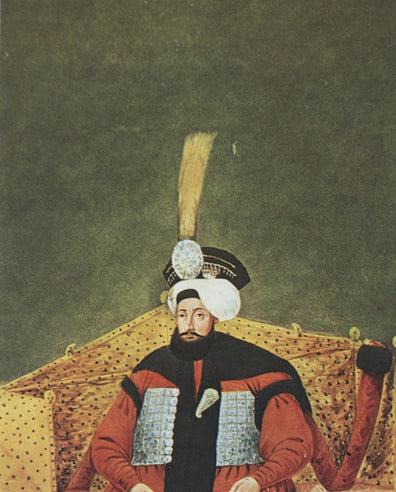
Portrait made in his lifetime — attributed to Konstantin Kapıdağlı
Mustafa IV
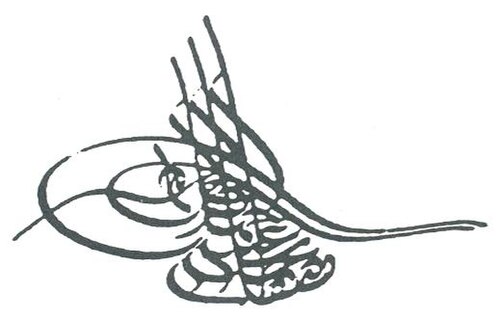
His one-year reign was the interval in which Selim III's reforms were reversed. He came to the throne through a revolt, fell through a revolt and was executed — the starkest example of Janissary tutelage.
Open the reign of Mustafa IV on the map▶ Watch the 1-minute video: YouTube · Instagram · TikTok
Interesting fact
He reigned for only one year (1807–1808). When Alemdar Mustafa Pasha marched on the palace he was deposed, and on 17 November 1808 he was strangled on the orders of his brother Mahmud II.
Source: TDV İslâm Ansiklopedisi (Turkish), article “MUSTAFA IV”
Life
His years as a prince
Mustafa was born on 8 September 1779. His father was Abdulhamid I and his mother Ayşe Sineperver Sultan. He received a classical palace education; together with his brother Mahmud he accompanied his father on inspection tours of the city, trying to get to know the world outside the palace. Because his cousin Selim III, who came to the throne when his father died, had no children, Mustafa was treated by him with affection and spent a relatively comfortable life as a prince.
According to the TDV article, however, Mustafa had been part of the opposition to Selim since his days as a prince. People close to him, including his sister Esma Sultan, worked for his accession, especially among the Janissaries.
Enthroned by the Kabakçı revolt
Selim III's Nizam-ı Cedid reforms met with opposition from the Janissaries and the ulema. At the end of the Kabakçı Mustafa revolt of May 1807, Selim was deposed and Mustafa became sultan on 29 May 1807. The organizers of the revolt, the deputy grand vizier (kaymakam) Köse Musa Pasha, the şeyhülislam (chief mufti) Topal Ataullah Efendi and Kabakçı Mustafa, meddled in affairs of state and forced through whatever they wanted, and this could not be stopped.
According to the TDV article, Mustafa IV's short reign passed in such great turmoil and disorder, and in such a relentless struggle between reformers and their opponents, that people soon came to regret Selim's deposition. The Russian war that had begun in 1806 was still going on; the revolt spread to the army at the front as well, and the Janissaries drove off the grand vizier. The armistice concluded with the Russians in August 1807 did no more than buy time for internal score-settling.
Alemdar Mustafa Pasha and 28 July 1808
Former statesmen who wanted to restore Selim to the throne gathered around Alemdar Mustafa Pasha, the ayan (provincial notable) of Rusçuk. Alemdar came to Istanbul with his army on 19 July 1808, had Kabakçı Mustafa killed and had Ataullah Efendi dismissed. He then raided the Sublime Porte (Babıali), arrested the grand vizier and marched on the palace to put Selim on the throne.
Mustafa had the palace gates shut and ordered the killing of his cousin Selim and his brother Mahmud. Selim was killed; Mahmud, however, escaped wounded and, as the last surviving male member of the dynasty, was placed on the throne on 28 July 1808. According to one tradition, Mustafa himself had also attacked Mahmud. Refusing to accept that he had been deposed, Mustafa is reported to have muttered, “I did not leave the throne; who put Mahmud on it?”
His death and assessment
Confined to his apartments in the palace, Mustafa did not give up sending messages outside in an effort to regain the throne. Three months later, when Alemdar Mustafa Pasha was killed in a Janissary attack and the rebels sought to march on the palace, he was strangled on 17 November 1808 on the orders of his brother Mahmud II. His funeral was held with ceremony, and he was buried in the tomb of his father Abdulhamid I at Bahçekapı.
Most historians condemn him as an enemy of reform. The TDV article, however, notes that Mustafa was deposed before he had the chance to do anything that would reveal his true views on reform, that for this reason no definite answer can be given to the question of whether he would have followed the path of his cousin or his brother, and that the negative judgment of him needs to be corrected.
Source: TDV Encyclopedia of Islam (TDV İslâm Ansiklopedisi), “Mustafa IV” (Kemal Beydilli); Mustafa Necib, Cabi Ömer Efendi, Cevdet Pasha and the study by Feridun M. Emecen are the main sources of this article.
Meanwhile in the world
Contemporary rulers
- Napoleon IEmperor of the French · 1804–1815Emperor who, at the height of his power, dominated much of Europe
- Alexander IEmperor of Russia · 1801–1825Tsar who alternately fought and made peace with Napoleon
- George IIIKing of Great Britain and Ireland · 1760–1820Long-reigning king of Britain as it resisted Napoleon
- Francis IEmperor of Austria · 1804–1835Last Holy Roman emperor and first emperor of Austria
- Fath-Ali ShahShah of Iran (Qajar dynasty) · 1797–1834Qajar shah caught in the rivalry of France, Britain and Russia
- Jiaqing EmperorEmperor of China (Qing dynasty) · 1796–1820Qing emperor who struggled with corruption and piracy
- Thomas JeffersonPresident of the United States · 1801–1809President whose Louisiana Purchase doubled the country's territory
What was happening in the world?
- 1807The British Parliament passes an act abolishing the slave trade throughout the empire.
- 1807Robert Fulton's steamboat Clermont makes its first voyage up the Hudson from New York to Albany.
- 1807Fleeing Napoleon's invasion, the Portuguese royal family sails for Brazil; Rio de Janeiro becomes the seat of government.
- 1808On 2 May the people of Madrid rise against French occupation; the Spanish War of Independence begins.
- 1808Beethoven's Fifth Symphony is performed for the first time in Vienna.
Sources: britannica.com [1] [2] [3] [4] [5] [6] [7] [8] [9] [10] [11] [12] · history.com [1]
Family
| Father | Abdulhamid I |
|---|---|
| Mother | Ayşe Sineperver Sultan |
| Consorts | Dilpezir Kadın, Seyyare Kadın, Peykidil Kadın |
| Children | Emine Sultan (died young) |
Major achievements
- Enthroned through the Kabakçı Mustafa revolt
- The Nizam-ı Cedid abolished and the old order restored
- Deposed within a year when Alemdar Mustafa Pasha marched on Istanbul
Treaties
None recorded.
Grand viziers
| Name | From | To | Length |
|---|---|---|---|
| Ibrahim Hilmi Pasha | September 14, 1806 | June 3, 1807 | 262 days |
| Çelebi Mustafa Pasha | June 19, 1807 | July 28, 1808 | 1 year, 39 days |
Battles and treaties
| Year | Event | Result / parties |
|---|---|---|
| 1807 | Naval battle: Athos (Lemnos) | Heavy Ottoman defeat: 3 battleships, 3 frigates and 2 smaller ships lost |
| 1808 | Revolt: Alemdar's March on Istanbul (Rusçuk Committee) | Selim III was killed in the palace; Mustafa IV was deposed, Mahmud II enthroned and Alemdar became grand vizier (28 July 1808) |
Full infoboxes are in the site’s “Battles and Treaties” tab; source: TDV Encyclopedia of Islam.
Death
He was deposed in 1808 and executed in Topkapı Palace the same year, after the Alemdar Incident.
Territorial change
The lands that changed hands in this period, and the battles or treaties that brought the changes, can be seen on the map: map of the reign of Mustafa IV.
Cite as: Atlas of the Sultans, “Mustafa IV: Reign Map, Wars and Conquests (1807–1808)”, https://padisahlaratlasi.com/en/sultans/iv-mustafa/ (last updated 21 November 2026). Corrections · Image credits
Terms on this page: Janissaries
Grand viziers of this reign: Alemdar Mustafa Pasha