TRENDEFRARAtlas of the Sultans · 36 / 39 · sultan
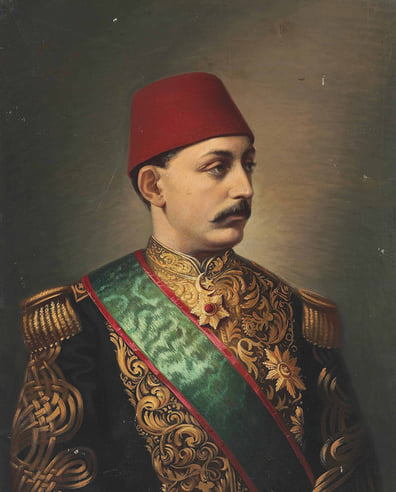
Portrait made in his lifetime — 19th c.
Murad V
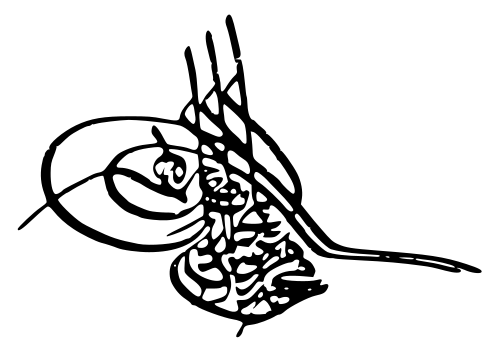
He was put on the throne in the hope of a constitutional reign and deposed three months later on grounds of health. He spent the remaining twenty-eight years of his life under house arrest in the palace, while his brother and successor reigned for thirty-three years.
Open the reign of Murad V on the map▶ Watch the 1-minute video: YouTube · Instagram · TikTok
Interesting fact
He reigned for only ninety-three days (1876); according to the sources he was in full possession of himself on only seven of them. As a prince he had taken piano and Western music lessons from two Italian teachers.
Source: TDV İslâm Ansiklopedisi (Turkish), article “MURAD V”
Life
A reform-minded heir
Murad was born on 22 September 1840. His original name was Mehmed; his father was Abdulmejid I and his mother Şevkiefser Kadınefendi. As a prince he received a good education: he studied Turkish, Arabic, French, Ottoman history and the sciences, and took piano and Western music lessons from two Italian teachers.
When his uncle Abdulaziz came to the throne in 1861, he was proclaimed heir apparent and accompanied him on his journeys to Egypt (1863) and Europe (1867). He formed close ties with the Young Ottomans; he used to discuss constitutional government, democracy and liberty with Şinasi, Namık Kemal and Ziya Pasha. In 1872 he joined the Freemasons. The TDV article records that his European manners and his Freemasonry were not looked upon kindly by his brothers, and that his greatest weaknesses were his excessive fondness for drink and his extravagance.
Enthroned by a coup
The Balkan crisis that began in Herzegovina in 1875, the Bulgarian uprising of May 1876 and the killing of two consuls in Salonica put the state in a difficult position. Opponents meeting at Midhat Pasha's mansion decided to depose Abdulaziz and make Murad sultan; demonstrations by madrasa students (softas) began on 10 May 1876.
On the night of 29–30 May, Dolmabahçe Palace was surrounded by land and sea. The heir, who did not know that the operation had been brought forward, feared he was about to be arrested and did not want to leave his apartments; he was persuaded only with difficulty and taken by rowing boat, in a storm and pouring rain, to Sirkeci, and from there to the Serasker Gate in Beyazıt, where he received the oath of allegiance. Although the official announcement said that Abdulaziz had been deposed “by general consent,” according to the TDV article this was a coup organized by a handful of people. Whereas tradition required him to sit on the golden throne in Topkapı, the allegiance ceremony was held at Dolmabahçe with him seated in a gilded armchair.
Ninety-three days
Murad appointed Ziya Pasha as his chief secretary and asked that Namık Kemal and his friends, whom Abdulaziz had sent into exile, be recalled; but this wish was not carried out. Divisions soon arose among the four statesmen who had put him on the throne; the serasker Hüseyin Avni Pasha behaved like a dictator and even made meetings with the sultan subject to his permission.
Murad, whose ill health had long been known, suffered a complete breakdown of his nerves under the events that followed one after another: the frightening night of his accession, the discovery of his uncle Abdulaziz dead on 4 June, and Çerkez Hasan's raid on a cabinet meeting on the night of 15–16 June, in which he killed Hüseyin Avni Pasha and the foreign minister. The doctors and the Viennese psychiatrist Leidesdorf reported that the chances of recovery were very slight. Thereupon, on the basis of a fatwa, Murad was deposed on 31 August 1876 and succeeded by his brother Abdulhamid II. According to the sources, he was in his right mind on only seven days of his ninety-three-day reign.
Twenty-eight years at Çırağan
After his deposition he was allowed to live in Çırağan Palace; every means was tried to treat him, but without result. His supporters, above all in Masonic circles, claimed that he was in good health and had been unjustly deposed, and made attempts to restore him to the throne. The best known of these was Ali Suavi's raid on Çırağan Palace on 20 May 1878; the “Çırağan Incident” ended with Ali Suavi being killed.
Placed under stricter guard after these attempts, Murad lived the life of a virtual prisoner for twenty-eight years. He died of diabetes on 29 August 1904 and was buried beside his mother in the Cedid Havatin Tomb at the Yeni Cami (New Mosque).
Source: TDV Encyclopedia of Islam (TDV İslâm Ansiklopedisi), “Murad V” (Cevdet Küçük); Mahmud Celaleddin Pasha's Mir'at-ı Hakikat, Abdurrahman Şeref, Ali Haydar Midhat and the reports of foreign envoys of the period are the main sources of this article.
Meanwhile in the world
Contemporary rulers
- VictoriaQueen of the United Kingdom, Empress of India · 1837–1901Queen who also took the title Empress of India in 1876
- Alexander IIEmperor of Russia · 1855–1881Reforming tsar who freed the serfs; assassinated in 1881
- William IKing of Prussia, German Emperor · 1861–1888Emperor who achieved German unification together with Bismarck
- Franz JosephEmperor of Austria, King of Hungary · 1848–1916Long-reigning ruler of the Austro-Hungarian Dual Monarchy
- MeijiEmperor of Japan · 1867–1912Emperor who led Japan from feudalism to great-power status
- Naser al-Din ShahShah of Iran (Qajar dynasty) · 1848–1896Shah who played Britain and Russia against each other to preserve independence
- Guangxu EmperorEmperor of China (Qing dynasty) · 1875–1908Child emperor whose government long remained in Cixi's hands
What was happening in the world?
- 1876Alexander Graham Bell receives the US patent for the telephone.
- 1876In Britain, Queen Victoria is given the title ‘Empress of India’.
- 1876At the Battle of the Little Bighorn, Lakota, Cheyenne and Arapaho warriors defeat Custer's cavalry.
- 1876The first Bayreuth Festival opens with the first complete staging of Wagner's Ring cycle.
Sources: britannica.com [1] [2] [3] [4] [5] [6] [7] [8] · nps.gov [1] · bayreuther-festspiele.de [1]
Family
| Father | Abdulmejid I |
|---|---|
| Mother | Şevkefza Kadın |
| Consorts | Elaru Mevhibe Kadın, Reftarıdil Kadın, Şayan Kadın, Meyliservet Kadın |
| Children | Mehmed Selahaddin, Hatice Sultan, Fehime Sultan, Fatma Sultan |
Major achievements
- A reign of ninety-three days — one of the shortest in the dynasty
- Open to constitutional government and close to Midhat Pasha's circle
- Trained in Western music; one of the first sultans to play the piano and compose
- The first sultan to join a Masonic lodge
Treaties
None recorded.
Grand viziers
| Name | From | To | Length |
|---|---|---|---|
| Mütercim Mehmed Rüşdü Pasha (term 4) | May 12, 1876 | December 19, 1876 | 221 days |
Battles and treaties
| Year | Event | Result / parties |
|---|---|---|
| 1876 | Battle: Serbian–Ottoman and Montenegrin–Ottoman wars (1876) | Decisive victory of the Ottoman armies |
Full infoboxes are in the site’s “Battles and Treaties” tab; source: TDV Encyclopedia of Islam.
Death
He died of diabetes in 1904 under house arrest in Çırağan Palace, twenty-eight years after his deposition.
Territorial change
The lands that changed hands in this period, and the battles or treaties that brought the changes, can be seen on the map: map of the reign of Murad V.
Cite as: Atlas of the Sultans, “Murad V: Reign Map, Wars and Conquests (1876–1876)”, https://padisahlaratlasi.com/en/sultans/v-murad/ (last updated 21 November 2026). Corrections · Image credits
Monuments of this reign: Çırağan Palace
State organisation: The Tanzimat and the renewal of government