TRENDEFRARAtlas of the Sultans · Ottoman monuments
Kutlu Bey Mosque
Monument · Mosque, Isparta, 1429
- Type
- Mosque
- Built
- 1429
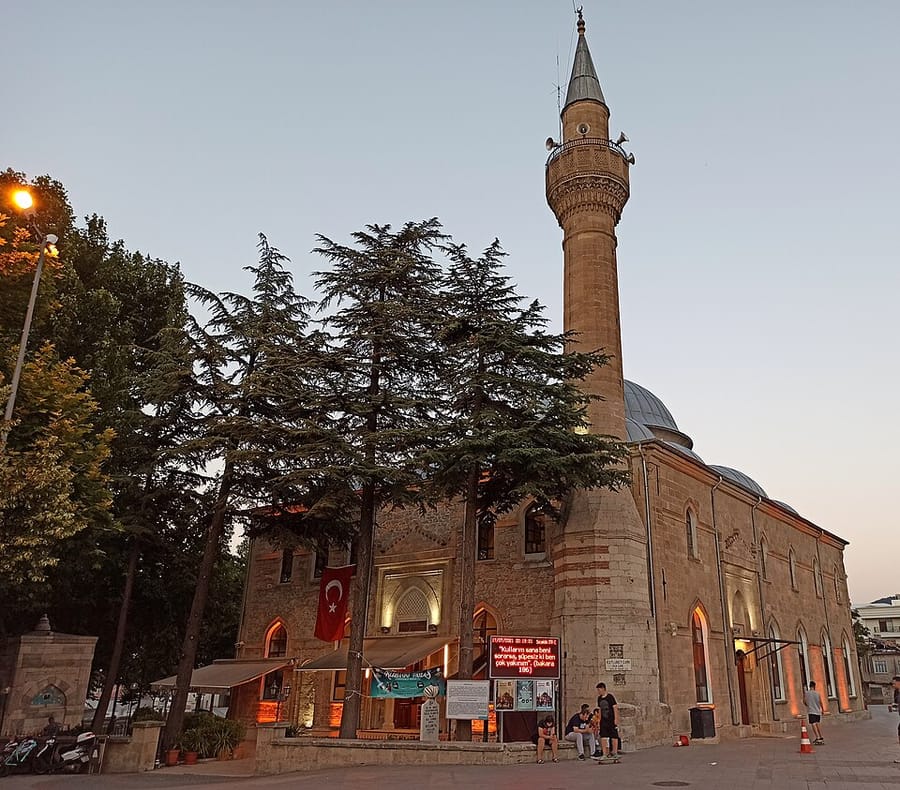

The great mosque of Isparta
Also known as the Great Mosque (Ulucami) of Isparta, the mosque stands beside the government building in the city centre and bears the name of its founder, Kutlu Bey, the first Ottoman governor of Isparta. The original building was erected in 1429, probably on the site of an earlier Seljuk structure. It is known to have had an earthen roof and a brick minaret with two balconies. In 1899, when most of its wooden posts were found to have rotted, the district governor (mutasarrıf) of Isparta, Hüseyin Hüsnü Pasha of Izmit, had it pulled down.
A new masonry mosque with many domes, built by the architect Yanko Efendi with money collected from the townspeople to mark the 25th anniversary of Abdulhamid II's accession, opened for worship in December 1902. Badly damaged in the 1914 earthquake, it too was demolished, and the present mosque was built on the old foundations in 1922, again with multiple domes. Its central dome rests on four columns and is surrounded by oval and smaller domes. The single-balcony minaret was rebuilt in 1931, and all the painted decoration and inscriptions date from the 1990 restoration.
Kutlu Bey and the first building
Isparta evidently came firmly under Ottoman rule in the reign of Murad II. In an endowment deed of Kutlu Bey dated 1429 he is called “emir of emirs”; the chronicler Neşri presents him as the subaşı (military governor) of Eğridir and writes that he was one of the five emirs whom Murad I left to guard Anatolia during the Kosovo campaign. Böcüzade Süleyman dates the Seljuk building that stood on the site of the mosque to 1085–86, Osman Turan to 1299. What is known of the first building rests largely on Böcüzade's study of 1908.
The Kutlu-Hamid Mosque
In 1899 it was decided to build a masonry mosque with many domes resembling Hagia Sophia; work began with some 500 lira collected from the townspeople, after permission had been obtained to name it Hamidiye. Completed in two years with columns of the local stone called ot taşı and walls of küfeki limestone, the mosque received a second minaret paid for by the sultan and was named Kutlu-Hamid. The wooden columns used in the rebuilding of 1922 were brought from the Tota forests of Sütçüler.
The present building and its decoration
The rectangular mosque has two rows of pointed-arched windows; the entrances on the east, west and north take on the appearance of monumental portals with triangular pediments framed by palmette bands. The mihrab is decorated inside with gilded plaster reliefs in the Empire style, and the band of the Throne Verse in monumental thuluth around it is the work of the calligrapher Bektaşi Mehmed Hilmi Efendi; the same verse also encircles the main dome. The minbar is of cut stone and the women's gallery of wood; the domes are decorated with acanthus leaves, and the columns are painted in oils to look like marble. The octagonal base of the free-standing minaret shows a surface with brick courses and a reused capital; the sixteen-sided shaft has muqarnas beneath the balcony and railings with geometric carving.
Source: TDV Encyclopedia of Islam (TDV İslâm Ansiklopedisi), “ULUCAMİ” (Ibrahim Yıldırım)
Related sultans
Cite as: Atlas of the Sultans, “Kutlu Bey Mosque · Ottoman monuments”, https://padisahlaratlasi.com/en/monuments/kutlu-bey-mosque/ (last updated 21 November 2026). Corrections · Image credits