TRENDEFRARAtlas of the Sultans · Ottoman monuments
Galib Pasha Mosque
Monument · Mosque, Istanbul, 1898–1899
- Type
- Mosque
- Built
- 1898–1899
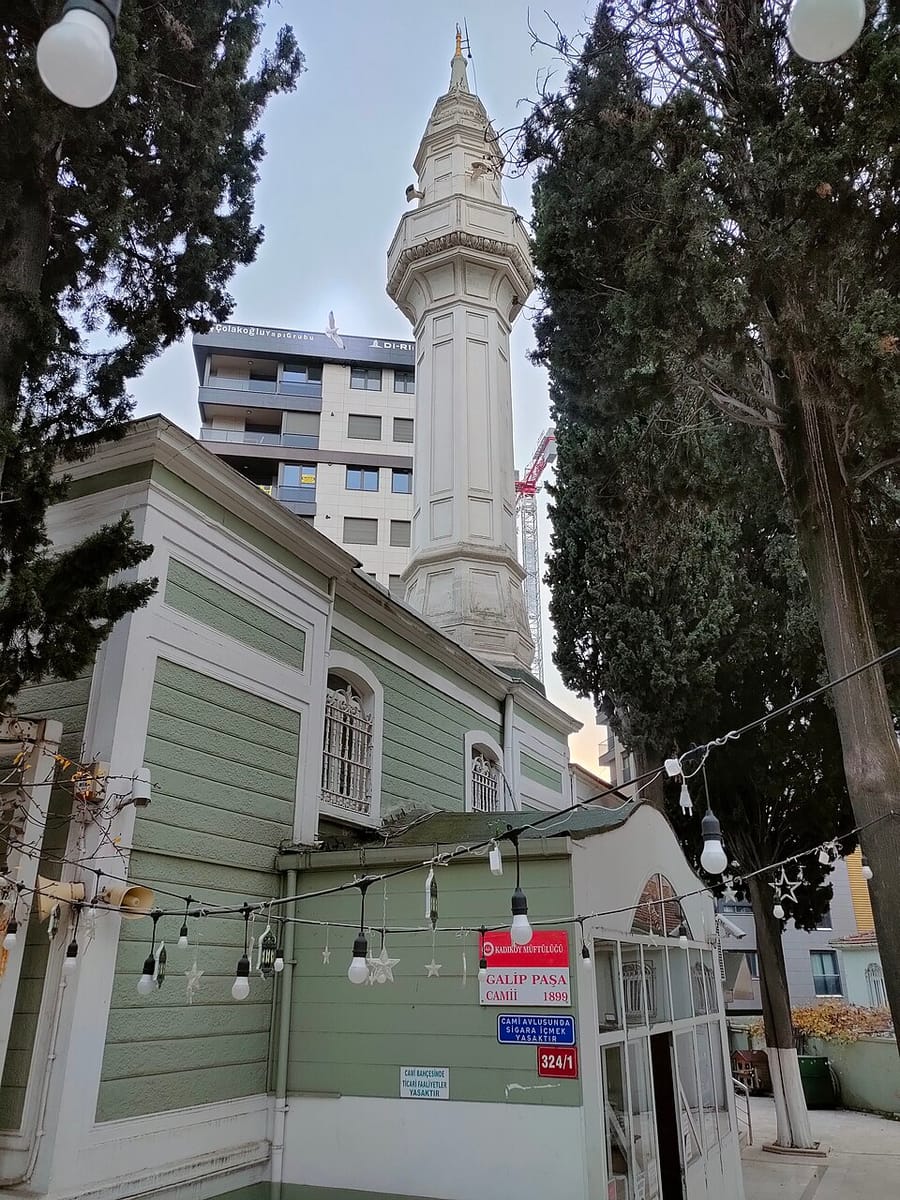

An eclectic mosque on Bağdat Avenue
Standing at the crossroads of Bağdat Avenue and Ethem Efendi Avenue on the Asian side of Istanbul, the mosque was built, according to the inscription over its door, in 1898–99 by Abdullah Galib Pasha, who served as a provincial governor and minister under Abdulhamid II. A photograph taken when it was new shows it standing on bare land; today it is the only mosque in a densely built-up neighbourhood and stands in a tree-shaded courtyard enclosed by a wall with iron railings.
The building represents the mixed (eclectic) style that dominated Turkish architecture in the late 19th century and fits none of the familiar Ottoman styles. A dome on a low, blind octagonal drum covers its square prayer hall. The triple windows on the side façades are inspired by the 'Syrian pediment' arrangement of Roman architecture. With its eight-sided shaft plastered in panels and its masonry cap, the minaret also departs from traditional minarets. In 1986 a domed annex was attached to the right side of the building, disregarding the extension plans that had been prepared.
Façade and minaret details
The enclosed late-comers' portico has two storeys. On the qibla side the mihrab projects outward as a small bay. The triple windows on the side façades are framed by four pilasters; of these windows with cast-iron grilles, the side ones are rectangular and the central one is taller and round-arched, an arrangement emphasised by a moulding above them.
The minaret rises at the right-hand corner of the portico block. Like the mosque, the minaret is plastered on the outside, so nothing can be said about its building material. An egg-and-dart frieze taken from ancient architecture is used on the balcony projection and at the base of the spire.
Interior and courtyard
The interior is decorated with painted ornament of the late period; the minbar and the preaching chair are of wood. The marble fountain at the Bağdat Caddesi corner of the courtyard wall has no connection with the mosque; it had been brought here some twenty to twenty-five years before the encyclopaedia entry was written. The imam's residence (meşruta) and the ablution fountain in the courtyard are new structures.
Source: TDV Encyclopedia of Islam (TDV İslâm Ansiklopedisi), “GALİB PAŞA CAMİİ” (Semavi Eyice)
Related sultans
Cite as: Atlas of the Sultans, “Galib Pasha Mosque · Ottoman monuments”, https://padisahlaratlasi.com/en/monuments/galib-pasha-mosque/ (last updated 21 November 2026). Corrections · Image credits