TRENDEFRARAtlas of the Sultans · Ottoman monuments
Adile Sultan Palace
Monument · Palace, Istanbul, 1861–1870
- Type
- Palace and pavilion
- Built
- 1861–1870

A sultan's palace above Kandilli
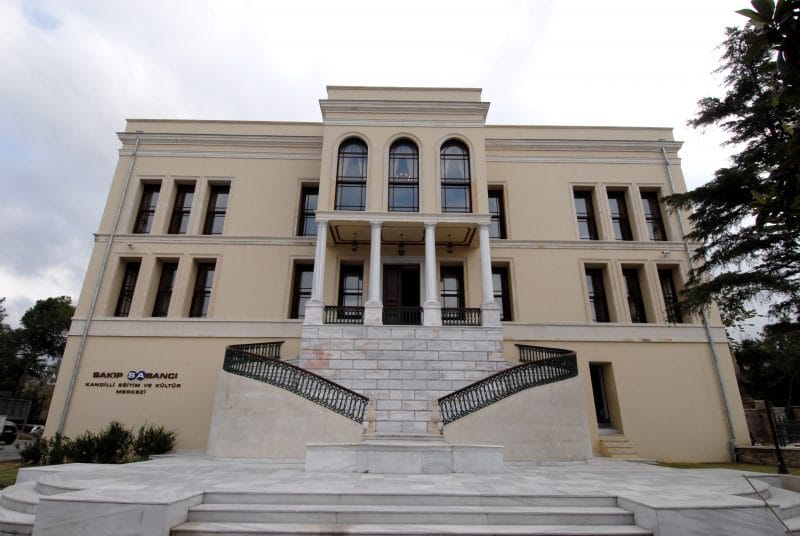
On one of the spots in Kandilli with the finest command of the Bosphorus, on its Asian shore, there once stood a mansion belonging to Halil Mehmed Rifat Pasha, Marshal of the Imperial Arsenal (Tophane). Sultan Abdulmejid bought it in 1856 for his sister Adile Sultan. Between 1861 and 1870 Sultan Abdulaziz had the mansion pulled down and built a large masonry palace in its place, said to be the work of the architect Sarkis Balyan. Adile Sultan spent her summers here. Both its exterior and interior followed the Western style that dominated the 19th century.
Measuring 32 × 93 m, the palace had fifty-five rooms, two halls and a large stone-paved entrance hall. On the seaward front a double staircase led up to a terrace with four marble columns, and the upper floor held Adile Sultan's own apartment with mirrors and painted ceilings; its most striking feature was an oval hall resting on twelve columns. In 1916 a girls' school was opened in the palace, renamed Kandilli Girls' High School in 1931. Gutted by fire in March 1986, the palace was left with only its masonry outer walls.
Adile Sultan and her palaces
Sultan Abdulmejid had bought the earlier pavilion for his sister Adile Sultan (1826–1899) on 31 March 1856. The presence, in the list of Sarkis Balyan's works, of a building at Kandilli called the “Palace of the Sultanas” supports the view that the palace was his work. The waterfront palaces at Fındıklı and Kuruçeşme and the pavilions at Silahtarağa and Validebağı are also said to have belonged to Adile Sultan; which of these were really hers remains to be investigated. The Kandilli palace, where she spent her summers, and the waterfront palace at Fındıklı, where she died, are accepted as hers.
Rooms and halls
Reached from the shore by a winding road, the palace had two main entrances, one facing the sea and the other the side. Behind the seaward door was a marble-paved hall, from which a double staircase led to the upper floor. The upper floor, Adile Sultan's private apartment, had large mirrors in gilded frames on its walls, and the ceilings of its hall and rooms were decorated with coloured ornament and paintings. The oval salon also had an ornamented ceiling; a door behind it led to the apartments overlooking the garden.
Like most Bosphorus mansions and pavilions, the palace also had an annex on the shore with a 9.50 × 6 m pool and a sea bath, reached from the large wooded grounds behind by a wooden bridge over the road. The servants' and grooms' quarters at the very back had disappeared earlier.
School years and the fire
In his memoirs Dr Cemil Topuzlu writes that Ahmed Rıza Bey proposed requesting the palace for a girls' boarding school and that they obtained an imperial decree from Abdulhamid II together; how far this is accurate is unclear. The school, opened in 1916, was first named Kandilli Adile Sultan Inas Mekteb-i Sultanisi. In 1966–1967 two new buildings were erected below the palace; in 1969–1970 the administration and classrooms moved there, and the palace was used only as a dormitory. In the 1986 fire some valuable furnishings and, above all, the large mirrors were also lost.
Source: TDV Encyclopedia of Islam (TDV İslâm Ansiklopedisi), “ÂDİLE SULTAN SARAYI” (Semavi Eyice)
Related sultans
Cite as: Atlas of the Sultans, “Adile Sultan Palace · Ottoman monuments”, https://padisahlaratlasi.com/en/monuments/adile-sultan-palace/ (last updated 21 November 2026). Corrections · Image credits