TRENDEFRARAtlas of the Sultans · Grand viziers
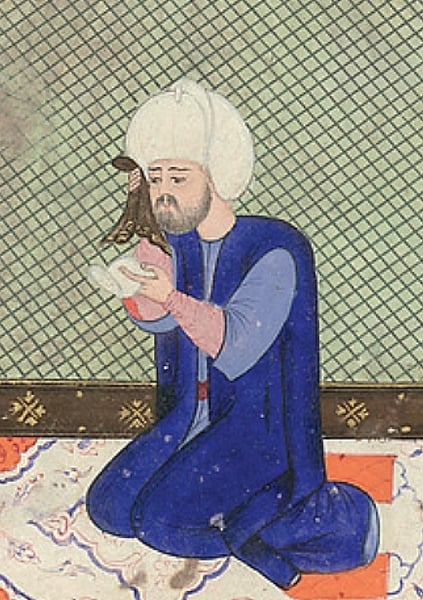
Sokullu Mehmed Pasha
Grand vizier, 1565–1579
 AI

From Bosnia to the Enderun
His Christian name was Bajo; he was born in 1505 in the village of Sokolovići near Višegrad in Bosnia. It is recorded that he said he descended from the Serbian despots, and also that he was of Bosniak origin; because of his height he was called “Tavil” (the Tall). He received his first education from his maternal uncle, a monk at the Mileševa Monastery. In the first years of Suleiman I he was enrolled for the palace by Yeşilce Mehmed Bey, who was collecting devşirme recruits from Bosnia; he told the Venetian envoy Tiepolo that he was eighteen at the time.
He was trained in the Edirne Palace, was taken into the Enderun after the death of Defterdar Iskender, and rose from stirrup-holder (rikabdar) to chief gatekeeper (büyük kapıcıbaşı). In 1546, on the death of Barbaros, he became grand admiral (kaptanıderya), and in 1549 governor-general of Rumelia.
From Transylvania to the grand vizierate
In 1551, as commander of the Transylvanian operation, he took fortresses such as Bečej, Bečkerek, Csanád and Lipova, but lifted the siege of Timişoara (Tımışvar) because of the cold. The following year he took part with Kara Ahmed Pasha in the conquest of Timişoara. After the Nakhchivan campaign he became a vizier in 1554. In 1557 he had the Serbian patriarchate at Peć (Ipek) reopened and placed his brother Makarije at its head. In the struggle between the princes he was sent to Selim's side and played an important role in Selim's victory in the battle on the plain of Konya in 1559.
In 1561 he became second vizier; his marriage the following year to Ismihan Sultan, the daughter of Prince Selim, strengthened his position. On 29 June 1565, on the death of Semiz Ali Pasha, he rose to grand vizier.
Szigetvár and the reign of Selim II
In 1566, on Suleiman I's last campaign, he directed the siege of Szigetvár in practice; when the sultan died as the fortress was about to fall, he concealed the death, sent word to Prince Selim in Kütahya, and for three weeks ran affairs as if the sultan were alive. Selim II left the government of the state largely to him. Projects to dig canals at Suez and between the Don and the Volga came onto the agenda but were not carried out; relief ships with master gunners and soldiers were sent to the Sultan of Aceh.
He opposed the Cyprus campaign, thinking it would invite the danger of a crusade, but could not break the influence of Lala Mustafa Pasha. After the defeat at Lepanto (Inebahtı) he made Uluç Ali Pasha grand admiral, and with the work he set in motion in the shipyards the fleet was rebuilt in a single winter; in 1573 Venice recognized the conquest of Cyprus. In 1574 La Goulette (Halkulvadi) was taken. By securing the election to the Polish throne first of Henry de Valois and then of István Báthory, he consolidated Ottoman influence there.
The reign of Murad III and his death
When Selim II died, he concealed the death and ensured the accession of Prince Murad, who was in Manisa. Although Murad III kept him in office, his rivals reduced his influence by establishing direct contact with the sultan, had war declared on Iran in 1578 against his wishes, and his close associates were removed. On 12 October 1579, in his mansion, he was killed with the dagger of a dervish who approached him as if to present a petition. The assassin was ostensibly a Bosnian complaining about the reduction of his timar; it is claimed that the Hamzavis had a role, and there are not very strong allegations that Murad III was also behind it. His tomb is in Eyüp.
The sources remember him as an intelligent statesman with a strong memory, measured, who could cope with the most difficult tasks. Among his main works are his mosques at Kadırga and Azapkapı, his külliyes in Lüleburgaz, Payas and Havsa, and his bridge in Višegrad.
Source: TDV Encyclopedia of Islam, “SOKULLU MEHMED PAŞA” (Erhan Afyoncu)
Related sultans
Cite as: Atlas of the Sultans, “Sokullu Mehmed Pasha · Grand viziers”, https://padisahlaratlasi.com/en/grand-viziers/sokullu-mehmed-pasha/ (last updated 21 November 2026). Corrections · Image credits