TRENDEFRARAtlas of the Sultans · 23 / 39 · sultan
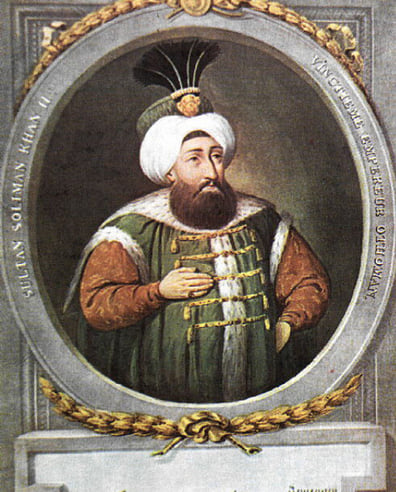
Imaginary portrait (made later) — artist and date unknown
Suleiman II
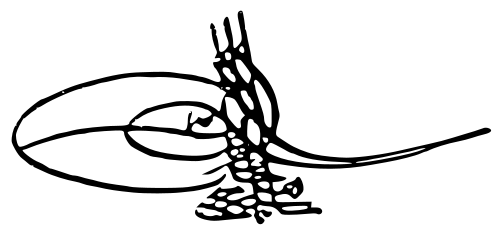
After forty years in the palace ‘cage’ he came to the throne in the middle of a collapse. Through a good choice of grand vizier he had Belgrade retaken; his short reign was spent trying to stem the losses.
Open the reign of Suleiman II on the map▶ Watch the 1-minute video: YouTube · Instagram · TikTok
Interesting fact
He was kept for about forty years in the part of the palace called the Şimşirlik. When they came to enthrone him, he thought he was about to be killed and said: “Better to die one day sooner than to die every day for forty years.”
Source: TDV İslâm Ansiklopedisi (Turkish), article “SÜLEYMAN II”
Life
Forty years in the Cage
Suleiman was born in Istanbul on 15 April 1642. His father was Sultan Ibrahim and his mother Saliha Dilaşub Sultan. His circumcision ceremony was held together with that of his elder brother Mehmed IV, who had by then come to the throne. His grandmother Kösem Sultan had at one point planned to depose Mehmed IV and put him on the throne; the plan was cut short when Kösem was killed in 1651.
After this he was shut away in a special section of the palace called the Şimşirlik and kept under closer watch. He was taken along on his brother's campaigns and hunting trips, and from time to time was moved to the Edirne Palace. He spent about forty years in this confined life.
An unexpected accession
The rout at Vienna in 1683 and the great territorial losses that followed deepened the discontent with Mehmed IV. After the defeat at Mohács, the mutinous army, the ulema and the leading statesmen decided that Suleiman should be brought in to replace him. The sources relate that when the prince saw the men who had come to fetch him, he was afraid, thinking he was about to be killed. He came to the throne on 8 November 1687, at the age of forty-five.
The new sultan's first problem was the accession bonus (cülus bahşişi) to be distributed to the troops; the treasury was empty, and the uprising of the zorbas (rebel ringleaders) could be calmed only with money arriving from Egypt, and with great difficulty. At one point the rebels also killed Grand Vizier Siyavuş Pasha; some even went so far as to propose doing away with all members of the dynasty and placing the Crimean khan at the head of the state. With pressure from the people as well, Suleiman punished the leading zorbas one by one and restored order.
Losses
Meanwhile bad news was arriving from the frontiers: in northern Hungary fortresses such as Eger (Eğri), Székesfehérvár (Istolni Belgrad), Lipova and Várad fell; Venice took the Morea and the fortresses in Dalmatia. When Belgrade came under threat the sultan set out for Edirne on 11 September 1688, but the city fell to the Austrians. The territorial losses also deprived the state of the cizye (poll tax), the avarız and other taxes; revolts continued in Anatolia. To raise money, through the efforts of Defterdar Fındık Mehmed Pasha, new taxes were imposed under various names, taverns were allowed to open in return for a tax, and a customs duty was introduced on tobacco. Copper coins called “mangır” were struck, debasing the currency; producers who disliked the mangır stopped sending goods to Istanbul, which led to rising prices and shortages. The notorious bandit chief Yeğen Osman Pasha could be eliminated only after long efforts.
In 1689 Suleiman went at the head of the army as far as Sofia. Meanwhile the Crimean Khan Selim Giray routed the Russians at Perekop (Orkapı); when the khan came to Edirne, the sultan received him standing, took him by the hand and seated him beside himself. But that same year Niš fell (25 September 1689) and Wallachia was overrun. The sources relate that the sultan complained that he had no loyal servant who would tell him the truth about the situation.
Fazıl Mustafa Pasha and the recapture of Belgrade
In the midst of this crisis Suleiman appointed Köprülüzade Fazıl Mustafa Pasha grand vizier. Mustafa Pasha undertook financial reforms and rebuilt the army. On 13 July 1690 the sultan personally saw him off to the front, and this time the Ottoman army won important successes: Pirot, Vidin and Niš were retaken, and after an eight-day siege Belgrade returned to Ottoman hands on 8 October 1690. In March 1691 Vlorë (Avlonya) and Kanina, which Venice had occupied, were also retaken. The sultan followed the activities of the pro-Ottoman Hungarian Thököly in Transylvania and supported Fazıl Mustafa Pasha's financial measures.
Character and death
The sources describe him as a pious sultan of dervish-like temperament, a stranger to dissipation and fond of hospitality; like his ancestors he had an aquiline nose, a round face and a large build. After his accession Arapzade Abdülvehhab Efendi, preacher of the Süleymaniye Mosque, was appointed his tutor and gave lessons in his presence every day.
As his illness grew worse, Suleiman met Fazıl Mustafa Pasha near Edirne when the grand vizier set out on campaign in May 1691; he received him alone and, weeping, prayed for the army's victory. He died in Edirne on 22 June 1691. His reign had lasted three years and eight months. His body was carried by carriage as far as Silivri and from there by ship to Istanbul, and was buried in the tomb of Suleiman I the Lawgiver (Kanuni) at the Süleymaniye, at his right side. He had six consorts but no surviving children; he was succeeded by his brother Ahmed II.
Source: TDV Encyclopedia of Islam (TDV İslâm Ansiklopedisi), “Süleyman II” (Abdülkadir Özcan); the main sources of this article are Silahdar Fındıklılı Mehmed Ağa, Defterdar Sarı Mehmed Pasha, Raşid and Uşşakizade.
Meanwhile in the world
Contemporary rulers
- Louis XIVKing of France · 1643–1715The 'Sun King', emblem of absolute monarchy and builder of Versailles
- Leopold IHoly Roman Emperor · 1658–1705Habsburg ruler whose long reign was marked by rivalry with France
- William IIIKing of England, Scotland and Ireland · 1689–1702Prince of Orange; reigned jointly with Mary II until 1694
- Peter I (the Great)Tsar, from 1721 Emperor of Russia · 1682–1725Reformer who reshaped Russia along Western European lines
- Suleiman I (Safi II)Safavid Shah of Iran · 1666–1694Son of Abbas II; first enthroned under the name Safi II
- AurangzebMughal Emperor of India · 1658–1707Last of the great Mughals; the empire reached its greatest extent
- KangxiEmperor of China (Qing dynasty) · 1661–1722His 61-year rule is the longest official reign in Chinese history
What was happening in the world?
- 1688Glorious Revolution in England: James II was deposed and William of Orange and Mary were invited to rule.
- 1689The English Bill of Rights was enacted, laying down that only a Protestant could wear the crown.
- 1689Russia and Qing China signed the Treaty of Nerchinsk, fixing their frontier and keeping Russia out of the Amur basin.
- 1690At the Battle of the Boyne in Ireland, William III defeated James II's attempt to regain the throne.
- 1690John Locke published An Essay Concerning Human Understanding and Two Treatises of Government.
Sources: britannica.com [1] [2] [3] [4] [5] [6] [7] [8] [9] [10] [11] · iranicaonline.org [1]
Family
| Father | Ibrahim |
|---|---|
| Mother | Saliha Dilaşub Sultan |
| Consorts | No consort is recorded |
| Children | No known children |
Major achievements
- Enthroned after forty years in the ‘cage’
- Köprülü Fazıl Mustafa Pasha made grand vizier and Belgrade retaken (1690)
- Finances reformed and the poll tax (cizye) reorganised
Treaties
None recorded.
Grand viziers
| Name | From | To | Length |
|---|---|---|---|
| Köprülü Damadı Siyavuş Pasha | September 23, 1687 | March 1, 1688 | 160 days |
| Nişancı Ismail Pasha | March 2, 1688 | May 2, 1688 | 61 days |
| Tekirdağlı Mustafa Pasha | May 2, 1688 | October 25, 1689 | 1 year, 176 days |
| Köprülüzade Fazıl Mustafa Pasha | October 25, 1689 | August 19, 1691 | 1 year, 298 days |
Battles and treaties
| Year | Event | Result / parties |
|---|---|---|
| 1690 | Siege: Loss and recapture of Belgrade (1688–1690) | Belgrade was retaken after an eight-day siege; the Austrians were driven across the Danube |
Full infoboxes are in the site’s “Battles and Treaties” tab; source: TDV Encyclopedia of Islam.
Death
He died of cirrhosis and oedema in Edirne in 1691.
Territorial change
| Year | Region | Event | Source |
|---|---|---|---|
| 1687 | − Eger | Eger surrendered after a long blockade (December 1687); Karlowitz (1699) | TDV İA, “EĞRİ” |
| 1688 | − Požega (central Slavonia) | Požega passed to Habsburg and Croatian forces (1687–1688); Karlowitz (1699) | TDV İA, “POJEGA” |
| 1689 | − Lika–Krbava | Fall of Udbina (July 1689) — Lika and Krbava joined the Habsburg Military Frontier; Karlowitz (1699) | Ágoston – Masters, Encyclopedia of the Ottoman Empire, p. 656 |
| 1690 | − Kanizsa | Kanizsa surrendered after a siege (April 1690); Karlowitz (1699) | TDV İA, “KANİJE” |
The lands that changed hands in this period, and the battles or treaties that brought the changes, can be seen on the map: map of the reign of Suleiman II.
Cite as: Atlas of the Sultans, “Suleiman II: Reign Map, Wars and Conquests (1687–1691)”, https://padisahlaratlasi.com/en/sultans/ii-suleyman/ (last updated 21 November 2026). Corrections · Image credits
Terms on this page: Grand vizier · Vizier
Grand viziers of this reign: Köprülüzade Fazıl Mustafa Pasha