TRENDEFRARAtlas of the Sultans · Ottoman monuments
Fatih Mosque (Pristina)
Monument · Mosque, Pristina, 1460–1461
- Type
- Mosque
- Built
- 1460–1461

Pristina's classical mosque
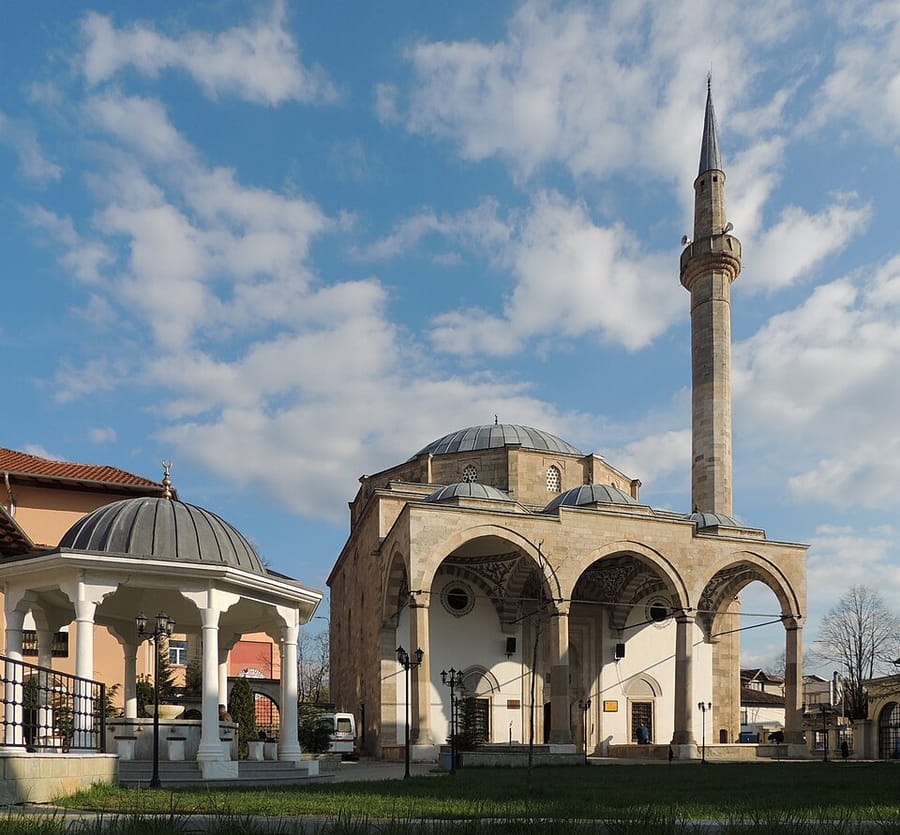
According to the four-line inscription over its door, the Fatih Mosque in Pristina, the capital of Kosovo, was built in 1460–61. However, because the inscription is painted in ta'liq script, its authenticity is doubted. Described by Ekrem Hakkı Ayverdi as “one of the finest mosques of Rumelia”, the building is one of the imposing and beautiful works of classical Ottoman architecture.
Built of dressed stone, the mosque is a perfect square measuring 17.66–17.88 metres a side externally. It is covered by a 14-metre dome with a fairly tall, windowed drum, carried on pendentives. At the entrance is a portico of four columns and three domes. The minbar is a fine example of the classical style, while the wooden gallery, with its Baroque details, may have been renewed in the second half of the 18th century. The door and qibla-window shutters are made in the kündekari technique of interlocking panels. The slender minaret was partly rebuilt later. Below the mosque stands a bathhouse hemmed in by buildings.
Details of the prayer hall
Each facade of the mosque has two windows below, three above and two more higher up. The muqarnas mihrab niche, in a plain frame, has colonnettes with hourglass capitals at its corners. To the right of the door, a staircase set into the thickness of the wall leads to the wooden gallery, whose central part is rather high. Although the painted decoration is late, Ayverdi believed the ornament at the centre of the dome to be original.
The wooden leaves of the portal, in kündekari (interlocking joinery) technique, have lost their beauty because they were painted in recent times; the long panels of the kündekari window shutters in the qibla wall, however, bear a rarely seen pattern. According to the entry on Pristina, the mosque's interior decoration and inscription are said to date from after the Austrian occupation of 1737; the building underwent an intensive and careful restoration between 1950 and 1961.
Minaret and bath
The lighter colour of the stones from about the middle of the minaret shaft shows that the upper part was renewed at a later date. The ring-shaped balcony projection, which does not match the architecture of Mehmed the Conqueror's time, is further evidence of this renewal. The bath below the mosque, hemmed in by buildings, has not been fully studied; its hot section has been identified as a four-iwan type with four private cells in the corners.
Source: TDV Encyclopedia of Islam (TDV İslâm Ansiklopedisi), “FÂTİH CAMİİ” (Semavi Eyice)
Related sultans
Cite as: Atlas of the Sultans, “Fatih Mosque (Pristina) · Ottoman monuments”, https://padisahlaratlasi.com/en/monuments/fatih-mosque-pristina/ (last updated 21 November 2026). Corrections · Image credits