TRENDEFRARAtlas of the Sultans · Grand viziers
Halil Hamid Pasha
Grand vizier, 1782–1785
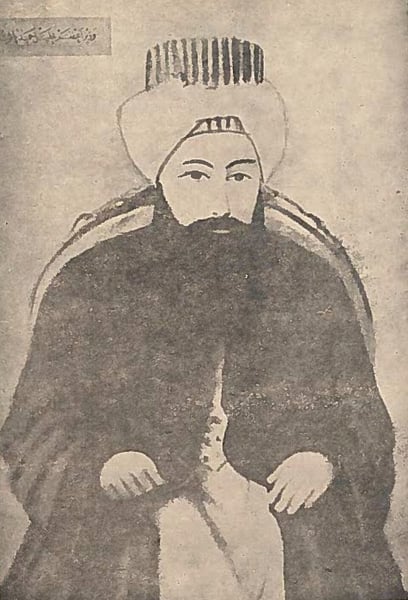

From the offices of the Sublime Porte
Originally from Isparta, he was born in 1736 and came to Istanbul at a young age with his father Hacı Mustafa Ağa. He began as a clerk in the Divan office (Divan Kalemi) of the Sublime Porte, moved to the Amedi office and rose to the post of amedci (its head); in these offices he came to know the organization and workings of the state at first hand. In 1779 he became chief tezkireci (secretary of memoranda), then reisülküttab, and in 1780 steward of the grand vizierate (sadaret kethüdası). In 1782 he was appointed steward of the grand vizierate for the second time by order of Abdulhamid I, and on 31 December of the same year he became grand vizier. The author of the article counts him among the rare statesmen who not only grasped the necessity of renewal but, accepting mortal danger, dared to put it into practice.
The Crimean crisis
His grand vizierate fell in the years when the crisis with Russia over the Crimea reached its peak. In 1783 Russia announced that it had annexed the Crimea; the state, which was not ready for war, was caught between public anger and the fear of being dragged into a war unprepared. On 18 December 1783, at a meeting kept secret from the public, it was agreed by the unanimous vote of those present, Cezayirli Gazi Hasan Pasha included, to issue a document recognizing the annexation. In line with Halil Hamid Pasha's view, a new war was not to be risked before the preparations had been completed.
Reforms
He began reform with the Janissary corps: he had roll calls held and, by declaring invalid the pay tickets (esami) held by those who did not actually serve, secured the transfer of thousands of vacant pay tickets to the treasury. He re-established the corps of Rapid-Fire Artillery (Sürat Topçuları), reformed the Miners' and Bombardiers' corps, and revived the Imperial Naval School of Engineering (Mühendishane-i Bahri-i Hümayun), which had been opened in 1773; in these tasks he made use of a large number of French experts.
Foreseeing that the Crimea would lead to a new great war, he filled the frontier fortresses of the Caucasus and the Balkans, and the fortresses in the Bosnian region, with arms, ammunition and provisions. According to the author of the article, the munitions stockpiled were enough for the first three years of the following war; Koca Yusuf Pasha, too, had said that it was not he but Halil Hamid Pasha who had set out on the 1787–1788 campaign. He tried to encourage domestic production in place of expensive foreign fabrics, and planned to open the Black Sea to the merchant ships of all states.
Dismissal and execution
On 31 March 1785 he was suddenly dismissed and exiled to Gallipoli, and his property was seized. Although he was appointed for a short time to the province of Habesh (Habeş), he was removed from this post too at Kos (Istanköy); following an execution decree he was killed on 27 April 1785, and his head was sent to Istanbul and put on display. This sudden fall has been interpreted as the result of his having planned to depose the aged sultan and enthrone Prince Selim. The author of the article, Kemal Beydilli, however, sees among the main reasons for the dismissal and execution the anger at the silence over the Crimea, the hostility of the groups whose interests his reforms had harmed, and the opposition of Cezayirli Gazi Hasan Pasha. The sources remember him as an experienced and courageous reformer. He founded a library of 449 volumes in Isparta and built fountains and a dervish lodge in Istanbul.
Source: TDV Encyclopedia of Islam, “HALİL HAMÎD PAŞA” (Kemal Beydilli)
Related sultans
City: Isparta
Cite as: Atlas of the Sultans, “Halil Hamid Pasha · Grand viziers”, https://padisahlaratlasi.com/en/grand-viziers/halil-hamid-pasha/ (last updated 21 November 2026). Corrections · Image credits