All toursTRENDEFRAR
Ottoman lands

Map tour · 1539–1588 · 9 stops · 8 min read

The works of Mimar Sinan

From Ağırnas to the Süleymaniye: how a devşirme recruit became the Ottoman chief architect

Scroll to continue ↓

Before 1491 – reign of Selim I

A devşirme boy from Ağırnas
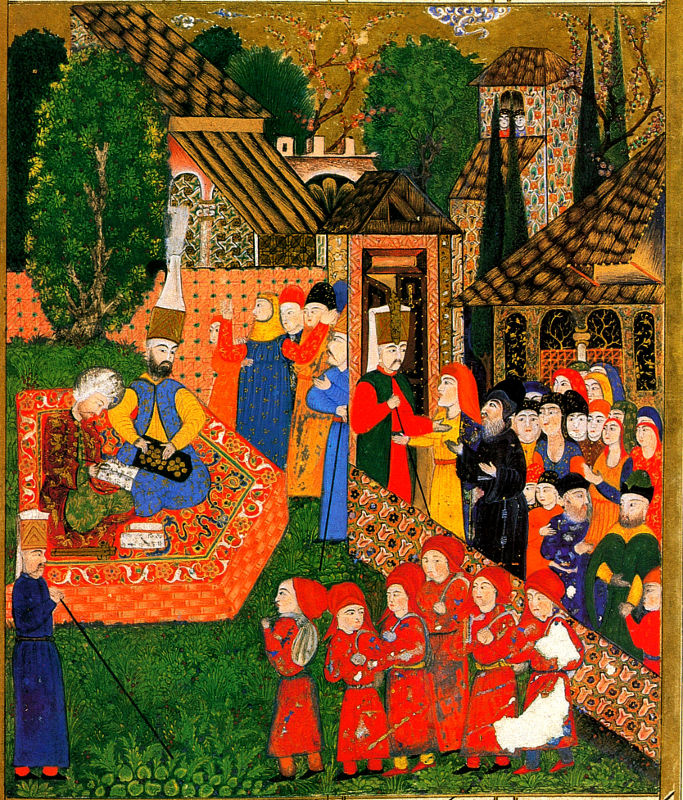
A miniature from the Süleymanname (1558): Christian boys levied in the Balkans being entered in the register.
A miniature from the Süleymanname (1558): Christian boys levied in the Balkans being entered in the register. · Image: Wikimedia Commons (public domain)

In the Tezkiretü'l-bünyan Sinan describes himself as a devşirme recruit of the reign of Sultan Selim I and says that boys were levied in the sanjak of Kayseri for the first time then; it had been decided in this period to levy boys from Anatolia as well as from Rumelia. His later correspondence with relatives in Kayseri confirms his origin in Ağırnas, which documents also support. He was the child of a Christian family; according to the TDV article, the most likely possibility is that he came from a Turkish-speaking Orthodox family long settled in the region. When he was recruited is unknown; since he is said to have been twenty-two when he came to Istanbul, he is thought to have been born before 1491. He was educated at a school overlooking the Hippodrome (Atmeydanı) and, by his own choice, turned to the craft of carpentry.
1521 – 1537

A Janissary on campaign

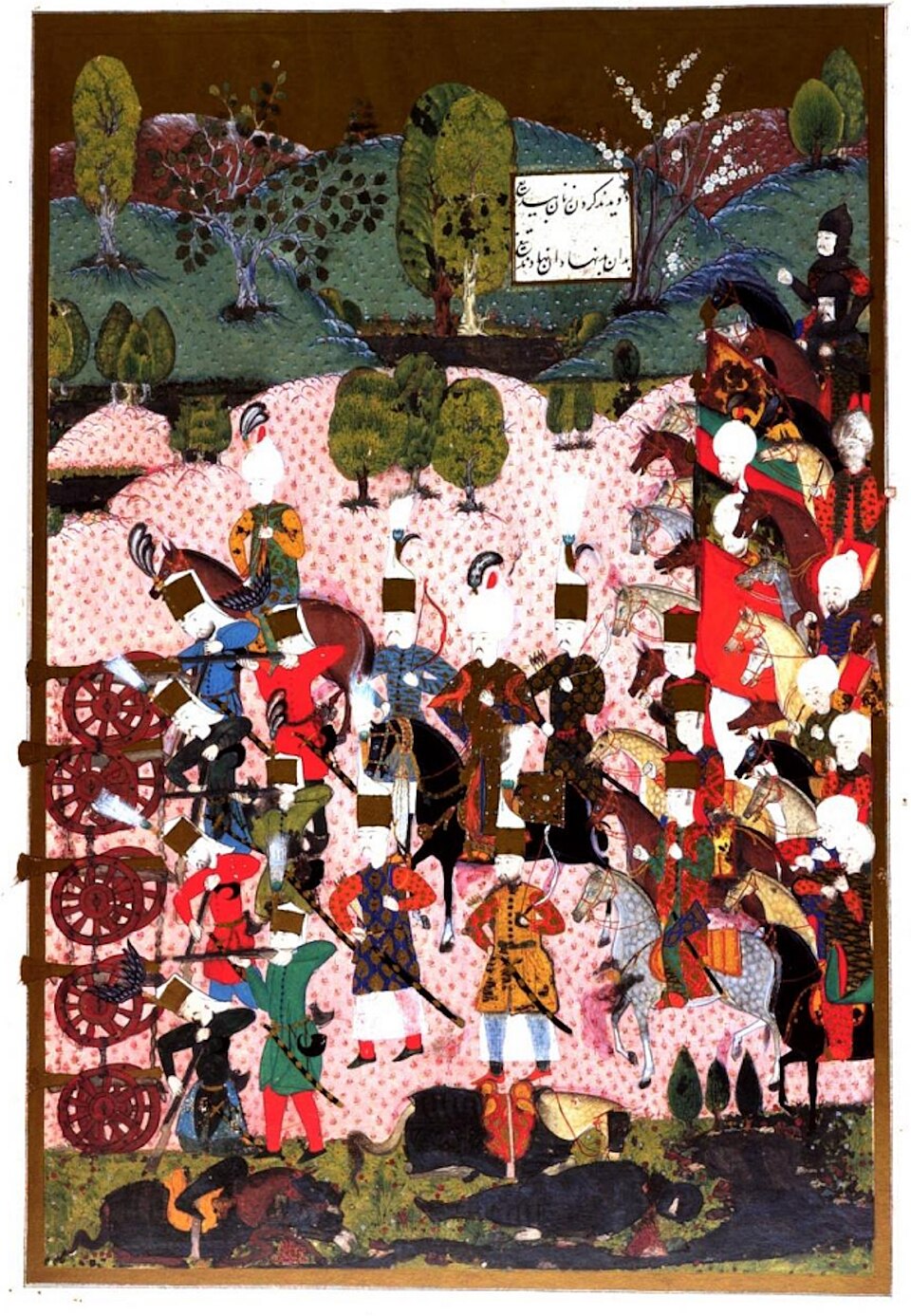
Miniature of the Battle of Mohács (1526) from the Süleymanname: Süleyman on horseback, Janissaries and cannon.
Miniature of the Battle of Mohács (1526) from the Süleymanname: Süleyman on horseback, Janissaries and cannon. · Image: Wikimedia Commons (public domain)

Sinan relates that he travelled through Arab and Persian lands in the sultan's service; reports that he was at Çaldıran are doubtful, but it is clear that he took part in the Egyptian campaign and was deeply impressed by Seljuk, Safavid and ancient buildings. The first campaigns he definitely says he joined are Suleiman the Magnificent's campaigns against Belgrade (1521) and Rhodes (1522); he served as a Janissary foot soldier and in reward was admitted to the mounted sekbans. He then fought at the Battle of Mohács and was made a yayabaşı of the novice boys, later a yayabaşı of the palace corps and chief of the crossbowmen (zemberekçibaşı). He stood out in the German campaign of 1532 and the Iraq campaign of 1534; by his own account he built and armed three galleys at Tatvan on Lutfi Pasha's orders and gathered intelligence on the Safavid forces. In 1537 he joined the Corfu campaign as a haseki.

1538 – 1539

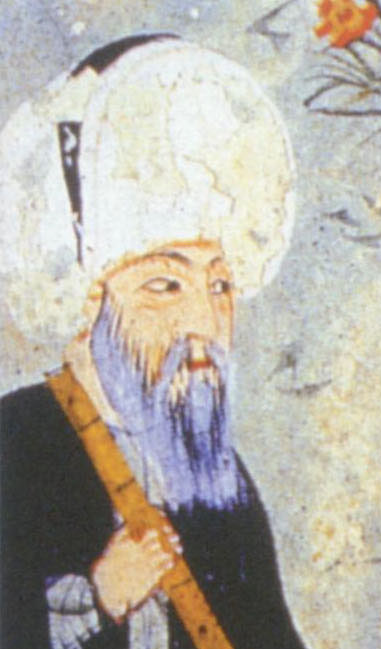
The Prut bridge and the chief architect

Detail from Seyyid Lokman's Tarih-i Sultan Suleiman (c. 1579): a figure holding a cubit rule, thought to be Mimar Sinan.
Detail from Seyyid Lokman's Tarih-i Sultan Suleiman (c. 1579): a figure holding a cubit rule, thought to be Mimar Sinan. · Image: Wikimedia Commons (public domain)

During the Moldavian campaign of 1538, when the army had to be brought across the Prut, the task was given to Sinan on Lutfi Pasha's recommendation. The bridge that Sinan, then forty-eight, built in thirteen days showed his mastery of timber construction over water and became almost a legend. He opposed a proposal to build a tower to guard the bridge, argued with Lutfi Pasha over it and even feared he would be punished. Instead Lutfi Pasha praised him and, after the death in 1537 of the chief architect known as Acem Alisi, appointed Sinan to the post; Sinan remained head of the architects until his death and signed documents as “chief of the imperial (Hassa) architects”. His first work as chief architect was the Haseki complex in Istanbul, founded in the name of Hürrem Sultan; its single-domed mosque was built in 1538–39.

June 1543 – August 1548

Şehzade: “my apprentice work”

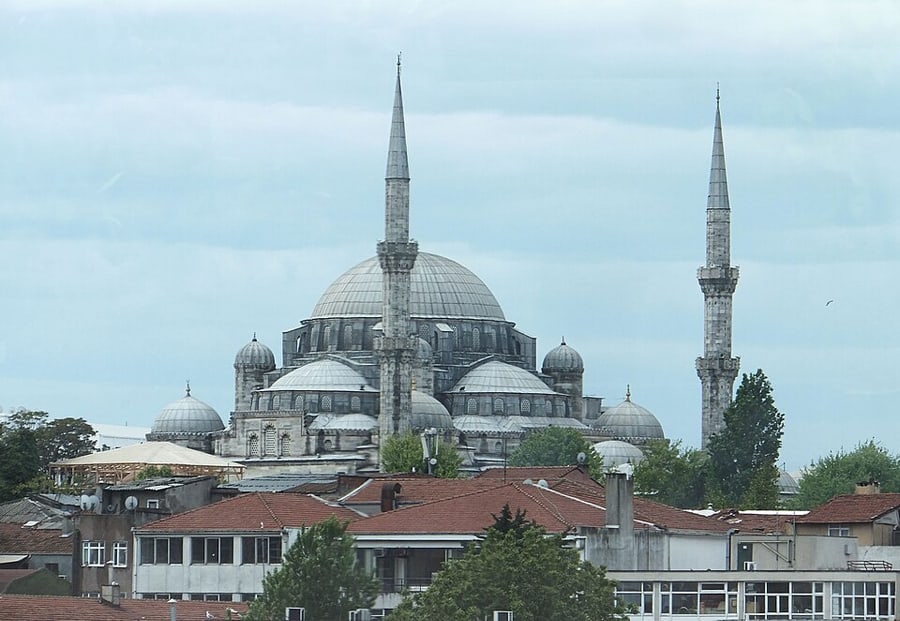
The Şehzade Mosque, seen from the west, from Zeyrek across the valley.
The Şehzade Mosque, seen from the west, from Zeyrek across the valley. · Image: Wikimedia Commons (CC BY-SA 4.0, R Prazeres)

Suleiman the Magnificent wished to build a complex in the name of his son Mehmed, who had died in 1543 while governor of the sanjak of Manisa, and the work went to Sinan, then fifty-four. Construction began in June 1543; the tomb where the prince was buried was finished first, and the mosque, whose foundations were laid on 23 May 1544, opened for worship in August 1548. In this first imperial complex designed by Sinan the central dome is supported by four half domes; because the buttresses are hidden inside arcaded galleries, the walls no longer carry the load and could be opened with many windows. Sinan calls this mosque “my apprentice work”. In the same years he built in Üsküdar the complex thought to have been founded in the name of Mihrimah Sultan, Süleyman's daughter; its mosque was finished in 1547 according to its inscription.

13 June 1550 – 15 October 1557

Süleymaniye: “my journeyman work”

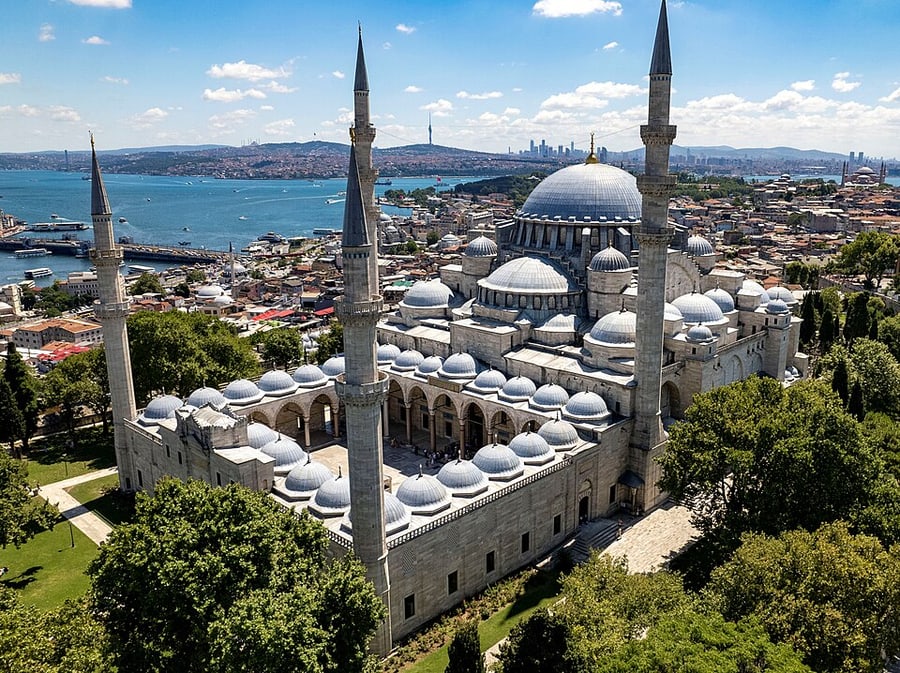
The Süleymaniye Complex from the air, with the Golden Horn and the Bosphorus behind.
The Süleymaniye Complex from the air, with the Golden Horn and the Bosphorus behind. · Image: Wikimedia Commons (CC0)

Part of the grounds of the Old Palace at Beyazıt was set aside for the complex to be built in Süleyman's name. 13 June 1550 is accepted as the day the foundations were laid; at the ceremony, attended by the sultan, Sheikh al-Islam Ebussuud Efendi laid the first stone. How the buildings would look from every part of the city had been fixed in advance in drawn plans; the hill above the Golden Horn was crowned with a pyramidal mass rising like a continuation of the slope. Seven years after the foundation, on Friday 15 October 1557, the mosque opened; Sinan relates that he handed the key to the sultan himself. The main dome, 27.40 metres across, rests on four great piers. The complex includes madrasas, a school of hadith, a medical school and hospital, a public kitchen, a han, a bath and the architect's own tomb. Sinan calls the Süleymaniye “my journeyman work”; after Süleyman's death in 1566 he also built the sultan's tomb.

1553 – 1559

A Süleymaniye in Damascus

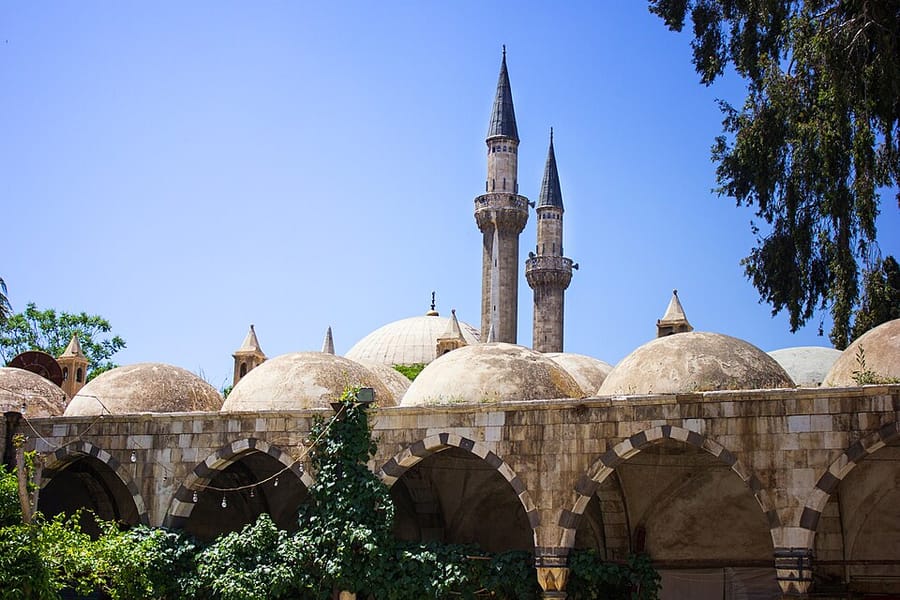
The Süleymaniye complex in Damascus: domed porticoes and the two minarets of the mosque.
The Süleymaniye complex in Damascus: domed porticoes and the two minarets of the mosque. · Image: Wikimedia Commons (CC BY-SA 3.0, Khaled ajlani)

The mosque and annexes of the Süleymaniye complex that Süleyman built in Damascus went up between 1554 and 1559; according to the mosque's inscription, work began in 962 and ended in 966 of the Hijra. The buildings are listed in the tezkires that record Sinan's works, but others ran the construction on site. According to the building accounts of the Istanbul Süleymaniye, in November–December 1553 a Hassa architect named Muslihuddin Halife was sent to Damascus through Sinan; a letter of 17 June 1560 from the beylerbey of Damascus shows that a Christian architect from Damascus named Todoros was in charge of the works. Şemsi Ahmed Pasha, then governor of Damascus, probably supervised them. Lead for the roofs was sent from Istanbul, while proportions and details reveal local labour. In the reign of Selim II, in 1566–1567, a madrasa and a covered market were added.

1568 – 1574

The Selimiye in Edirne

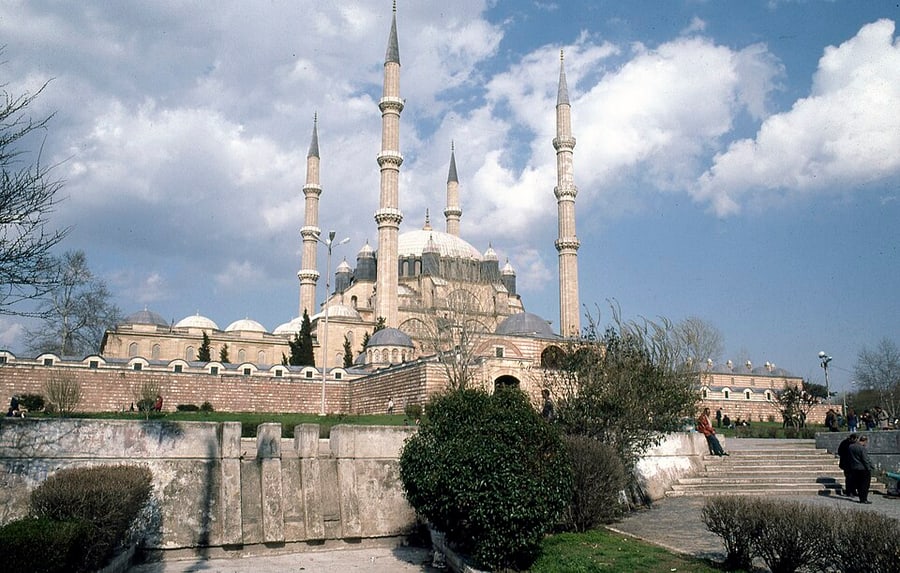
The Selimiye Mosque in Edirne with its four minarets, seen from a distance.
The Selimiye Mosque in Edirne with its four minarets, seen from a distance. · Image: Wikimedia Commons (CC BY-SA 4.0, Dosseman)

Between 1568 and 1574 Sinan built the mosque, the madrasas and the eastern shops of the covered market of the complex founded in the name of Selim II on Kavak Meydanı, in the grounds of the old palace in Edirne; the rest of the market and the primary school are attributed to the architect Davud Ağa after the sultan's death. When the mosque was finished Sinan was eighty-three and, because of his age, was known as “Koca” (the Elder); the Selimiye is regarded as his greatest work. The central dome, resting on eight piers, is 31.30 metres across and 42.25 metres high; according to the TDV article, the Selimiye's unified interior surpassed all the sultans' mosques, the Süleymaniye included, and Hagia Sophia. For the first time the four minarets rise from the corners of the domed prayer hall; 70.89 metres high, each has three balconies and is visible to travellers 10-15 kilometres away.

1560s – 1578

Bridges and staging posts in Rumelia

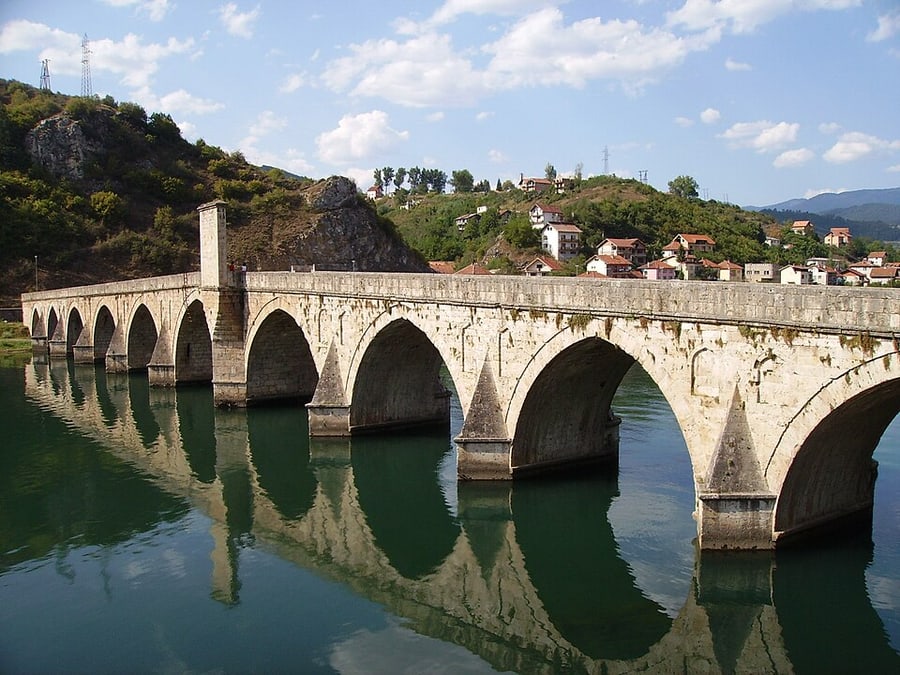
The Mehmed Paša Sokolović Bridge over the Drina at Višegrad.
The Mehmed Paša Sokolović Bridge over the Drina at Višegrad. · Image: Wikimedia Commons (CC BY-SA 3.0, Julian Nyča)

The number of Sinan's works is disputed: comparing the sources of the period yields a list of 452 buildings, while some handbooks speak of about 350. According to the TDV article, the chief architect did not build every structure himself; for some he only drew the plans and supervised the work through his assistants, and master builders, foremen and plans travelled to distant sites. The road from Istanbul to Edirne and Central Europe is a good example. On the inscription of the Büyükçekmece bridge the builder is named “Yusuf Ibn Abdullah”; the caravanserai at the bridgehead is most probably also Sinan's work from Süleyman's reign. Sokullu Mehmed Pasha's staging-post complex at Lüleburgaz was completed in 1569, or at the latest in the early 1570s. The inscriptions of the bridge over the Drina at Višegrad, also built for Sokullu, give the date 985 (1577–78); some scholars read one of them as 979 (1571–72).

1584 – 1588

Pilgrimage, death and tomb

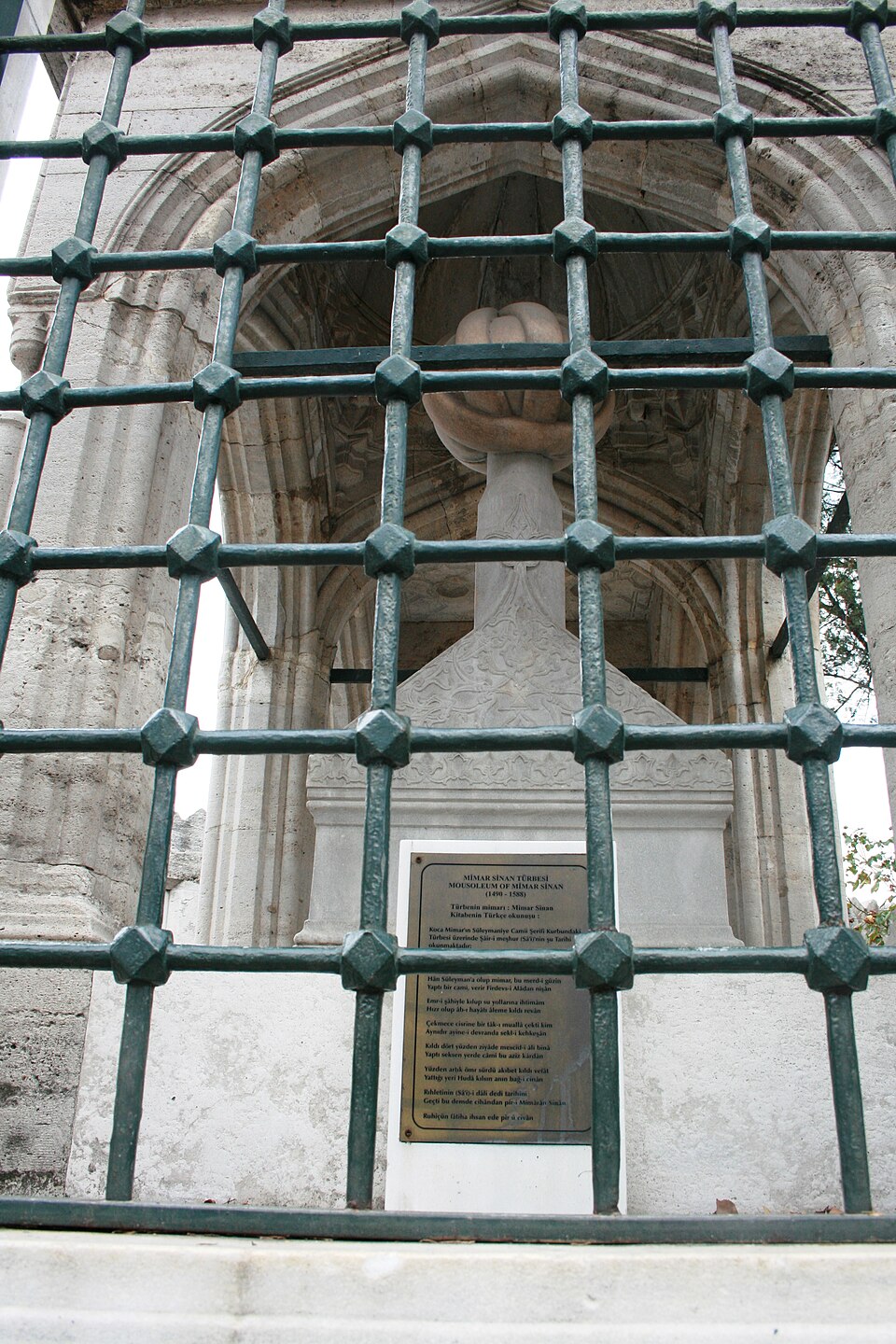
The tomb of Mimar Sinan at the Süleymaniye: the turbaned gravestone, with a plaque giving the reading of the epitaph in front.
The tomb of Mimar Sinan at the Süleymaniye: the turbaned gravestone, with a plaque giving the reading of the epitaph in front. · Image: Wikimedia Commons (CC BY 3.0, Nérostrateur)

When Sinan set out on the pilgrimage to Mecca in 1584, he left the architect known as Mehmed Subaşı as his deputy. After his return, though close to a hundred years old, he carried on his duties with great enthusiasm and died in 1588. His close friend, the poet Sai Mustafa Çelebi, author of the Tezkiretü'l-bünyan compiled from Sinan's own recollections, ended his epitaph with the line “In this moment the elder of architects, Sinan, passed from the world.” Sinan lies today in his own tomb on a small plot in a corner of the Süleymaniye complex. According to his undated endowment deed, his wife Mihri had died before him and his son Mehmed Bey had fallen as a martyr; the deed names two daughters and two grandchildren. It lists eighteen houses, thirty-eight shops, lands, a garden, a mill and 300,000 akçe in cash. The TDV article calls him the man who carried Ottoman architecture to the summit of world architecture.

End of the tour

The texts are based on the TDV Encyclopedia of Islam articles below. Borders are drawn from the atlas's regional data and are approximate; see the Method page.

Sources

More tours